Ukraine and Russia strike bridges ahead of planned talks in China
Ukraine attacked the Crimean Bridge for a second consecutive day on November 17 as Russian missiles badly damaged two bridges in Kyiv. The strikes increased military pressure before planned meetings in China where US President Donald Trump said the war would be discussed.
 Mariam Al Mansoori
Bridge attacks disrupt transport and utilities
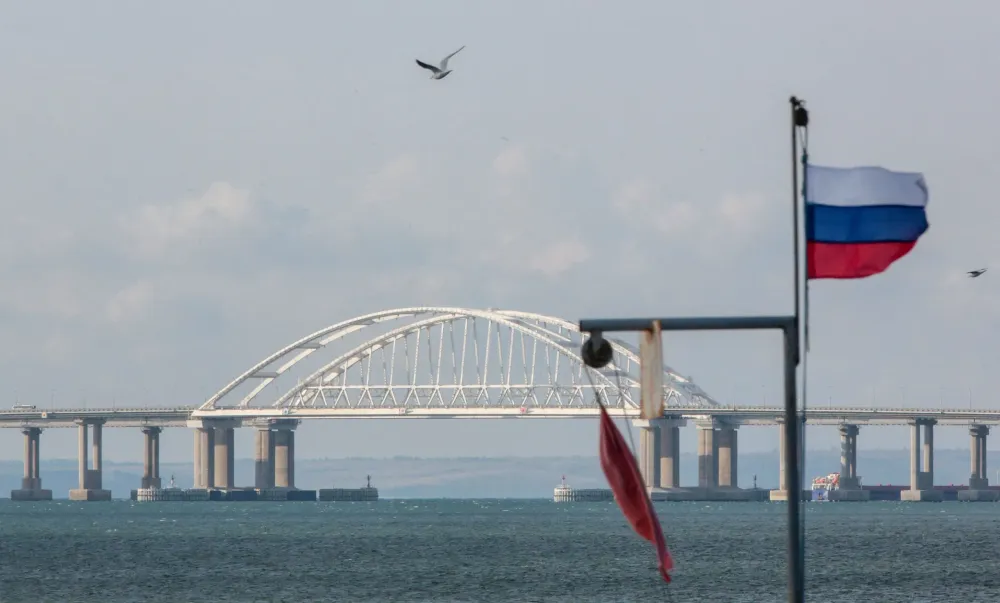
Traffic across the Crimean Bridge, which connects the peninsula with southern Russia, stopped early Tuesday, according to Crimea's Kremlin-installed governor, Sergei Aksyonov. He confirmed the attack, while images shared on social media appeared to show a collapsed section of the roadway.
Ukraine's Security Service, the SBU, reported that a metal arch and the road span below it had been destroyed completely. It described the railway section as "preliminarily damaged," although the parallel rail bridge appeared to remain standing.
Ukrainian President Volodymyr Zelenskyy called the strike the seventh stage of an "unprecedented operation" carried out entirely with Ukrainian-made weapons. He identified Palianytsia drones as the weapons used against the road section and said Neptune missiles, Ruta drones and FP-5 drones targeted the railway.
Russia's Defense Ministry described the wider Ukrainian drone assault as the largest of the war. It claimed to have shot down 1,441 drones across 22 regions, exceeding Monday's reported total of 1,336, which it had described as a record.
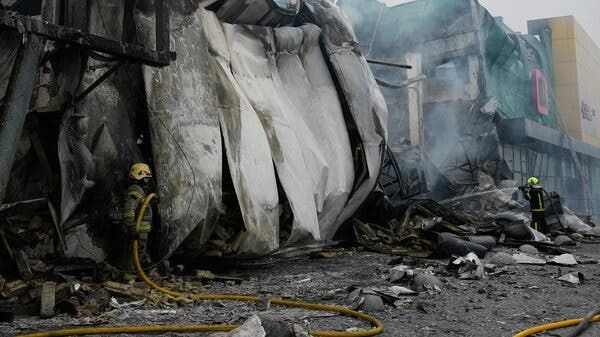
In Kyiv, Zelenskyy said four Russian ballistic missiles struck the Southern Bridge and three hit the Northern Bridge overnight. Two people were killed, and both crossings over the Dnipro River sustained heavy damage.
Russian attacks on the bridges and other Ukrainian infrastructure interrupted utility services. Zelenskyy reported disruptions to water and heating in some districts, along with power outages in the Dnipro, Kharkiv and Zaporizhzhia regions.
Repeated attacks on the Crimean crossing
The Crimean Bridge has been targeted several times since 2022. A truck bombing that October brought down road-deck spans and ignited the rail link. In July 2023, sea drones struck a pier upright, damaging the roadway. Ukrainian special forces later detonated explosives underwater near support pillars in June 2025, closing the crossing for several hours.
The nearly 12-mile bridge cost $3.7 billion and is Europe's longest crossing. According to Russian state media cited by CNN, its designed capacity is 40,000 cars daily, along with 14 million passengers and 13 million tons of cargo annually.
CNN reported that Ukraine had intensified attacks on Crimea during the preceding six months. Widespread electricity outages and fuel shortages prompted the Russian-installed authorities to declare a state of emergency over the summer.
China meetings follow progress in Abu Dhabi
The exchanges come amid renewed diplomatic efforts to end a war now deep into its fifth year. Two days of negotiations in Abu Dhabi last week produced an agreement between Russia and Ukraine on a large-scale prisoner exchange, as well as progress on practical arrangements such as ceasefire-monitoring systems.
Russian President Vladimir Putin is due in Shenzhen this week for the Asia-Pacific Economic Cooperation leaders' summit. A three-way meeting with Trump and Chinese President Xi Jinping is planned. CNN reported that the Kremlin has portrayed the gathering as a "New Yalta" and that the bridge strike has left Yalta, in annexed Crimea, effectively inaccessible from mainland Russia until repairs are made.
A separate Putin-Trump meeting is also being arranged. Kremlin aide Yuri Ushakov said Monday that Ukraine would be discussed, although officials were still coordinating the time and location, according to Interfax. Trump confirmed overnight that the war would be on the agenda, reversing the White House's earlier position.
Ahead of the talks, Trump put combined Ukrainian and Russian soldier losses at 25,000 a month without identifying a source, CNN reported. NATO Secretary General Mark Rutte had offered a different estimate the previous week, saying Russia alone was losing "more than 40,000 troops - killed or seriously wounded - every month."
Trump's son-in-law Jared Kushner, who is leading US diplomatic efforts alongside White House envoy Steve Witkoff, said Monday that he had discussed the "next steps in the peace process" with Ushakov and with Ukrainian and European officials. Zelenskyy also reported online discussions with US and European delegations, saying they had developed further plans toward negotiations between leaders.
Axios reported Tuesday that Witkoff and Kushner planned to meet Ukrainian and European officials later in the week to work on security guarantees and Ukraine's postwar economic recovery plan.