UAE joins nine countries in signing pact to safeguard AI technology
The UAE, the United States and eight other countries signed the San Francisco Declaration on November 15, 2026, setting out a shared approach to protecting sensitive AI technology and the infrastructure supporting its supply chains. The agreement also calls for working groups, but sets no timetable or funding commitments.
 Layla Haddad
A shared definition of what needs protection
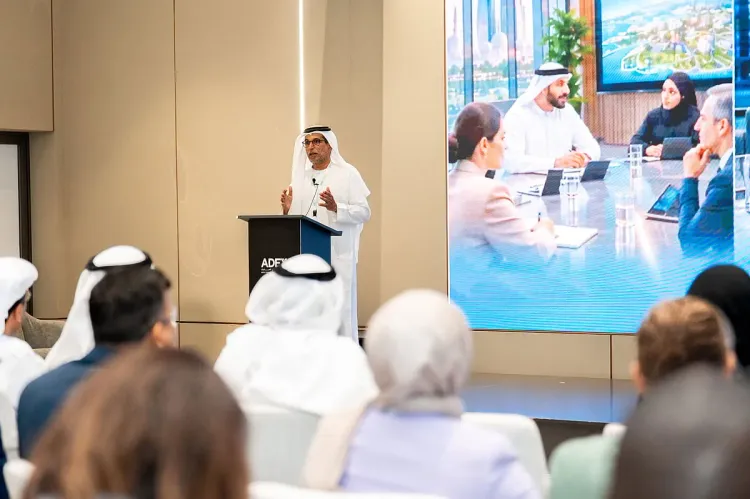
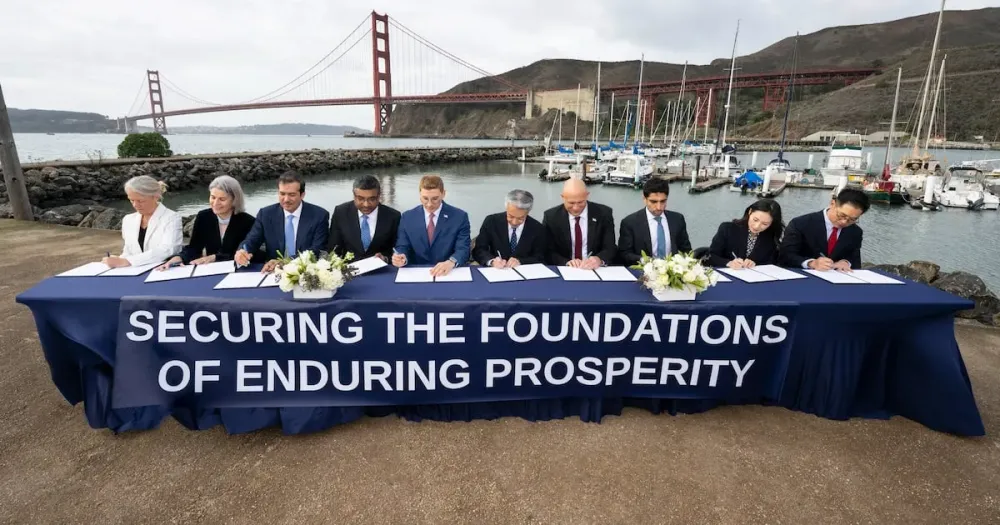
The signing took place near the Golden Gate Bridge at the Pax Silica Founders Retreat, which US Under Secretary of State for Economic Affairs Jacob Helberg convened in San Francisco. Omran Sharaf, the UAE's assistant foreign minister for advanced science and technology, attended the ceremony. Australia, India, Israel, Japan, South Korea, Qatar, Singapore and the UK were the other signatories.
Formally named the San Francisco Declaration on the Secure Foundations of Enduring Prosperity, the document treats economic security as fundamental to national security, according to the US State Department. It establishes a common understanding of the technology and infrastructure participants intend to safeguard together.
The declaration divides those assets into two categories. Sensitive technologies encompass the goods, software, materials, knowledge, components and inputs essential to AI supply chains, along with their means of production. Critical infrastructure covers the physical and digital systems supporting those chains: ports and terminals; transportation, communications and logistics networks; information and communications technology and energy infrastructure; and the digital platforms coordinating their operations.
The document warns that theft, illicit transfer or acquisition of sensitive technologies by hostile actors could give them a meaningful military or intelligence advantage, or undue economic leverage over participants. Its signing comes amid growing concern in recent years about US AI technology reaching adversarial countries, with some warning that unchecked transfers could erode the US lead.
The State Department uses "super intelligence," or SI, in line with a Trump White House mandate for government references to AI. The declaration acknowledges the terminology difference in a footnote: "For some participants, ‘super intelligence’ refers to ‘artificial intelligence.’"
Five proposed working groups
The State Department described the declaration as a new phase for Pax Silica, the Trump administration initiative launched in 2025 to secure supplies needed to build AI. Helberg wrote on X after the ceremony: "Defining these foundations together lets us protect them together."
To put the shared principles into practice, the declaration calls for working groups in five areas: pro-innovation policy frameworks; SI adoption in key sectors; supply chain cooperation across the SI stack; safe harbors and supply chain security hubs; and SI security and resilience.
The proposals do not yet come with an implementation schedule. According to The Statesman, the declaration gives no date for establishing the groups and announces no individual projects, funding commitments or enforcement arrangements.
The UAE's expanding AI ties
The UAE became a Pax Silica member at the start of 2026. Helberg has repeatedly praised the trust and cooperation between Washington and Abu Dhabi. In April, the two governments announced closer AI collaboration and convened the first meeting of their AI acceleration working group.
Those ties form part of the UAE's decade-long effort to become a global AI leader. In 2017, it became one of the first countries to appoint an AI minister, Omar Al Olama, who now serves as minister of state for AI, digital economy and remote work applications. The announcement establishing the Mohamed bin Zayed University of Artificial Intelligence followed in 2019.
During President Donald Trump's 2025 visit, the countries announced plans for a 5-gigawatt UAE-US AI Campus in Abu Dhabi.
Further signatures expected
India, another signatory, formally entered Pax Silica on February 20, 2026, at the India AI Impact Summit in New Delhi, according to The Statesman.
The San Francisco signing preceded a Quad leaders' summit scheduled for November 17 in Manila. Leaders from India, the US, Japan and Australia were expected to discuss strategic cooperation and developments in the Indo-Pacific, Millennium Post reported.
Germany, Sweden, the Netherlands and the European Commission are expected to sign the declaration during the week of November 23, 2026, Helberg said, according to the Financial Times.