Altman Praises Huang's Role in AI After NVIDIA Resignation
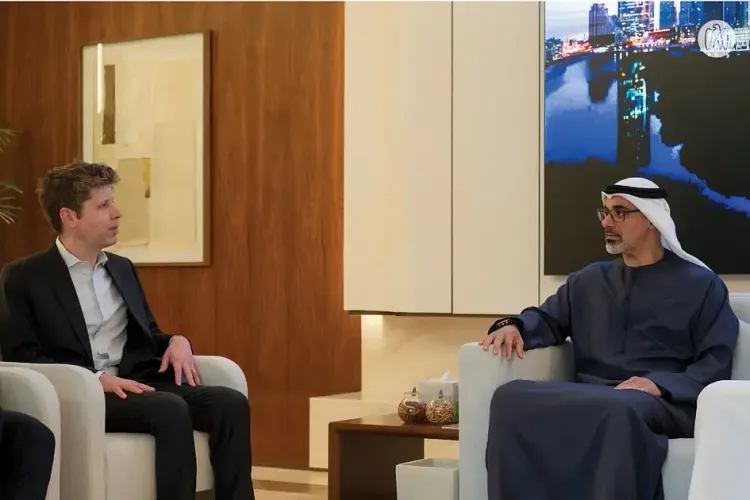
Sam Altman voiced support for former NVIDIA CEO Jensen Huang at a Semafor event, calling him a longtime hero and crediting his company with an early bet on OpenAI. Altman also addressed concerns that chipmakers are counting on the same AI customers to buy their output.
 Layla Haddad
Gratitude for NVIDIA's early support
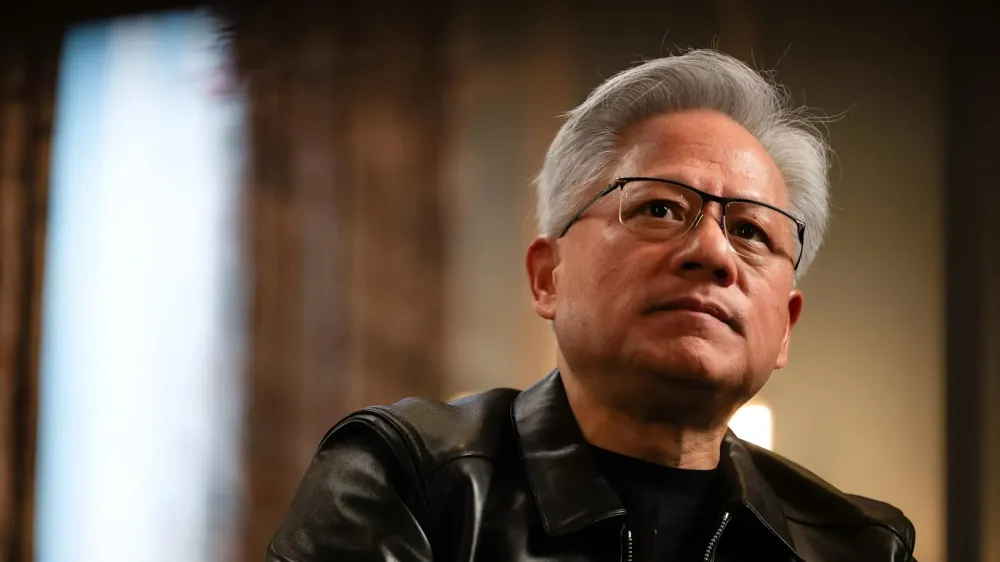
Asked about Huang's situation days after his surprise departure, Altman said he did not know enough to answer the question. He nevertheless expressed personal empathy and appreciation for Huang's work.
"Jensen has long been a hero of mine. Heroes have flaws. I am grateful for the company he's built," Altman said. He added that he remembered being in a situation like this, though it "feels like forever ago."
"But it's hard to imagine the AI revolution without Jensen. And the company he has built took an early bet on us. We took an early bet on him. I have extreme extreme gratitude for that."
OpenAI and NVIDIA's relationship spans both computing equipment and infrastructure financing. In 2023, Huang said he had personally delivered OpenAI's first supercomputer. OpenAI's public launch of ChatGPT helped ignite enthusiasm for AI before NVIDIA's rapid rise.
NVIDIA has also committed $105 billion in financing to a major data center complex it is developing with OpenAI. The commitments were part of Huang's effort to expand AI technology, and they have drawn scrutiny since his exit.
Leadership transition and scrutiny
Huang's 33 years leading NVIDIA, which he co-founded in 1993, ended on November 12, 2026. The board announced that his resignation as president, CEO and director took effect immediately.
Colette Kress took over as interim CEO while retaining her executive vice president and chief financial officer roles. The board also appointed Harvey C. Jones as its first chair and said its search for a permanent CEO would include candidates from inside and outside NVIDIA.
According to AP News, Huang's departure followed reports of two extramarital relationships: one with a businesswoman suspected by U.S. intelligence of being a Chinese spy, which Beijing denies, and another with an NVIDIA executive who reported directly to him.
NVIDIA stock fell about 14% at the opening bell on November 12, while the Nasdaq declined 1.5%. Bernstein and Oppenheimer also downgraded the shares.
The company had no succession plan for Huang. Engineer Ian Buck and former sales chief Jay Puri were among the names publicly discussed as possible replacements. President Trump advocated for Tim Cook, the former Apple CEO who is now its executive chairman. NVIDIA has not named a permanent successor.
Huang also faces requests for a closed-door briefing from U.S. House committee chairs. Representative Brian Mast threatened to subpoena him if he did not respond by November 11, 2026, although no subpoena was reported to have been issued. The House China committee requested a briefing for November 18.
Why chip demand may be counted more than once
At Semafor, Altman also explained his earlier warning to Samsung that global AI demand was being "double counted." He said forecasting had been more straightforward when the industry had "one chip provider." Now, multiple suppliers expect to sell much of their production to the same customers, including OpenAI and Anthropic.
OpenAI's demand and data center capacity are finite, Altman said, yet chipmakers are approaching the silicon supply chain with expectations that OpenAI will buy all their chips. He described underlying demand and the data center build-out as solid, while cautioning that AI companies cannot, and do not need to, source all their supply from every vendor.
His original comments came during an October 31, 2026, closed-door meeting at Samsung's Human Resources Development Center in Yongin, South Korea. About 50 presidents of Samsung Group affiliates attended, representing businesses in electronics, finance and biotechnology. South Korea's Financial News obtained a record of the session and reported on it on November 11.
The discussion comes amid reports that Samsung has sold its entire 2027 supply of high-bandwidth memory and that SK hynix's production is fully committed for the same period. In October 2025, OpenAI signed a letter of intent with both South Korean chipmakers to secure memory for its Stargate infrastructure project.
Altman also cited OpenAI usage figures to illustrate longer-term growth in AI demand. Its heaviest user consumed about 100,000 tokens per month in early 2020; by early 2026, the top user's monthly consumption had reached 100 billion tokens, a million-fold increase over six years.