Altman Argues Cloud Computing Makes Better Use of Scarce DRAM Than PC RAM
OpenAI CEO Sam Altman says scarce memory would be used more efficiently in shared cloud infrastructure than in individual PCs. His argument about running AI locally comes as data center demand absorbs manufacturing capacity and consumers face sharply higher memory prices.
 Layla Haddad

The case for shared memory resources
Speaking with Stripe co-founder John Collison on the Cheeky Pint podcast, Altman challenged the idea that capable open-source AI models running on personal computers could substantially reduce demand for data centers. His objection centered on how often the memory in those computers would actually be used.
"It's quite terrible to have everybody have a bunch of the world's limited supply of DRAM sitting in their own computer," Altman said.
He put that memory's potential utilization at around 5% of the time, without offering data to support the estimate. Pooling resources in the cloud, he argued, would allow more intensive use of a constrained supply.
The remarks concerned the efficiency of local AI inference, not an explicit call for consumers to stop purchasing RAM. Utilization also does not capture every reason to run software locally: personal computers offer offline access, more control over personal data, and less dependence on outside services.
AI demand and OpenAI's own purchases
OpenAI is itself a major participant in the competition for memory. A September 2026 report from the Center for Strategic and International Studies (CSIS) said the company reportedly reached agreements in October 2025 to buy as many as 900,000 DRAM wafers a month for its planned $500 billion Stargate AI data center project.
According to the report, those agreements reportedly secured about 40% of global DRAM output, prompting stockpiling and worsening shortages throughout the technology supply chain. CSIS projects that data centers will consume approximately 70% of the memory devices manufactured worldwide in 2026.
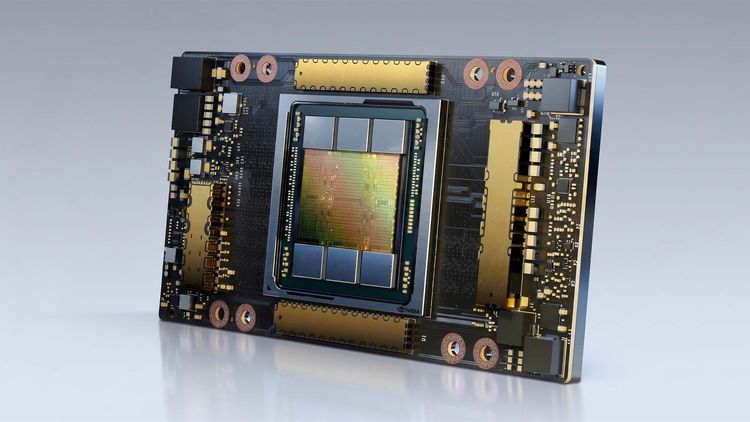
The shift toward high-bandwidth memory, or HBM, also puts pressure on conventional memory production. CSIS says HBM needs roughly four times as much cleanroom capacity per gigabyte as conventional DRAM. Expanding HBM output therefore leaves less capacity for commodity memory.
That production is concentrated among a small number of suppliers. CSIS, citing TrendForce, puts Micron, Samsung, and SK Hynix's combined share of global DRAM sales at 90.5% in the fourth quarter of 2025.
Higher prices reach PC buyers
The shortage is already visible in retail listings. Wccftech reported that prices for some high-capacity DDR5 kits in Japan climbed as much as 761% over the past year. It also identified a 32GB DDR5-7600 kit purchased for $110 in 2024 that is now advertised above $1,500, while noting that substantially cheaper alternatives remain available.
Across the wider DRAM market, J.P. Morgan Global Research forecasts a price increase of more than 400% between the start of 2024 and the end of 2026.
Other hardware-related price measures have risen as well. In August 2026, J.P. Morgan reported increases of 23% since the end of 2024 in both the U.S. Consumer Price Index for software and accessories and the Producer Price Index for storage devices. Over the same period, the import price index for computers, peripherals, and parts rose 37%.
Adding supply will take years
Altman acknowledged that supply has been slow to respond. He suggested that earlier boom-and-bust cycles have left memory manufacturers wary of committing aggressively to new capacity.
Wccftech reported that Samsung expects the shortage to deepen in 2027, with constraints potentially lasting into 2028. Samsung has already sold all of its 2027 HBM supply and signed long-term agreements covering approximately 60–70% of its production capacity. Manufacturers are reportedly expected to meet only 60% of global memory demand by the end of 2027.
New factories require substantial money and time. CSIS estimates that a memory fabrication plant costs about $15–20 billion and takes at least two to three years to complete, even in favorable circumstances, limiting the industry's ability to respond quickly to a demand surge.
A July 2026 Deloitte analysis anticipated that the three largest memory manufacturers could raise their combined capital spending by nearly 340% from 2024 to 2027. Memory could account for roughly half of all semiconductor industry capital spending in 2026, Deloitte said.
That investment would not deliver immediate relief. Deloitte said building memory factories and scaling production often takes three to five years, with new supply not expected to come online until 2029 or 2030.