Anthropic's IPO filing reveals $16.3 billion in revenue and vast computing commitments
Anthropic publicly filed for an initial public offering on Oct. 26, revealing its full financial results for the first time as it seeks a listing as soon as November. The San Francisco company behind Claude reported nearly 14-fold revenue growth in the first half of 2026, alongside a large accounting charge and infrastructure contracts that could reach $807 billion.
 Layla Haddad

Rapid growth, with a costly accounting charge
Subscriptions and paid access to its AI models and Claude products helped Anthropic bring in $16.3 billion in the first six months of 2026, nearly 14 times its revenue a year earlier.
Its $80.7 billion net loss included a $72.4 billion one-time charge associated with convertible notes and other financial instruments. Backers including Amazon and Google had invested billions through convertible debt, which later converts into equity. As Anthropic's valuation climbed, the value of that debt increased too. Because the debt is a liability, the company recorded the increase as a loss.
Operating results showed a narrower loss: $693 million, compared with $2.1 billion in the first half of 2025. Excluding stock-based compensation, non-cash charitable contributions and legal settlement expenses, Anthropic reported adjusted operating income of $1.6 billion, a margin of about 10%.
The first half also marked its first period of positive operating cash flow. Operations generated $3.9 billion, compared with an outflow of $1.5 billion a year earlier.
Computing costs reached $5.6 billion in the second quarter, when revenue totaled $11.6 billion. Anthropic put that ratio at $2.08 in revenue for each dollar spent on compute.
The company employed 5,300 people on Sept. 30, 2026, compared with 940 at the end of 2024. It reported revenue per employee of $6.6 million over the preceding 12 months.
Expanding customer spending and concentrated revenue
Anthropic's prospectus put net revenue retention at around 900% as of Sept. 30, meaning existing customers increased their spending roughly ninefold from a year earlier.
Its enterprise customer base included more than 11,900 customers generating at least $100,000 each in revenue over the preceding 12 months. Within that base, more than 1,900 generated at least $1 million each, and approximately 250 generated at least $10 million each.
Despite that breadth, five unnamed customers accounted for roughly a quarter of revenue during the nine months ended Sept. 30. Many customers have no long-term contractual obligation to maintain their spending and can cut back or cancel at any time.
Cloud marketplaces operated by Amazon Web Services, Google Cloud and Microsoft Azure accounted for 48% of first-half revenue, Anthropic said. Those platforms collect payment from end customers and pass it on after deducting platform fees.
Infrastructure obligations stretch into 2036
The New York Times tallied as much as $807 billion in computing and other infrastructure contracts disclosed in the prospectus. The obligations vary in duration and cancellation terms.
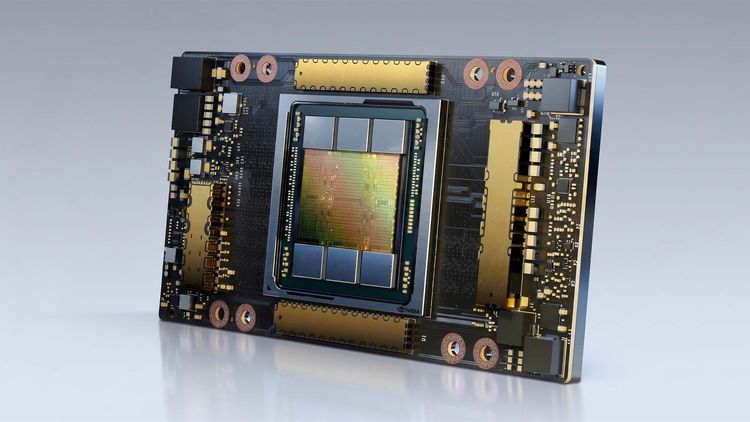
A $110 billion agreement with Amazon runs through 2036. Other commitments include $114.5 billion for Google TPUs through 2033 and at least $44.9 billion with Microsoft from November 2026 through May 2033.
The SpaceX agreement covers up to $120.5 billion through 2029, with monthly payments of about $3.1 billion once all promised capacity is available. Unlike some longer-term obligations, that computing lease can be canceled starting in 2027 with 90 days' notice.
Contracts without cancellation rights require payment even if Anthropic does not use the computing capacity. Those obligations could become a significant risk if growth fails to keep pace.
Anthropic ended June with about $132 billion in cash and readily accessible investments. Interest income alone exceeded $1 billion during the first half. Its pursuit of additional capital through an IPO comes alongside those substantial resources and spending commitments.
An offering with key terms still open
The Form S-1 submitted to the U.S. Securities and Exchange Commission sets out plans to trade on the Nasdaq under the symbol "ANT". Goldman Sachs and Morgan Stanley lead the underwriting group, which includes roughly 20 other banks.
The Wall Street Journal reported that Anthropic is aiming to list during the week of Nov. 16, 2026. The offering could raise $100 billion or more at a valuation between $1.5 trillion and $2 trillion, according to that report. Anthropic's filing did not specify how many shares it would sell, a price range or a target valuation.
That reported IPO range is separate from Anthropic's latest private valuation. A funding round announced in May raised $65 billion at a post-money valuation of $965 billion, up from $380 billion in February.
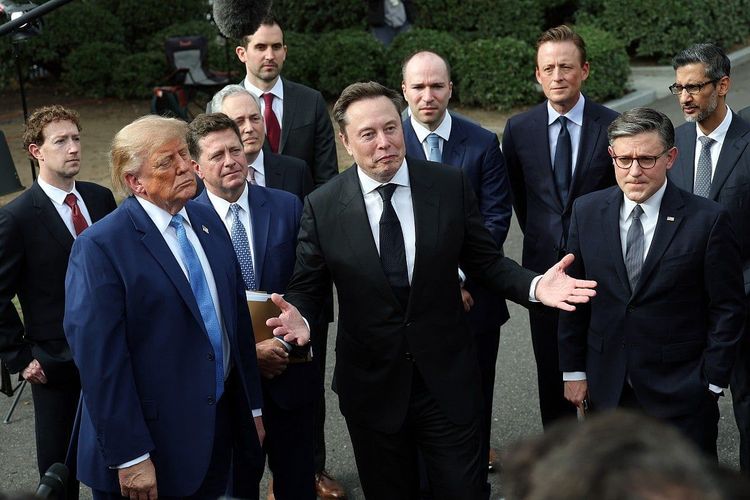
An Anthropic debut would follow Elon Musk's SpaceX, which went public on the Nasdaq in June 2026 in the largest IPO on record. SpaceX ultimately raised $85.7 billion at a valuation of about $1.77 trillion. Anthropic's reported valuation range would put it near or above that level.
Founder control and disclosed risks
After the listing, CEO Dario Amodei and Anthropic's six other co-founders would retain 50.1% of the voting power. Such arrangements are common at founder-led technology companies, preserving founders' influence and providing some insulation from public-market investor pressure.
Risk disclosures occupy 94 pages of the 335-page filing. Anthropic warned that AI models could pose "catastrophic or existential risks to humanity," potentially exposing the company to product liability and reputational damage. It also identified "intense competition" and the possibility of failing to obtain enough computing capacity as major risks.