Exporter demand exceeds $1 billion for UAE's Africa AI initiative, ADEX says
UAE exporters have submitted inquiries worth more than the $1 billion allocated to the country's AI for Development initiative in Africa, according to the Abu Dhabi Exports Office (ADEX). More than 10% of the funding is already being deployed.
 Layla Haddad
Combining export finance with AI technology
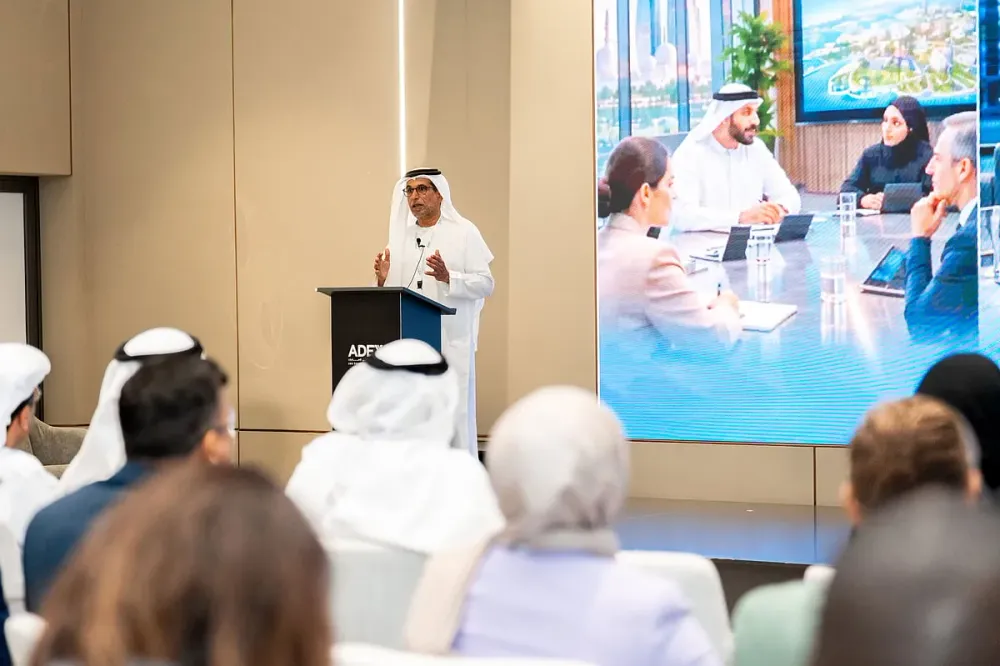
Stefaniya Ilina, ADEX's senior officer for export and structured finance, gave the figures at the ADEX-hosted AI for Development Forum in Abu Dhabi. The initiative brings UAE AI companies together with state-backed export financing, while development finance institutions and political risk insurers help reduce the risks of entering African markets.
Sheikh Khaled bin Mohamed bin Zayed Al Nahyan, Crown Prince of Abu Dhabi, announced the initiative during his November 2025 speech at the G20 summit in Johannesburg, South Africa. ADEX, which is part of the Abu Dhabi Fund for Development (ADFD), implements it with the UAE Foreign Aid Agency.
Also called Ai.(d), the platform is described as UAE-initiated and African co-owned. It was launched under the leadership of the Office of Development Affairs, Presidential Court.
Rather than arrange technology purchases and financing separately, African governments can obtain both through ADEX. "We go into the African countries with a package, a technology package and a financing package," Ilina said. "This allows the African countries to borrow and get all of the services at once, rather than in separate parts."
How projects are financed
Buyer's credit is ADEX's principal financing instrument. After a UAE exporter reaches a commercial agreement with an African buyer, that buyer involves its government, which borrows directly from ADEX. Ilina said insurers and development finance institutions join transactions that exceed ADEX's own limits to help make them "bankable".
The initiative also draws on the Multilateral Innovation Fund, according to The National's partner content with ADFD. This blended-finance mechanism was established to lower risks and fund AI-powered projects in Africa; its initial UAE anchor capital is projected at $1 billion.
ADEX's wider export-finance operations had provided AED 6.6 billion by the end of 2025, according to ADFD's 2025 Annual Report, released April 2, 2026. That financing helped UAE exporters reach more than 40 international markets and supported over 34 export-focused financing agreements.
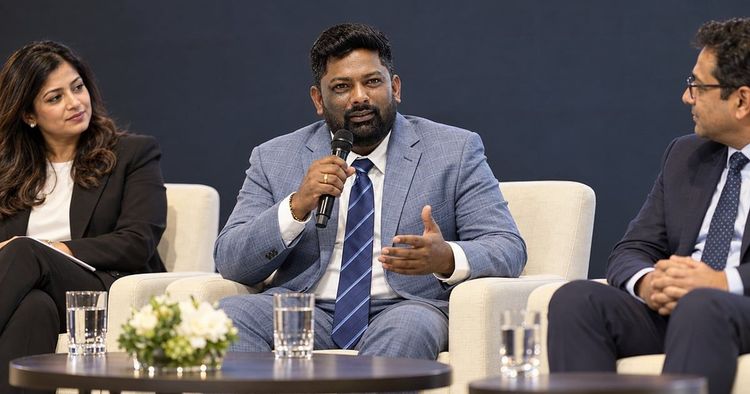
Alastair McLeod, Marsh's political risk and structured credit leader for India, the Middle East and Africa, said insurance against risks including expropriation and nonpayment can make projects "more bankable". "Developing AI infrastructure requires more than technology and capital," he said.
Applications from agriculture to satellite monitoring
The initiative's scope extends across education, agriculture, healthcare, energy, environmental work and digital infrastructure. A video shown at the forum illustrated possible future uses in African agriculture, education and infrastructure.
One planned component is the Ai.(d) Fund's Smart Resilient Future Zones: AI-enabled corridors focused on education and agriculture, to be developed jointly with African governments. Design work on the first zones is scheduled to begin in 2026.
Ilina and Orbitworks Vice President Salim Al Alawi highlighted AI-enabled satellites as an area of UAE export capability. Al Alawi said they could help governments obtain faster insights into infrastructure, environmental conditions and natural resource management.
Near-real-time imagery could also help identify wildfires, oil spills and flash floods, Ilina said, with potential benefits for agriculture and healthcare.
Mohammed Saif Al Suwaidi, ADFD's director general and chairman of ADEX's Export Executive Committee, said combining exporters' capabilities and innovation with development financing could produce "practical solutions" for partner countries.
Insurers assess growing infrastructure demand
Demand for insurance on AI projects is increasing, according to Navid Shahidinejad, senior underwriter for political risk and credit at MSIG USA, the US arm of Japan's MSIG. Financing inquiries now cover not only data centers but also telecom towers, fiber and, more recently, GPUs, he said.
"I don't see an end in sight. Honestly, the demand seems insatiable," Shahidinejad said. "I think we're only at the beginning stage of this AI development and the computing demand that it requires."
He described US and European data center markets as showing signs of saturation amid limits on electricity, water and land. Some African countries, by contrast, have surplus power and land available, he said. Although Africa still accounts for a small portion of projects, he sees a shift toward the continent.
Data policies and local demand
For Afreximbank, AI infrastructure is a priority in its next five-year strategy, said Emeka Oniya, director of digital business and innovation. "Digital infrastructure is now as important, or even more important, than normal roads and ports," he said.
Oniya argued that finding demand is often harder than finding capital. He cited a recent Central Bank of Nigeria requirement to keep regulated payment data within the country. The rule prompted a rush for domestic data center capacity and, in his account, hundreds of millions of dollars in investment.
"Once there's demand, then investment usually follows demand," he said.
Afreximbank is advocating regional data policies instead of separate national approaches, Oniya said. With support from the African Continental Free Trade Agreement, that approach would allow smaller markets to share data centers.
Earlier UAE commitments in Africa
The AI program forms part of a longer history of UAE assistance to Africa. Since 1971, the country has provided African nations with more than AED 152 billion in aid.
Ai.(d) is presented as building on commitments including the Africa Green Investment Initiative, through which the UAE allocated $4.5 billion to deliver 15 GW of new clean power capacity in Africa by 2030. It also follows a $400 million UAE commitment to the IRENA Energy Transition Accelerator Financing Platform.