Passport-sized foldable phones are taking over: Samsung, Huawei, Xiaomi and Apple join the race
Shorter, wider foldables are emerging as the premium phone battleground for 2026, with Samsung, Huawei, Xiaomi and potentially Apple all launching passport-sized devices that unfold into tablet-like screens.
Passport-sized foldable phones are taking over: Samsung, Huawei, Xiaomi and Apple join the race
The foldable phone market is undergoing a fundamental design shift. After years dominated by tall, narrow devices, manufacturers are converging on a new form factor: shorter, wider handsets that resemble a passport when closed and unfold into broad, tablet-like displays.
The global foldable smartphone market, valued between $34.46 billion and $47.4 billion in 2026, is experiencing robust expansion. Book-style foldables now command over 62% of the segment, with the inward-fold design accounting for 58.8% of market share due to superior screen protection compared to outward-folding alternatives.
Samsung has brought this passport-sized concept to international markets with the Galaxy Z Fold8, unveiled July 22 and released in the UAE on August 7. The device measures 123.9mm tall, 81.9mm wide and 9.7mm thick when closed, weighing 201 grams. Its 5.5-inch cover display opens to reveal a 7.6-inch main screen with a 4:3 aspect ratio.
Samsung describes the Fold8 as "wider, shorter and more pocket-friendly" compared to previous Fold models. The design shift has resonated with consumers: the Galaxy Z Fold 8 series achieved record-breaking pre-orders of 1.44 million units in South Korea during a seven-day period from July 28 to August 3, representing a 39% increase over the previous generation and surpassing the Galaxy Note 10's 2019 record. Global pre-orders are estimated between 4.7 million and 5.2 million units, with the standard Galaxy Z Fold 8 capturing approximately 59% of total demand.
Technical improvements have enhanced the appeal of Samsung's new design. Samsung Display demonstrated a crease-less OLED panel at CES 2026 that is confirmed for the Galaxy Z Fold 8, using metal as structural support material to improve durability and reduce visible creasing. Most foldable phones are designed to withstand 100,000 to 200,000 folds before significant degradation, though advanced models are tested for up to 400,000 folds.
Huawei pushes the passport design further
Huawei has taken the concept even wider with the Pura X Max, available in China from 10,999 yuan. The device measures just 120mm tall and 85mm wide when folded, with an 11.2mm thickness. It features a 5.4-inch exterior OLED screen and unfolds to a 7.7-inch foldable OLED display.
Huawei's market position reinforces the significance of its design choices. The company dominates China's foldable smartphone market with 60-76.6% market share as of Q1 2026, having shipped over 15 million foldable phones and becoming the first Chinese brand to reach this milestone. In Q1 2026 alone, Huawei shipped 2.842 million foldable units in China.
The Pura X Max runs HarmonyOS 6.1 and is powered by Huawei's Kirin 9030 Pro chip. The company has not announced conventional UAE availability for the device.
Xiaomi confirms September launch
Xiaomi has confirmed its new flagship folding phone will be called the Xiaomi 18 Fold and will launch in September. The device will use Xiaomi's new 3-nanometre XRing O3 processor, along with LPDDR6 memory supplied by Chinese chipmaker ChangXin Memory Technologies.
Leaked images suggest the Xiaomi 18 Fold follows a similar passport-sized design philosophy to Samsung's Galaxy Z Fold 8, though official dimensions and display specifications have not been published. The September launch will clarify whether shorter, wider foldables are becoming a broader industry standard rather than a design limited to Huawei and Samsung.
More manufacturers reportedly developing wide foldables
Leaked reports suggest additional manufacturers are exploring the form factor for 2027 releases. Oppo is reportedly developing a wide foldable with a roughly 5.5-inch cover display and 7.6-inch folding screen, potentially launching in the first quarter of 2027 with Qualcomm's future Snapdragon 8 Elite Gen 6 series processor.
Honor is also reportedly testing a similarly proportioned device with an approximately 5.5-inch outer screen and 7.6-inch inner display, along with a battery of around 7,000mAh or more. A possible first-quarter 2027 release has been suggested, though neither Oppo nor Honor has confirmed these devices.
Apple's potential entry on September 9
Apple has scheduled a special event for September 9 at 9 pm UAE time. The company has not officially announced a foldable iPhone, and as of September 3 has never confirmed development of such a device. However, industry expectations for a foldable unveiling are unusually high.
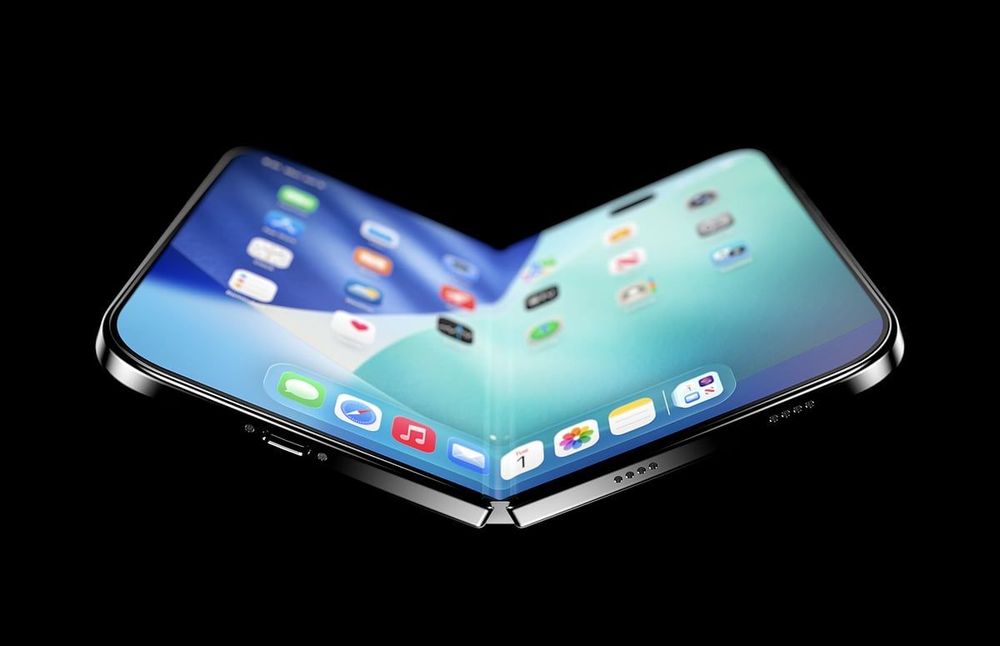
Supply chain reports point toward passport-sized specifications. Analyst Ming-Chi Kuo has indicated Apple's book-style foldable is expected to feature a screen measuring around 5.5 inches when closed and 7.8 inches when open, with a 4:3-style internal display. Reports suggest the device may use Touch ID rather than Face ID, with estimated pricing above $2,000.
Apple has signed a three-year exclusive agreement with Samsung Display to supply foldable OLED panels for its first foldable iPhone, reportedly paying around $250 per foldable display. Initial 2026 shipments are expected to be around 3 million units. Market forecasts project Apple could capture 31% of the global foldable market in 2026 despite launching only in the second half of the year, with approximately 7.1 million units shipped in its debut year.
While foldable smartphones remain a niche category accounting for less than 2% of the global smartphone market—with approximately 20-22.9 million units shipped globally in 2025-2026—Apple's entry could significantly accelerate mainstream adoption of the passport-sized form factor. The company would not be inventing the design, but its market influence could transform what is currently an emerging hardware trend into the next major smartphone category.