Northern Israeli voters call for Netanyahu's ouster ahead of election
Soldiers and residents interviewed by The National in northern Israel want the October 27 election to bring a new government, citing security failures, damage from the Hezbollah conflict and an economy still struggling to recover.
 Mariam Al Mansoori
Calls for a different government
Among those demanding change were officers and soldiers who had served in Lebanon. They blamed Prime Minister Benjamin Netanyahu and his right-wing coalition for harming the country and said he should answer for the security failures surrounding the Hamas-led attacks of October 7, 2023. After nearly 20 years in office, they argued, he should go.
Lior Shelef remained undecided about whom to support, but not about the need for a new government. Speaking at Kibbutz Shior, about a kilometer from the Lebanese border, he pointed to economic problems and military-service exemptions for ultra-Orthodox citizens. He had spent much of the past three years on military operations in the north.
"Israel needs a change, and I think this change should be very dramatic," Shelef said. He believed many Israelis were similarly uncertain about their vote and said those who were in government on October 7 should acknowledge that it was time for change.
At nearby Kibbutz Dafna, reserve Lt. Col. Eyal Dror had recently returned from a deployment in Lebanon. He called the governing coalition "one of the worst coalitions that we have ever had in Israel" and said rebuilding the economy, particularly in the north, required a new government. He saw opposition leaders Gadi Eisenkot and Naftali Bennett as possible leaders of that effort.
Barry Praag, a Dafna resident who supports the left-wing Democrats Party, wanted the next coalition to work with Israeli-Arab parties on the Palestinian question. A two-state solution, he said, would need support from surrounding Arab countries. On responsibility for the October 7 failures, he said Netanyahu had "a lot to answer" for and that the "buck stops with him."
A divided election field
The coalition choices raised by voters also feature in the latest polling. An October 19 Walla poll, reported by The Jerusalem Post, put Netanyahu's bloc at 48 Knesset seats, down from 49, and opposition parties at 54. Neither reached the 61 seats needed for a majority, leaving unaligned and Arab-led parties holding the balance.
Eisenkot's Yashar rose to 23 seats in that survey, while Netanyahu's Likud fell to 19. The poll followed the withdrawal of Benny Gantz's Blue and White Party from the race; both Yashar and Bennett's B'Yachad gained ground.
Israel votes on October 27, 2026, and formal results are due by November 4, according to the Jewish Telegraphic Agency. JTA puts the eligible electorate at 7,331,981, or 71.15% of a population of 10,305,000. That compares with 6,788,804 eligible voters in 2022, representing 70.31% of the population of 9,656,000.
The cost of displacement
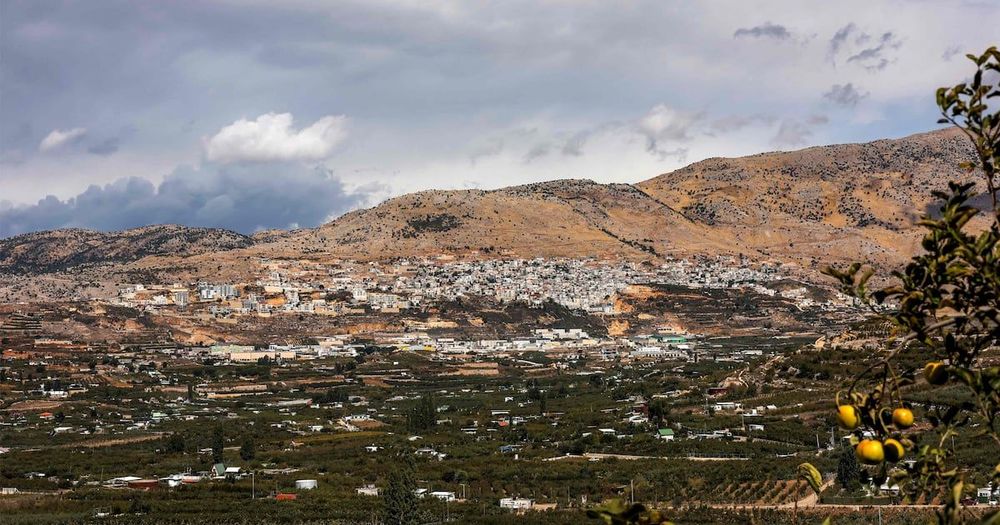
The conflict with Hezbollah that followed the Hamas-led attacks forced nearly 70,000 people from northern Israel to leave their homes for almost two years. Figures from border communities show the damage and disruption residents are still confronting.
During a January 28, 2026, visit, Israel's State Comptroller and Ombudsman found that about 15,000 people had returned to Kiryat Shmona, which had roughly 25,000 residents before the war. The city's welfare rolls had grown from 1,720 to 3,600, while the number of licensed businesses had dropped from 720 to 470. Mayor Avihai Stern warned that a population below 10,000 would mean "there's no way back."
Metula's town council head described extensive destruction to the comptroller's delegation in early 2026: Hezbollah fire had damaged 28 of the community's 32 public buildings and about 78% of its homes. Of 240 hotel rooms, only 80 were operating again.
A later account from The Christian Science Monitor, published September 8, put Kiryat Shmona's population at 24,000 and reported that almost 40% had yet to return. About half the businesses along its main shopping street were still closed. The mayor described the city as "on the verge of collapse."
The Monitor reported that Israel had earmarked about $6 billion for border communities. Recovery efforts also include Tel-Hai College, which has been declared a university, with a planned expansion into the University of Kiryat Shmona in the Galilee intended to attract students, faculty and families.
Security fears and demands for accountability
Residents' concerns extend beyond reconstruction. Many interviewed in the north feared that Hezbollah, the Iran-backed group across the Lebanese border, was waiting for another opportunity to attack.
Dror said Lebanon's government needed to act more forcefully against Hezbollah to reclaim control of its country, while arguing that only Israel could weaken the group. He wanted peace that would allow tourism and the economy to recover and his children to attend school safely.
"As long as I have to send my son to the school, which is 600 metres from Lebanon and Hezbollah have the ability to fly a drone across the school I'm not feeling safe," he said. Although he hoped a new government's diplomacy could deliver security, he did not exclude further military action.
Demands for accountability were also heard in Tel Aviv on Saturday night, October 24, when anti-government demonstrators called for an inquiry into the October 7 failures. The crowd welcomed Eisenkot, Netanyahu's main rival, with cheers and chants. Netanyahu has refused to establish a commission of inquiry, saying it would be biased against his government.