Olmert Calls Netanyahu on the "Wrong Side of History," Warns Commanders Over West Bank Violence
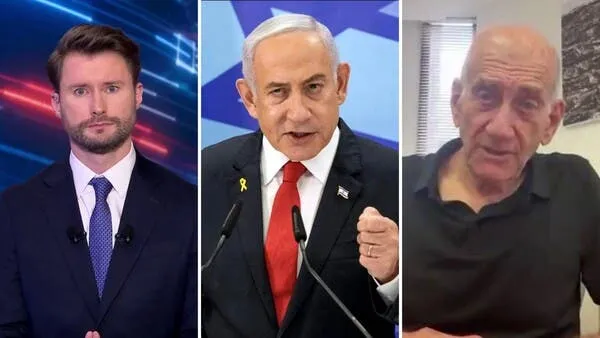
Former Israeli Prime Minister Ehud Olmert accused Benjamin Netanyahu of political desperation and warned Israeli military and police commanders of possible legal consequences if they fail to stop Jewish extremist violence in the occupied West Bank. In an interview with Al Arabiya English Editor Micheal Prendergast, he also challenged Netanyahu's claims about Iran and backed Gadi Eisenkot as his preferred successor.
 Mariam Al Mansoori
Netanyahu's record and opposition alternatives
Olmert described Netanyahu as being on the "wrong side of history" in a discussion of the election, the prime minister's political future and Israeli democracy.
He assigned Netanyahu "complete and ultimate responsibility" for the Hamas-led October 7, 2023 attack. In Olmert's account, Netanyahu refused to engage with the Palestinian Authority while reaching an understanding with Hamas that allowed substantial funding to flow to the group from abroad. Olmert argued that those policies helped Hamas build its military capabilities.
Discussing the election outlook, Olmert cited opinion polls in predicting that Netanyahu would lose between one-third and 40 percent of his existing political strength.
His preferred replacement was Eisenkot, the former military chief who leads the centrist Yashar party. Olmert described him as "more mature" and "more ready," pointing to his popularity and polling performance. He also identified Naftali Bennett, Yair Lapid, Yair Golan and Avigdor Lieberman as capable opposition figures.
Exit polls leave coalition prospects uncertain
Israel voted on October 27, 2026, to elect the 26th Knesset, according to Encyclopaedia Britannica and Al Jazeera. It was the first national election since the October 7, 2023 Hamas attack and the subsequent Israel-Hamas, Israel-Hezbollah and 2026 Iran wars.
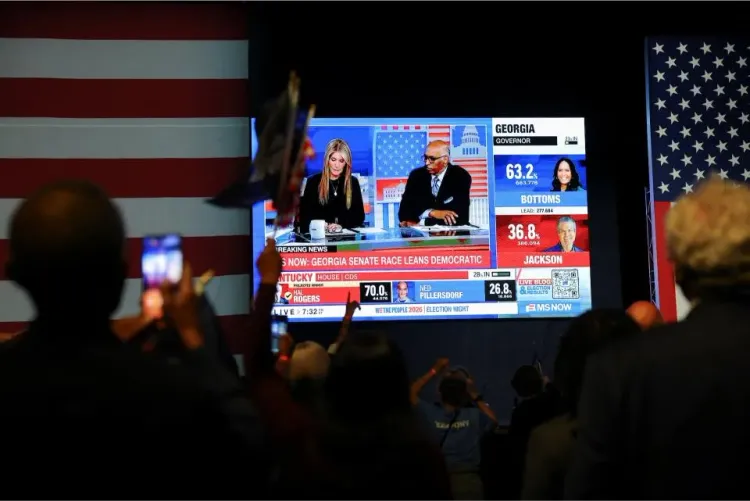
Britannica reported that exit polls indicated a tight contest and voter turnout unmatched in decades. An initial narrow advantage for the anti-Netanyahu camp vanished when the projections were revised early on October 28. Neither side appeared to have a path to a coalition without backing from parties across the political divide or from the Arab bloc. That bloc was projected to take 17–19 seats, about 15 percent of the Knesset.
The vote came at the end of the first Knesset term in decades to complete its statutory duration. According to Britannica, Netanyahu is the only prime minister since Golda Meir, who served from 1969 to 1974, to complete a full term in office.
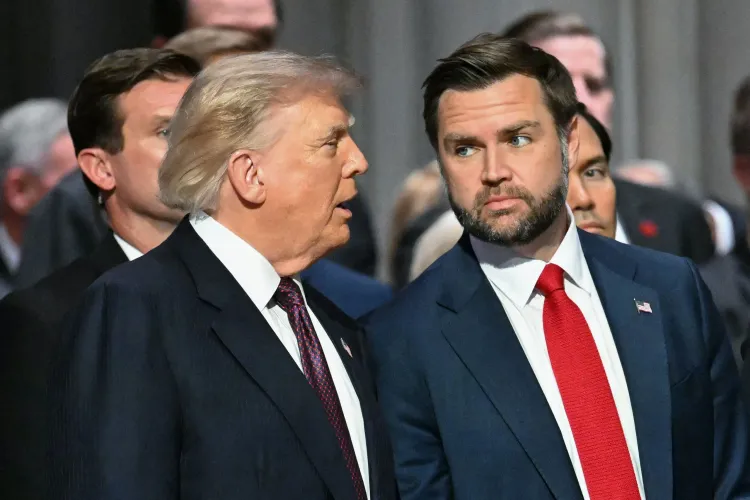
Days before the election, U.S. President Donald Trump endorsed Netanyahu. Britannica described the endorsement as an unusual direct intervention by a U.S. president in Israeli electoral politics.
Challenging the Iran message
Olmert's criticism of Netanyahu's campaign focused in part on an image the prime minister posted on X showing a nuclear explosion over Tel Aviv. He accused Netanyahu of trying to scare voters and called the post evidence of political desperation.
He questioned how that warning fit with Netanyahu's earlier claim that Israel and the United States had destroyed Iran's nuclear capabilities. "They never had a bomb, they never possessed a bomb, and we never destroyed a bomb," Olmert said.
Olmert acknowledged concern over Iran's enrichment of uranium to 60 percent purity, while distinguishing that material from a completed nuclear weapon. He asked why Netanyahu was raising the prospect of a nuclear attack after declaring Iran's nuclear capabilities eliminated.
Legal warning and a two-state solution
Addressing Israeli military and police commanders, Olmert warned that failing to halt violence by Jewish extremists in the occupied West Bank would leave them legally responsible for crimes committed there.
"And you will be tried in the court of public opinion in the world, but possibly also in the International Criminal Court," he said.
Al Arabiya English's description of the interview also says Olmert continues to regard a two-state solution as the only viable route to lasting security and peace for Israel after October 7.