US and Qatar sign minerals framework to strengthen supply chains
The United States and Qatar agreed on a framework to coordinate their critical minerals strategies on November 23, adding to Washington's supply-chain partnerships in the Gulf. The agreement was signed in Washington during the eighth US-Qatar Strategic Dialogue, according to the countries' joint statement.
 Sara Khan
Minerals and AI agreements
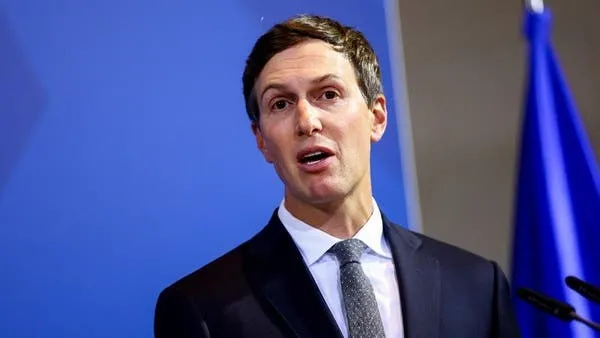
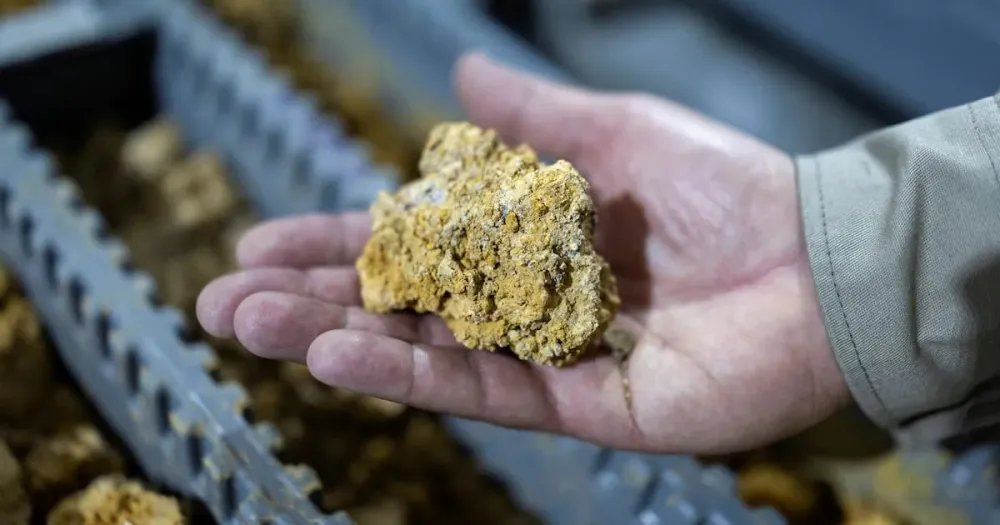
The framework aims to diversify and strengthen critical minerals supply chains. Undersecretary of State Jacob Helberg linked it to Pax Silica, the US-led effort to secure supplies connected to artificial intelligence, semiconductors and rare earth elements.
"This framework builds on that foundation to secure supply chains from mining to refining to manufacturing," Helberg wrote on social media.
The dialogue also produced an artificial intelligence acceleration partnership and a memorandum of understanding on critical minerals processing, Qatar's Ministry of Foreign Affairs said. Washington welcomed Qatar's participation in Pax Silica in the joint statement, according to IANS.
Details of the minerals framework remain limited in the announcement: IANS reported that the statement provided neither the agreement's text nor a list of individual projects, and it announced no funding commitment for the framework.
Qatar's investments and Washington's Gulf partnerships
The agreement comes as Qatar, the UAE, Saudi Arabia and other Gulf countries expand their investments across the critical minerals supply chain. Qatar's investments have focused on mining companies, while President Donald Trump's administration has pursued closer Gulf partnerships to counter China's grip on the sector.
In 2024, the Qatar Investment Authority invested $180 million in TechMet, a Dublin-based critical minerals investment company also backed by the US International Development Finance Corporation. QIA said the money was expected to help increase output of lithium, nickel, cobalt, rare earths and other critical minerals.
QIA followed that investment in 2025 with a $500 million private placement in Canada's Ivanhoe Mines, acquiring a 4% equity stake. Ivanhoe said it intended to use the proceeds for growth opportunities in critical minerals exploration, development and mining. More recently, London-based rare earth developer Pensana welcomed a $165 million investment from Qatar-backed Cascade to support a mine in Angola.
Other Gulf partnerships preceded the Qatar framework. In February 2026, the United States and the UAE agreed to cooperate on securing critical mineral and rare earth supply chains, covering mining and processing. The UAE is also a Pax Silica signatory. In 2025, the US International Development Finance Corporation and UAE sovereign wealth fund ADQ launched the $1.8 billion Orion Critical Mineral Consortium.
Washington also signed a critical minerals memorandum of understanding with Saudi Arabia during Trump's 2025 visit to the kingdom. That year, the Pentagon, through its partnership with MP Materials, entered a strategic joint venture with Saudi mining company Maaden to develop a rare earth refinery in Saudi Arabia.
Energy security and the broader dialogue
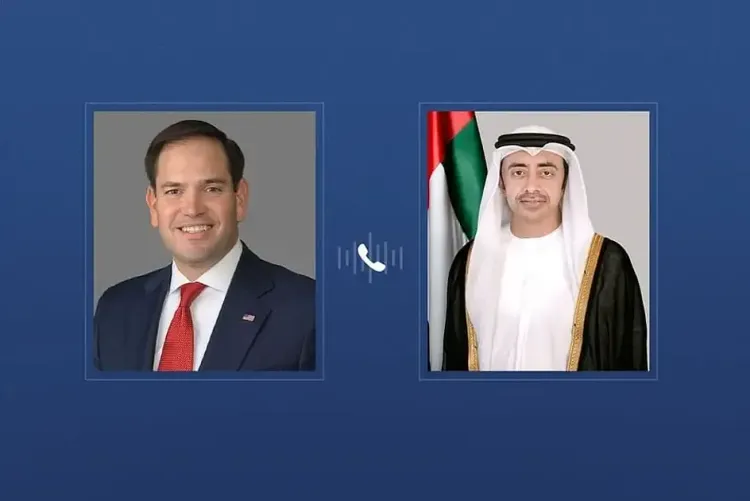
The two countries reaffirmed their strategic partnership at the dialogue. Earlier on November 23, Secretary of State Marco Rubio met Qatari Foreign Minister Sheikh Mohammed Al Thani at the State Department for talks on economic and security priorities.
Energy cooperation included a shared interest in abundant, resilient global supplies, with the joint statement citing the Golden Pass LNG project. The countries also renewed their commitment to freedom of navigation through the Strait of Hormuz, describing safe, unobstructed passage as essential to regional security, dependable energy supplies and global economic stability.
The strait carried about one-fifth of global liquefied natural gas trade in 2024, mostly from Qatar, according to US Energy Information Administration estimates. China, India and South Korea received a combined 52% of the LNG that passed through it that year.
Defense talks covered progress under the $38 billion US-Qatar Statement of Intent on defense cooperation. The delegations also considered ways to strengthen Qatar's integrated air and missile defenses, following the September 2026 US-Qatar Military Consultative Commission, MENAFN reported.
Rubio also thanked Qatar for its $30 million pledge to the UN Trust Fund for the Gang Suppression Force in Haiti, according to MENAFN.
Separately, Qatar's Foreign Ministry spokesperson Majed bin Mohammed Al Ansari said on November 17 that efforts to narrow differences between Washington and Tehran were continuing. Representatives were meeting periodically to discuss proposals.
The joint statement said talks on defense, security cooperation, counterterrorism, law enforcement and cultural ties would extend into early 2027, as the United States and Qatar prepare to mark 55 years of diplomatic relations.