Trump alleges Iran broke MoU, seeks lasting nuclear restrictions
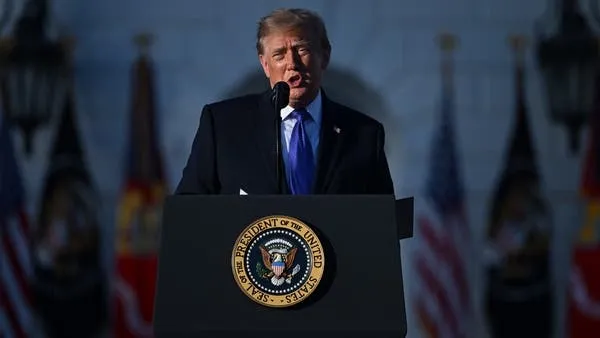
President Donald Trump accused Iran of breaching a memorandum of understanding the day after it was signed and said he wants a permanent agreement preventing Tehran from acquiring nuclear weapons. He made the remarks in a November 21, 2026, phone interview with Fox News.
 Sara Khan
An agreement binding future presidents
"We make a deal, and then they break the deal the next day," Trump said, according to Anadolu Agency. He said a new agreement must remain binding on future administrations.
"I am going to make a deal that is permanent," Trump told Fox News. Discussing how it should outlast his presidency, he added: "What I'm doing is I'm going to make it so that if we have an incompetent president in four years or 15 years or 20 years..."
Trump said replacing Iran's government had not been his aim, while calling its current leaders "more rational." Later in the interview, he described a "fundamental change of regime" and referred to the officials now dealing with Washington as Iran's "third tier" of leadership.
"We're dealing with the third group, so you could call that the ultimate regime change," he said, according to Anadolu Agency.
The June framework
The memorandum at issue was a 14-point framework electronically signed near Paris on June 17, 2026. Intended to end the US-Iran war, it opened a 60-day period for negotiating a final agreement, according to Al Jazeera.
The war had begun on February 28 with joint American-Israeli strikes. Iran closed the Strait of Hormuz early in the conflict, blocking roughly one-fifth of global oil and liquefied natural gas supplies, Al Jazeera reported.
In the June memorandum, Iran reaffirmed that it "shall not procure or develop nuclear weapons." Whether Iran could enrich uranium, and for how long, remained for the 60-day negotiations to resolve.
Washington committed to ending all types of sanctions against Iran and working with regional partners on a reconstruction plan worth at least $300 billion. The terms also called for the US to start lifting its naval blockade immediately and complete its removal within 30 days. The Strait of Hormuz was to reopen without tolls for 60 days.
Earlier warnings and Iran's response
Trump had also ruled out allowing Iran to acquire nuclear weapons at a White House press conference on November 20, the day before the phone interview. "We're not going to let them have a nuclear weapon... and I'm not George Bush -- Watch my lips... But Iran will never have a nuclear weapon, ever," he said.
Two days earlier, during a Fox News interview in Shenzhen, China, Trump called the June memorandum "a waste of time," CBS News reported. He said there was an "indication" Iran was considering chemical or biological weapons because the US had "shut them out" of nuclear weapons.
Iran's foreign ministry rejected that accusation. Spokesperson Esmaeil Baqaei drew a comparison with Colin Powell's 2003 presentation to the UN about Iraq's alleged weapons of mass destruction, saying the allegations followed "the same fraudulent script."
Military costs and energy disruption
A Pentagon official put US military spending on the war at more than $48 billion since late February, CBS News reported on November 19. The estimate did not include damage to US bases or harm to the global economy.
Also on November 19, the International Energy Agency described the Strait of Hormuz crisis as "the largest threat to energy security in history." The agency said its scale dwarfed the oil shocks of the 1970s.