Egypt and Iraq seek closer ties as Cairo talks include 10 million barrels of crude
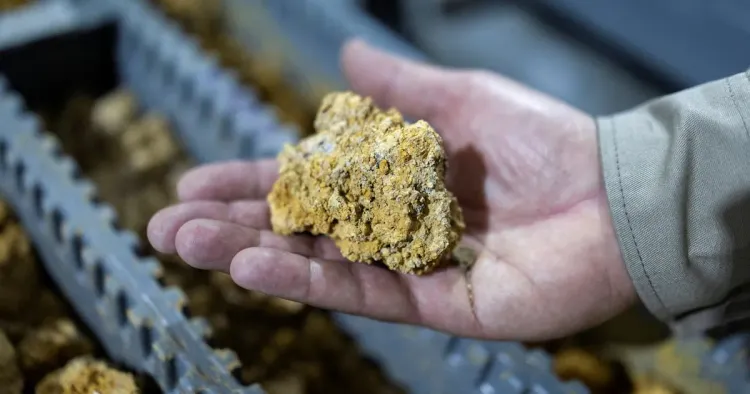
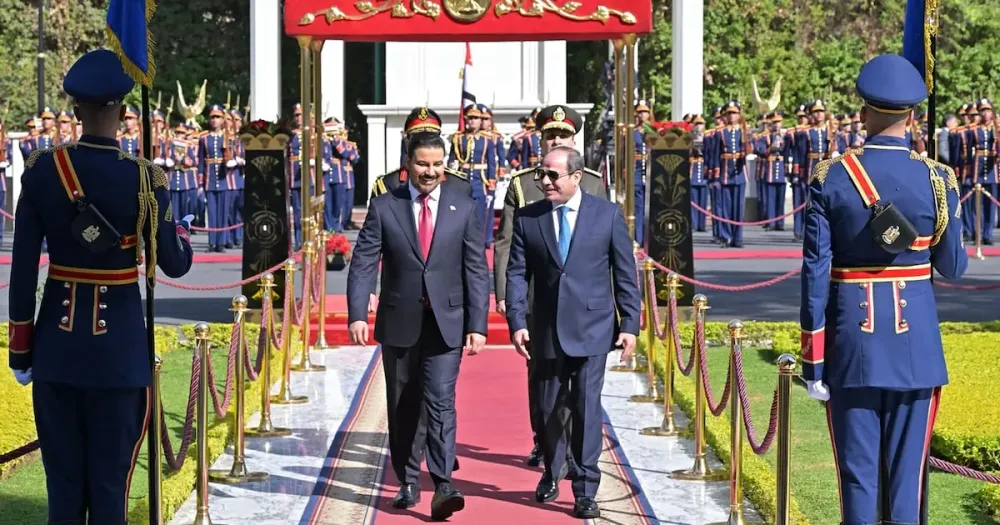
Egypt and Iraq pledged to expand energy, trade, investment and military cooperation during Iraqi Prime Minister Ali Al Zaidi's first official visit to Cairo on Monday, November 23. Alongside his talks with President Abdel Fattah El Sisi, officials discussed a possible supply of about 10 million barrels of Iraqi crude to Egypt.
 Sara Khan
Oil supply and alternatives to Hormuz
Iraqi officials did not specify a delivery period for the proposed crude supply. The discussions also covered export routes that would bypass the Strait of Hormuz, which Iran effectively closed after US-Israeli attacks in February. Iraq and other Gulf oil producers have since sought other ways to ship their crude.
One option being discussed is a pipeline linking Basra with Aqaba, Jordan's Red Sea port, potentially extending toward Egypt. Daily News Egypt reported that Iraq's oil ministry has not made a final decision on the Basra-Aqaba project.
The disruption sharply reduced exports that account for more than 90% of Iraq's budget. Shipments dropped from 3.36 million barrels a day in February to 131,000 in April. Iraq's oil ministry says exports have since recovered to about 2.7 million barrels a day as the country used alternative routes, including a reopened pipeline to Turkey.
The two countries have earlier oil arrangements to draw on. In 2020, they agreed to a mechanism under which Egyptian companies' reconstruction work in Iraq would partly pay for Iraqi crude, according to Daily News Egypt. Separately, EnterpriseAM reported on November 24 that Egypt's General Petroleum Corporation had a contract with Iraq's State Organization for Marketing of Oil for 12 million barrels of Basra Light annually. That arrangement began in 2017, and Iraq suspended shipments at the end of 2023 over payment terms.
Egypt was also reported on Sunday, November 22, to have contracted for 9 million barrels of Russian crude, according to Daily News Egypt.
Committee agreements and trade
Al Zaidi's visit coincided with the fourth Egyptian-Iraqi Joint Higher Committee session in Egypt's New Administrative Capital. He and Egyptian Prime Minister Mostafa Madbouly chaired the meeting.
Iraqi News reported that the prime ministers oversaw the signing of 10 cooperation documents and memoranda of understanding. They included a treaty addressing tax evasion and double taxation on income and capital, as well as agreements covering pharmaceuticals and medical supplies, radio and television broadcasting, nuclear and radiation oversight, fisheries, scientific research, national planning, and youth and sports.
Ahead of the meeting, Iraq's Trade Ministry had identified finance, planning, agriculture, transport, trade and industry as areas the agreements would cover. The countries agreed that Baghdad would host the committee's fifth session, Daily News Egypt reported.
The push for closer commercial ties comes amid a decline in Egyptian exports to Iraq. A government official told Asharq Business that those exports totaled about $724 million in the first 10 months of 2026, down 5.8% from $769 million a year earlier, according to Daily News Egypt. Egyptian imports from Iraq doubled to $10 million over the same period. Egypt's Commercial Representation Service put total bilateral trade in 2024 at about $1.1 billion, a 26.1% increase from 2023.
Visa plans and a bank branch
At the joint news conference, Al Zaidi said the countries would lift visa requirements so their citizens could travel for work and visits, according to Shorouk News, as cited by EnterpriseAM.
Baghdad also wants to reopen Rafidain Bank's Cairo branch, Iraqi Trade Ministry Undersecretary Sattar Al Jabri said in a report published by EnterpriseAM on November 24. The branch began operating in the 1980s, but its license was suspended in 2005. Al Jabri said Iraq wants that license reinstated rather than applying for a new one, which would require about $150 million.
Regional security and shared water concerns
The Egyptian presidency said the leaders discussed regional crises as well as bilateral relations. El Sisi told reporters they had agreed to "strengthen mechanisms of political consultation" in response to the region's "intertwined challenges".
Al Zaidi, a 41-year-old businessman who became Iraq's youngest prime minister when he took office in May, praised Egypt's efforts to ease tensions. According to the Egyptian presidency, he sought closer consultation with Cairo "to prevent a renewed regional escalation".
On maritime security, El Sisi said both leaders opposed "attempts to undermine the freedom and security of navigation" in the Gulf, the Bab Al Mandeb strait and the Red Sea. He said responsibility for Red Sea security and governance belonged exclusively to its Arab and African coastal states. Egypt has repeatedly used that position to oppose a naval role for countries outside the Red Sea.
Water security was another shared concern. El Sisi described Egypt and Iraq as "downstream states" and urged respect for international law governing rivers that cross national borders. He opposed "unilateral measures" and called for advance notification and consultation. Egypt's long-running dispute with Ethiopia concerns the Grand Ethiopian Renaissance Dam on the Blue Nile; Iraq relies on the Tigris and Euphrates, both of which originate in Turkey.
Gaza and Yemen
The leaders supported efforts to negotiate a political settlement in Yemen. On Gaza, El Sisi urged Israel to fulfill its commitments under the first phase of US President Donald Trump's peace plan, including admitting aid and supplies needed for early recovery.
He also called for the plan's second phase to proceed. Its provisions include a complete Israeli withdrawal, the arrival of a Palestinian technocratic committee to govern Gaza, and deployment of an international stabilization force.