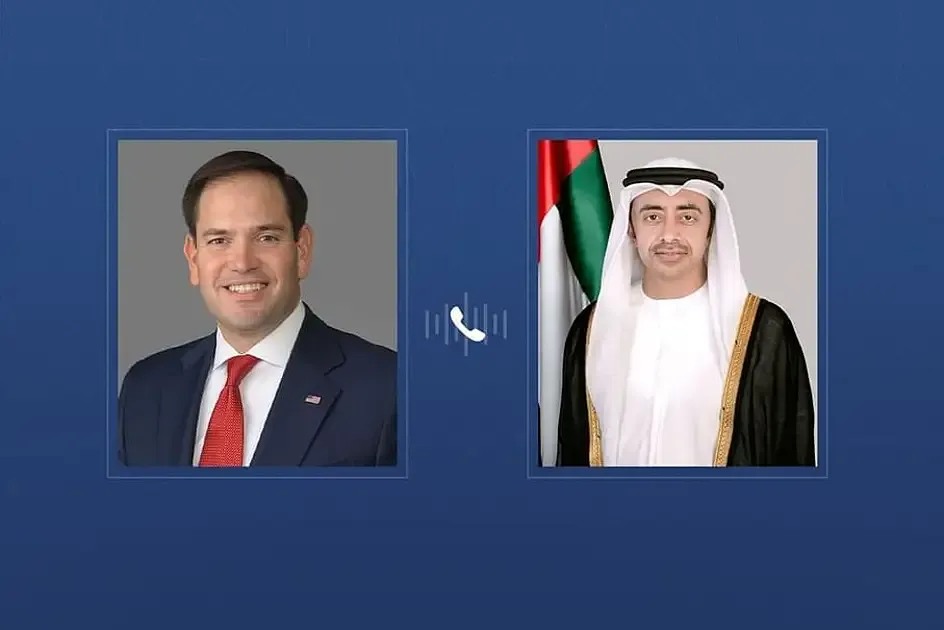
Sheikh Abdullah and Rubio discuss Sudan war in phone call
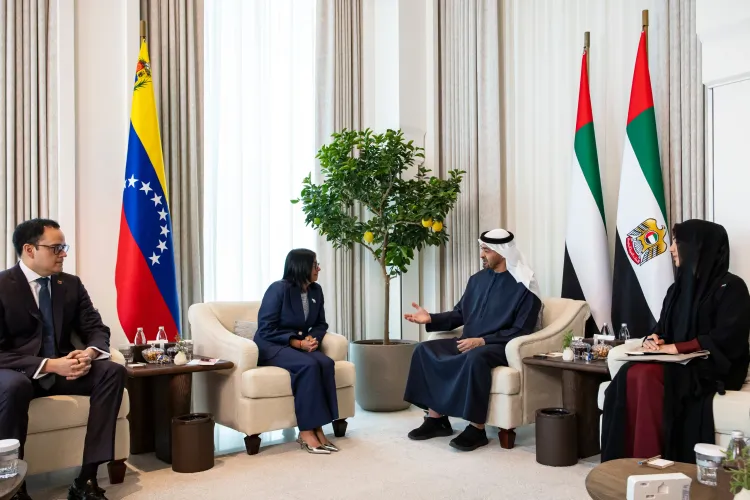
Sheikh Abdullah bin Zayed Al Nahyan, the UAE's Deputy Prime Minister and Minister of Foreign Affairs, discussed regional developments and the war in Sudan with US Secretary of State Marco Rubio by phone, WAM reported. The conversation also addressed the conflict's humanitarian consequences.
 Sara Khan
UAE backs ceasefire and civilian-led process
Sheikh Abdullah reaffirmed UAE support for regional and international efforts to bring about an immediate, unconditional ceasefire in Sudan and begin a comprehensive political process led by civilians. He said those efforts seek to relieve Sudanese suffering and help people achieve security, stability and a dignified life.
The UAE's Ministry of Foreign Affairs has separately called for an inclusive transition led by civilians and independent of both warring parties. The ministry says the UAE has been Sudan's second-largest humanitarian donor after the United States since the civil war began in 2023, citing a $500 million pledge for urgent humanitarian needs.
Diplomatic efforts and planned talks
The call followed diplomatic initiatives involving the Quintet: the African Union, IGAD, the Arab League, the European Union and the United Nations.
On November 2, 2026, UN Special Envoy for Sudan Pekka Haavisto said the UN expected to meet the RSF and its allies before Christmas in late December. The discussions, planned through the Quintet, would address a possible transition to civilian rule, according to The Soufan Center.
Haavisto said the UN had already met representatives aligned with the SAF and an anti-war coalition headed by former Prime Minister Abdalla Hamdok. He cautioned that the planned engagement did not yet represent a commitment by the warring parties to a ceasefire.
In a joint statement on November 13, the Quintet condemned escalating drone attacks across eight Sudanese states: Khartoum, Darfur, Kordofan, Blue Nile, Gadaref, Gezira, Sennar and Red Sea. According to The Rio Times, it demanded an immediate stop to attacks on civilians and civilian infrastructure, an end to outside support for the warring sides, and a humanitarian truce leading toward a comprehensive ceasefire.
The statement also urged regional and international actors to support de-escalation efforts, including those of the Quad, which brings together the United States, the UAE, Saudi Arabia and Egypt.
Damage to electricity supplies and accusations involving Ethiopia
The Soufan Center reported in early November that Sudan's electricity network was close to collapse. The Sudanese rights group Emergency Lawyers said drone attacks had struck at least 15 substations since early October.
The Merowe Dam on the River Nile was reported to be the country's last major source of electricity, providing more than 70% of its supply. Power outages were disrupting water pumping, hospital services, dialysis, cold storage and winter irrigation.
The Soufan Center also reported that Sudan's army-led authorities had lodged formal complaints with the UN Security Council and the African Union's Peace and Security Council, accusing Ethiopia of permitting the RSF to use its territory to launch drone attacks.
Sudan's army-led Sovereignty Council alleged in a report that 70 attacks involving 187 one-way attack drones originated in Ethiopia between February 15 and October 27, 2026, killing 176 Sudanese soldiers and 484 civilians. Ethiopia rejected the accusations and accused the SAF of supporting Tigray-linked armed groups.