AI-Backed Candidates Suffer Key Midterm Losses as Voters Target Data Centers
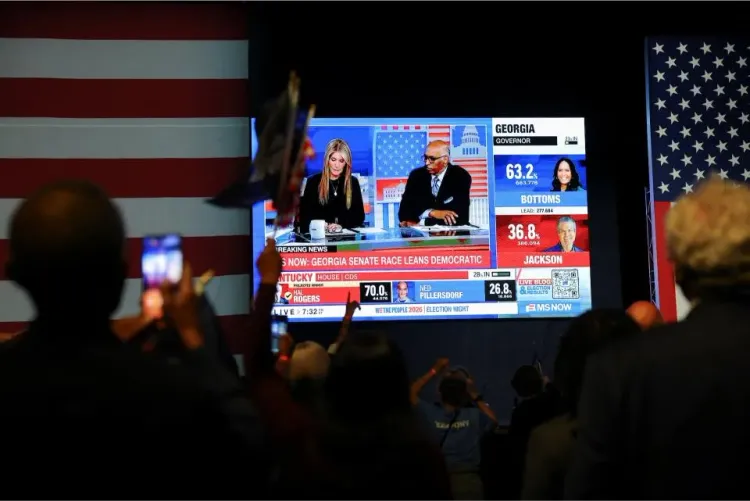
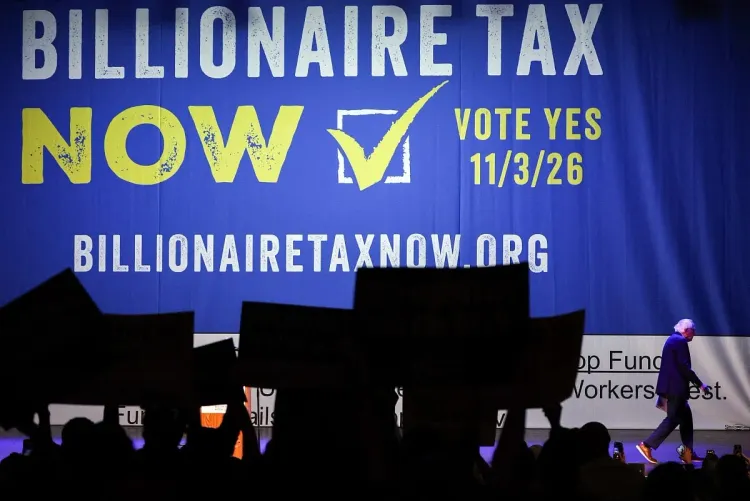
The AI industry's political spending failed to protect several closely contested Republican seats as Democrats won control of Congress in November. Voters also approved local restrictions on data centers, putting the industry's electricity demands at the center of a debate over who should pay for its expansion.
 Mariam Al Mansoori
High-profile losses, but a mixed overall record
South Carolina delivered the industry's largest general-election setback. Two super PACs associated with Leading the Future, the largest AI political network, spent $4.8 million supporting Senator Darline Graham's reelection. Democrat Annie Andrews, who labeled her opponent "Data Center Darline," defeated Graham on November 3.
The nickname alone does not explain a Democratic Senate victory in a state Kamala Harris lost by nearly 18 percentage points. Democrats captured both congressional chambers amid high living costs, an unpopular war and presidential approval near 30 percent, winning Senate seats in Texas and Kansas as well as South Carolina.
Tech Influence Watch put AI-aligned super PAC spending at about $79 million across 68 House and Senate contests. Fortune reported that most Republican recipients in close races lost. Public First, an Anthropic-backed network advocating stricter AI safeguards, also saw its Republican candidates defeated in Texas's 35th Congressional District and Alabama's 2nd.
The broader results were more favorable to Leading the Future. Fast Company reported that more than 86 percent of its candidates had won or were leading, citing victories in 31 of 38 House races and nine of 12 Senate races. The publication described the network's success rate as roughly comparable to that of the cryptocurrency super PAC Fairshake.
Local votes put power costs on the agenda
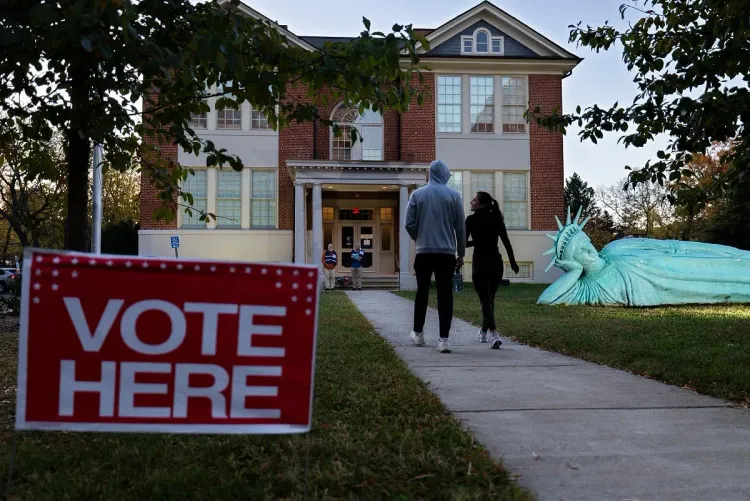
Opposition to data center development extended well beyond individual congressional campaigns. In SSRS exit polling, 56 percent of voters identified AI and data centers as a major or crucial consideration in their congressional vote.
Voters approved development limits in 40 of 41 local data center ballot measures. According to Fortune, those votes took place across 10 states, with restrictions winning by an average of 49 percentage points. The exception was Harwood, North Dakota, a community of about 800 people where a project was already underway.
Annenberg Public Policy Center polling found that 69 percent of Democrats and 54 percent of Republicans opposed having data centers in their communities. Separately, about three-quarters of respondents in a Data for Progress survey said support from an AI super PAC would make them less likely to vote for a candidate. Guardrails commissioned that poll of more than 3,000 likely voters in Iowa, Michigan and Ohio.
Electricity costs had already drawn bipartisan attention in Congress. Several weeks before the election, the House voted 417-3 for the Ratepayer Protection Act. It would require states to consider making data centers pay for grid upgrades needed to supply their electricity demand. The Senate version was killed.
Most spending went into the primaries
The networks' spending patterns help distinguish their primary campaigns from their general-election results. An Intercept analysis of Federal Election Commission records found that Leading the Future and Public First spent $50.7 million on primaries. Only 5 percent of their direct expenditures went toward contested general-election races.
By October 26, Leading the Future had spent $7.4 million on the general election while retaining $34 million in cash. Public First's general-election spending stood at $1.1 million. In its cycle-wide analysis, Fast Company put the networks' spending at about $34.8 million and $24.4 million, respectively, compared with roughly $154 million for Fairshake.
The largest single expenditure of the networks' primary campaign concerned Alex Bores, a New York Assembly member running in the Democratic primary for the state's 12th Congressional District. They spent $21.3 million supporting or opposing him. Bores, who had co-sponsored legislation requiring AI companies to report safety incidents, lost the primary.
In her Al Arabiya commentary, Intissar Ben Aziz interpreted the Bores contest as a warning to other lawmakers about the political cost of challenging the industry. She argued that low-turnout primaries offer a more receptive setting for concentrated advertising spending than general elections.
The networks and their funding practices
Leading the Future's backers include venture capital firm Andreessen Horowitz, OpenAI president Greg Brockman, and Palantir and 8VC cofounder Joe Lonsdale, according to Fast Company. Its partisan affiliates are Think Big, which supports Democrats, and American Mission, which supports Republicans. That arrangement parallels Fairshake's structure.
The network has also faced questions about disclosure. The Intercept reported that Leading the Future routed more than $30 million through newly established Delaware corporations, with $17.4 million passing through Summit Ridge Media Group and $21.3 million through Lantern Production Consultants. In a complaint filed in May, the Campaign Legal Center alleged that the practice violated FEC disclosure rules.
Company commitments and congressional plans
Within 48 hours after voting ended, OpenAI released a framework for future data center projects that expanded its earlier commitments to pay its own energy costs.
Representative Ted Lieu, co-chair of a House Democratic commission on AI, pledged congressional action: "We will hold public hearings on AI. We will pass legislation, reasonable guardrails on AI."
Democratic control does not guarantee that legislation will become law. The party lacks the votes to override a presidential veto, and President Trump supports data centers. The industry also argues that stringent regulation could give China an advantage in AI. Ben Aziz's commentary predicted that donors would return for the 2028 elections with revised messaging.
Market losses and implications for the Gulf
Investors reacted sharply after the election. On Thursday, November 5, the Nasdaq 100 dropped 6.4 percent, its steepest one-day decline since March 2020, wiping out $2.3 trillion in value, Bloomberg reported. Bloomberg attributed part of the fall to speculation about a Democratic crackdown on AI, alongside concerns about stretched valuations. European semiconductor shares also fell.
The debate has implications for the Gulf, which is receiving advanced chips used in AI data centers. In November 2025, Washington approved advanced chip sales to Saudi Arabia and the United Arab Emirates, and Saudi Arabia's HUMAIN signed an agreement with Nvidia.
The available evidence does not establish that US resistance to data center construction will redirect projects to the Gulf. It does show that the cost of powering AI has become an electoral issue in the United States, the country that sets the rules governing those chip sales.