Why a single-blade safety razor delivers a closer shave with less irritation
Traditional safety razors with a single sharp blade cut hair cleanly without the repeated friction of multi-blade cartridges, reducing razor bumps and irritation while offering better control over technique.
Why a single-blade safety razor delivers a closer shave with less irritation
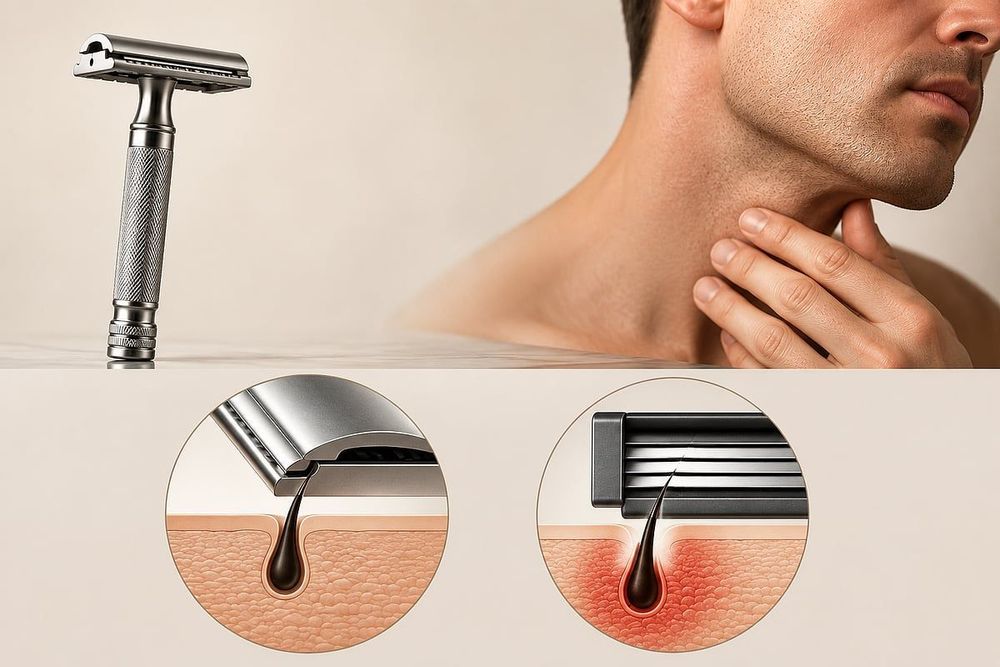
A close shave does not always require adding more blades. Traditional safety razors rely on a single exposed edge, fundamentally changing how hair is removed. Rather than several blades passing over the same patch of skin in one stroke, one sharp blade cuts the hair cleanly before moving on. This approach can reduce friction and limit opportunities for irritation, particularly for people who regularly experience razor bumps or ingrown hairs. The result often feels smoother, though it requires more attention to technique.
The safety razor concept dates back over a century. King Camp Gillette patented the double-edge safety razor with disposable blades in 1901 and introduced the first commercially successful model in 1903, revolutionising shaving by making it accessible without professional barbers or blade maintenance. That fundamental design remains popular today, as traditional wet shaving experiences a resurgence driven by sustainability concerns and renewed interest among younger consumers in the craft of grooming.
How multi-blade razors create irritation
Multi-blade cartridge razors use a mechanism that can inadvertently increase skin problems. The lift-and-cut system employed by these cartridges sees the first blade lift hair above the skin surface so subsequent blades can cut it below skin level. This action pulls hair upward before cutting, causing it to snap back beneath the skin and increasing the risk of ingrown hairs and razor bumps.
A five-blade cartridge means skin is scraped five times in a single stroke, stripping away protective oils and disrupting the skin barrier. That extra friction leads to increased irritation. With multi-blade razors, each blade successively removes lubricating agents from the skin without replenishing them, compounding the problem with every pass.
For individuals with coarse, curly or easily irritated facial hair, this repeated blade contact often leaves skin feeling sore. Pseudofolliculitis barbae, commonly known as razor bumps, affects approximately 45 to 80 per cent of Black men, particularly those with tightly curled hair. Dermatologists frequently recommend trying single or double-edge razors when razor bumps become a recurring issue.
What a safety razor offers
A safety razor holds a double-edge blade at a fixed angle, leaving the user in control of pressure and direction. Cartridge razors simplify the process with pivoting heads and multiple blades, but they make several cutting passes with every stroke. For many users this works adequately, yet those prone to irritation sometimes find that a single sharp blade used with proper technique delivers better results.
Good preparation remains as important as the razor itself. Softening the beard with warm water, using quality shaving cream and shaving with the grain form the foundations of a comfortable shave. Safety razors should be held at approximately a 30-degree angle to the skin, with the weight of the razor providing the pressure rather than applying additional force. This technique helps prevent irritation and nicks while maintaining control.
Choosing the right equipment
Selecting a mild safety razor makes more sense for beginners than choosing the most aggressive design. A sharp blade used with light pressure is usually kinder to skin than a dull blade pressed harder. Dermatologists recommend changing razor blades every five to seven shaves because dull blades cause tugging and increase the risk of irritation, cuts and razor bumps. A synthetic shaving brush helps build richer lather while lifting hairs before the blade reaches them.
Marketing claims about achieving the closest possible shave matter less than consistent technique. Short strokes, shaving with the grain and replacing blades regularly make the biggest difference. Anyone with persistent skin problems should seek advice from a doctor rather than relying solely on equipment changes.
The broader appeal of traditional shaving
Beyond skin health, sustainability concerns are driving consumers toward traditional safety razors. They produce less plastic waste than disposable cartridge razors, with reusable metal handles and recyclable blades significantly reducing environmental impact. The wet shave market is projected to grow from 18.3 million dollars in 2023 to 46.8 million dollars by 2033, driven by increasing interest in sustainable grooming and traditional shaving methods.
Finishing the shave with an alcohol-free aftershave can leave freshly shaved skin feeling calmer than products with high alcohol content, which some users find drying. Dermatologists often suggest soothing post-shave products when irritation is a concern. An alcohol-free formula fits naturally into a routine focused on reducing unnecessary irritation rather than masking it.
The biggest lesson from traditional wet shaving is that comfort depends more on technique than blade count. A single sharp blade, used with light pressure and good preparation, can produce an impressively close shave while reducing repeated contact with the skin. For beginners, a complete setup includes a beginner-friendly safety razor, fresh replacement blades, a quality brush and an alcohol-free aftershave to complete the routine.