Bathrooms evolve into wellness sanctuaries with accessibility at the core
Homeowners are transforming bathrooms into relaxation spaces with warm materials, layered lighting and smart storage, while prioritising accessibility and future-proofing their investments.
Bathrooms evolve into wellness sanctuaries with accessibility at the core
The bathroom is shedding its purely functional identity. While ease of cleaning and practical fittings remain essential, homeowners in 2026 are pursuing spaces that balance efficiency with comfort, personality and an invitation to linger, whether starting the day or settling into an evening routine.
This shift is more than aesthetic. More than two-thirds of homeowners now consider accessibility or special needs when planning bathroom projects, a figure that has risen steadily and reflects a growing focus on designing for the long term. Among those addressing these requirements today, over 40 per cent are accommodating aging household members, while nearly half are planning ahead for future needs that may emerge in the next five years or beyond.
Wellness takes centre stage
The 2025 Houzz Bathroom Trends Study found that 36 per cent of renovated bathrooms included wellness-oriented features. Upgraded lighting led the list, followed by soaking tubs, spa baths and water features. Cleanliness, spacious showers, organised storage and natural light were also closely associated with relaxation. A quarter of homeowners now use their primary bathroom for wellness and self-care activities, driving demand for features that support these rituals.
This transformation is occurring within a global bathroom remodelling market valued at approximately 413 billion dollars in 2025, projected to reach up to 593 billion dollars by the mid-2030s, growing at an annual rate of 3.7 per cent. The trend is particularly visible in North America, where the market is expanding at 4.1 per cent annually, fuelled by increased home improvement spending, smart technology adoption and rising disposable income.
Layout with intention
Creating a more comfortable bathroom begins with the layout. Movement should feel easy, with enough clearance around the vanity, toilet and shower. A walk-in shower with a low or flush threshold gives the room a cleaner visual line and improves accessibility. Wet rooms, which feature open shower areas with proper drainage throughout, now account for one in six renovated bathrooms, with half of homeowners citing better space utilisation as the primary motivation.
Built-in seating serves multiple purposes, from bathing and grooming to improving accessibility for anyone with limited mobility. Universal design principles recommend features such as comfort-height toilets set at 17 to 19 inches rather than the standard 15 inches, doorways at least 36 inches wide to accommodate wheelchairs, and a 60-inch turning radius for mobility devices. Recessed niches keep products within reach while freeing the floor and ledges from bottles.
In larger bathrooms, the bath is being given greater prominence. Designers are revisiting built-in tubs surrounded by tile or stone, which provide useful ledge space and can fit neatly into awkward corners. Interior designer Uns Hobbs told Homes & Gardens that a built-in bath becomes a strong visual focal point and adds architectural interest to the space. The surround can hold toiletries, a book, a plant or a candle without adding another piece of furniture.
Warmth and texture
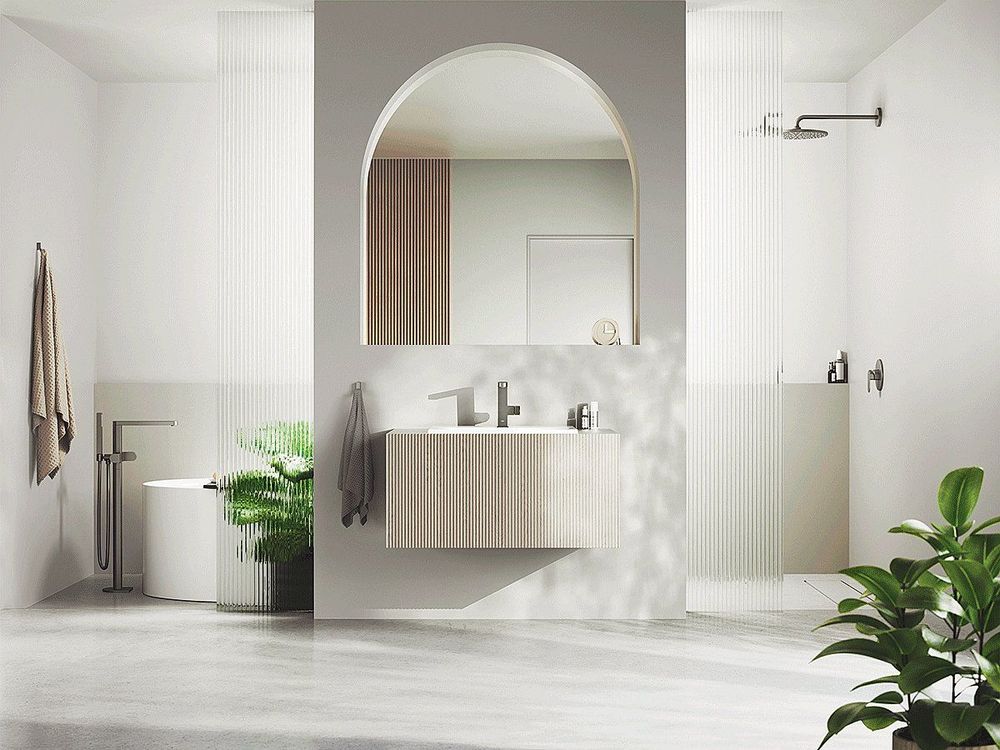
Material choices establish the character of the room. Cold grey, brilliant white and highly polished finishes are giving way to warmer shades and surfaces with visible texture. Sand, clay, mushroom, terracotta, moss and soft brown bring depth without overwhelming a compact space. Creamy stone, honed marble, handmade tiles and timber-effect cabinetry introduce variation that becomes more apparent as the light changes.
Interior designer Rebecca Hughes describes the direction as one of warmth and tactility, with creamy veined stone and honed finishes creating a softer atmosphere, according to Homes & Gardens. These materials can be used selectively. A stone vanity top, tiled shower enclosure or wooden cabinet can provide sufficient warmth when a full renovation is beyond the budget.
Median spending on bathroom renovations stood at 13,000 dollars in 2024, with major primary bathroom remodels averaging 22,000 dollars and larger bathrooms over 100 square feet seeing median spending of 25,000 dollars. More than half of homeowners chose either fully custom or semi-custom vanities over stock options during renovations, demonstrating a willingness to invest in tailored design solutions that suit their specific needs.
Mixing the finishes
Bathrooms are also becoming less perfectly matched. Using one finish for every tap, handle, light and accessory can make a room feel flat. Brushed nickel, polished chrome, aged brass and darker metals can sit together when their tones are repeated with some discipline.
Polished nickel has emerged as a notable finish for 2026, with designer Shea McGee naming it her strongest bathroom prediction in a recent Homes & Gardens interview. Its gentle sheen works particularly well with stone, timber and glazed tile.
Lighting the space
Lighting deserves the same attention as flooring or sanitaryware. A single bright ceiling light may illuminate the room, yet it rarely serves every purpose well. A successful scheme combines general lighting with sconces beside the mirror, focused light around grooming areas and softer illumination for evening use.
Dimmers allow the room to change through the day. Warm bulbs between 2700K and 3000K create a flattering, relaxed effect, while good task lighting around the mirror ensures that skincare, shaving and make-up remain easy.
Clutter under control
Storage plays an equally important role in the way a bathroom feels. Cluttered counters can make even a large room appear cramped. Drawers with internal dividers, mirrored cabinets, recessed cupboards and built-in shelves give everyday products a fixed place.
Storage should be planned around routines. Frequently used items belong close to the basin, towels need accessible shelves, and cleaning supplies can be concealed in a deeper cabinet. Electrical sockets inside cabinets can also keep toothbrushes, shavers and styling tools off the counter while they charge.
Personal details
Personality can then be introduced through details that are easy to change. A framed print, patterned towels, a ceramic stool, a vintage mirror or a small cordless lamp can soften the functional elements. Plants suited to humid conditions add colour and texture. Fragrance should remain restrained, especially in a small or poorly ventilated room.
Most homeowners turn to professionals for bathroom renovations, with general contractors hired by 45 per cent, bathroom remodellers by 20 per cent and cabinetmakers by 16 per cent. The complexity of integrating lighting, plumbing, ventilation and accessible features makes professional guidance valuable.
The most successful bathroom does not depend on its size or the cost of its fittings. It comes from understanding how the room is used and removing the small irritations that interrupt the experience. Better light, clear surfaces, comfortable materials and well-placed storage can transform an ordinary routine. The result is a bathroom that supports daily life and feels unmistakably part of the home.