When wardrobes become time capsules: A personal reckoning with decades of unworn clothes
A Dubai editor confronts her overstuffed wardrobe containing multiple versions of herself across changing sizes, unworn shoes and memories she cannot discard, reflecting a struggle shared by millions of women worldwide.
The archive of identity
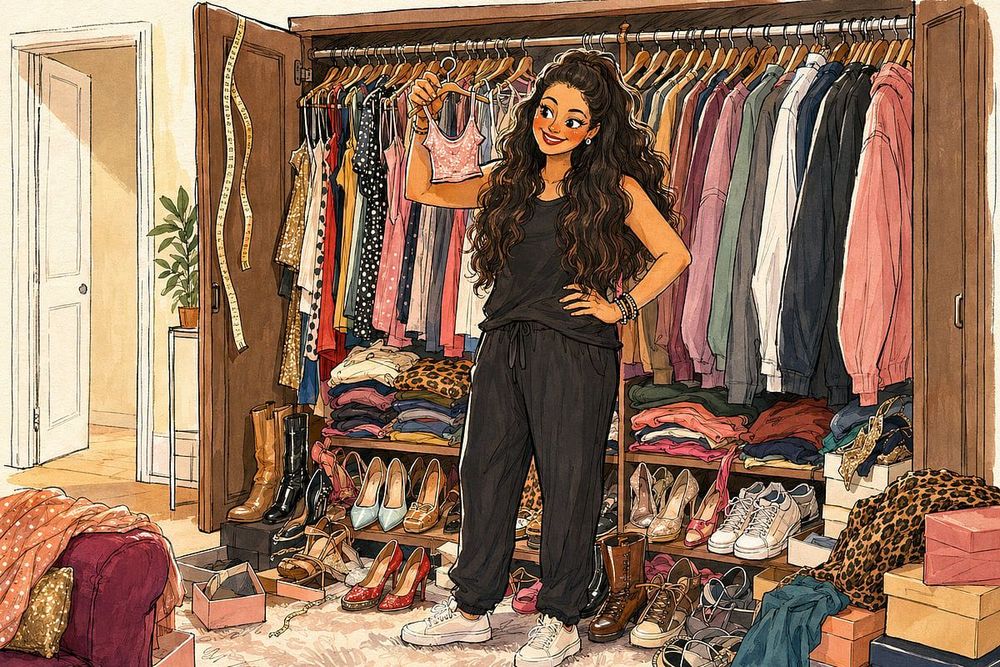
Multiple versions of the same person occupy a single wardrobe in Dubai, each representing a different era, a different body and a different set of beliefs about what clothing means. Most of these versions are considerably smaller than the woman currently paying the bills.
One version wore XS, sustained by youth, favourable genetics and the conviction that size zero represented a legitimate achievement. Another maintained an S for several years with determined optimism. The present occupant ranges between M and L, depending on the brand, the cut and how aggressively the garment has been engineered to undermine confidence.
Growing up in an era when women were expected to occupy minimal physical space while owning enough clothing to stock a department store created particular habits. A functioning metabolism handled the first requirement. An enthusiastic approach to shopping satisfied the second. XS dresses, tops, trousers and jackets accumulated with the certainty that the body had committed to permanence.
The wardrobe transformed into an archive documenting every trend briefly considered essential to identity. Party dresses from forgotten celebrations remain alongside jeans now capable of restricting blood flow and tops requiring the proportions of a twelve-year-old gymnast. They stay because they carry memories, even extremely vague ones. A dress worn once to an event with people whose names have vanished still feels like a chapter worth preserving. Apparently, autobiography can be written in polyester.
This experience is far from unique. Research indicates the average woman owns approximately 103 items of clothing but wears only about 10 percent of her wardrobe regularly, according to a 2016 survey of American women. The phenomenon exists on a spectrum, with hoarding disorder affecting an estimated 2 to 6 percent of the population and officially recognized in psychiatric diagnostic criteria since 2013. For most people, attachment to clothing falls somewhere between normal sentimentality and clinical concern.
The shoe problem
Footwear presents an entirely separate challenge. Practical considerations have never governed shoe purchases. An attractive pair immediately generates an entire imagined future of dinners, holidays, glamorous arrivals and admiring attention. Reality typically involves wearing them twice, developing blisters and relegating them to storage where they await an unlikely comeback.
Several years ago, more than 100 pairs departed in cargo shipments to another country. Their ultimate fate remains unknown and uninvestigated. They may have found appreciative new owners. They may be worn by strangers. Ignorance provides protection from uncomfortable truths.
A well-meaning husband once attempted intervention, pointing to garments untouched for years and questioning their continued residence. This represented an amateur miscalculation. Need has never factored into the relationship with clothing. A sequinned jacket might prove essential for an unexpected invitation to perform with a glam-rock band. Appeals to conscience, storage limitations and logic met with wardrobe reorganization creating the illusion of space. He has since accepted that the wardrobe operates under separate jurisdiction.
The narrative shift
Age eventually entered the equation. A comfortable S persisted for years until 2023 brought bodily expansion. The initial response involved denial, attributing changes to brands, fabric, laundry settings and possibly an international conspiracy targeting waistbands.
The narrative eventually shifted. The goal became building muscle rather than maintaining slimness. This sounded purposeful and athletic, considerably more appealing than acknowledging hostile trousers. Weight training provided excellent justification for larger clothing. Tops required room around chest and arms. Oversized garments became fitness equipment. M and occasionally L arrived with the gravity of medical diagnosis.
Scientific research offers context for these changes. While popular belief holds that metabolism slows significantly after age 30, studies show it actually remains stable through the 20s, 30s, 40s and 50s, declining substantially only after age 60. However, body composition does shift, with body fat increasing by an average of 1 percent annually beginning in the fourth decade of life, particularly affecting women. These physiological changes occur regardless of metabolism.
The wardrobe now contains garments spanning decades and multiple belief systems. The XS section represents historical fiction. The S section embodies optimism. The M and L section accommodates breathable reality.
The donation dilemma
Return to former sizes appears unlikely. Even with weight loss, shoulders and arms have established different plans. Those tiny tops would now require rescue teams and generous amounts of cooking oil for removal.
In Dubai and across the UAE, numerous charitable organizations accept clothing donations, including Emirates Red Crescent, Beit Al Khair Society, Dubai Cares and Thrift for Good. Some offer convenient home pickup services through mobile apps. Companies have been contacted. Questions about timing and collection areas have been asked. Then they request a collection date and the connection mysteriously fails.
The sensible solution involves letting go. This makes intellectual sense. Emotionally, attachment persists to a dress last worn when mobile phones still had physical buttons. The broader context adds weight to the decision. The fashion industry generates approximately 10 percent of global carbon emissions, making it the second-largest consumer of water worldwide and exceeding combined emissions from international aviation and maritime shipping. Modern clothing is worn an average of only 7 to 10 times before disposal, a decline of more than 35 percent in just 15 years, reflecting the rise of fast fashion consumption patterns. Holding onto clothes for decades stands in stark contrast to this throwaway culture.
For now, everything remains. Current clothes compete for space with former selves, imaginary future occasions and shoes awaiting cinematic returns. The wardrobe opens each morning to reveal the complete history of questionable decisions and the declaration that there is absolutely nothing to wear.