Nepal-Tibet glacier collapse leaves 633 dead and nearly 3,000 missing
A catastrophic wall of water and debris triggered by a massive glacier collapse has devastated the Himalayan border region between Nepal and Tibet, with rescue operations hampered by fears of renewed flooding.
Nepal-Tibet glacier collapse leaves 633 dead and nearly 3,000 missing
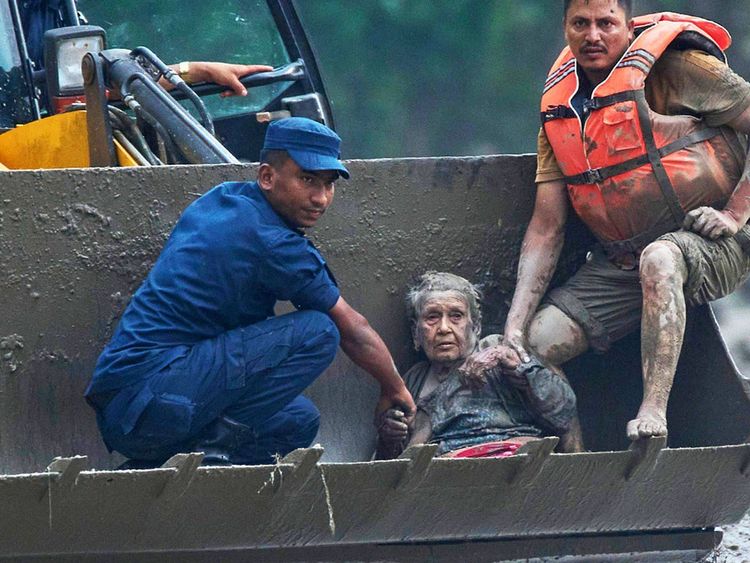
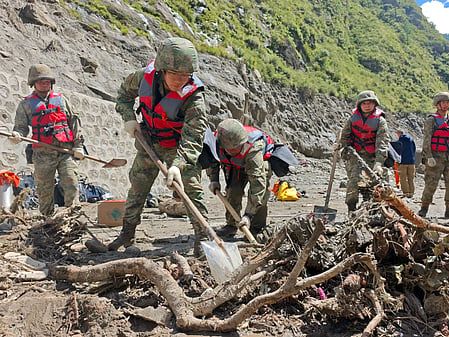
Rescuers in Nepal and China continued their desperate search Saturday for thousands of people missing after a devastating glacier collapse unleashed a tsunami-like torrent through the Himalayan region, destroying entire villages and critical infrastructure.
The disaster began Wednesday when a massive section of glacier broke away from Langtang Lirung mountain at approximately 5,200 meters elevation on the Nepal-Tibet border. The ice and rock mass plunged about 1,200 meters onto the valley floor before crashing into the Lhende River, triggering catastrophic flooding downstream.
The death toll has reached 633, with Nepal reporting 626 fatalities and Tibet confirming seven deaths. The number of missing persons has soared to nearly 3,000, including 2,426 people unaccounted for in Nepal and 554 in Tibet. Among those missing are 933 hydropower workers, trekkers, and Hindu and Buddhist pilgrims traveling to Tibet's sacred Mount Kailash.
Unprecedented speed and scale
Water levels in the Trishuli River rose by as much as 9 meters in just 30 minutes during the flood event, according to monitoring stations. The catastrophic speed left little time for evacuation and explains the high casualty toll.
Initial seismic readings registered magnitude 5.2, leading authorities to initially suspect an earthquake. However, the US Geological Survey later determined that the seismic signal was generated by the massive landslide and glacier collapse itself, not a tectonic earthquake.
All the settlements near the river were swept away. There is nothing left.
Survivor Buddhi Ram Dangol told AFP.
Infrastructure devastation
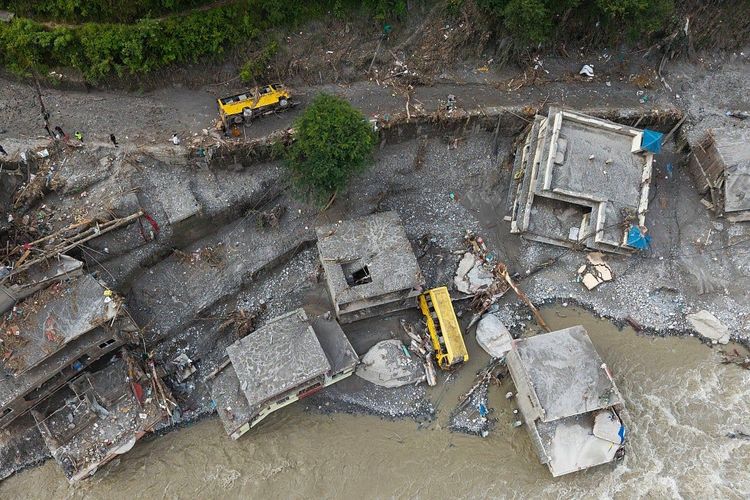
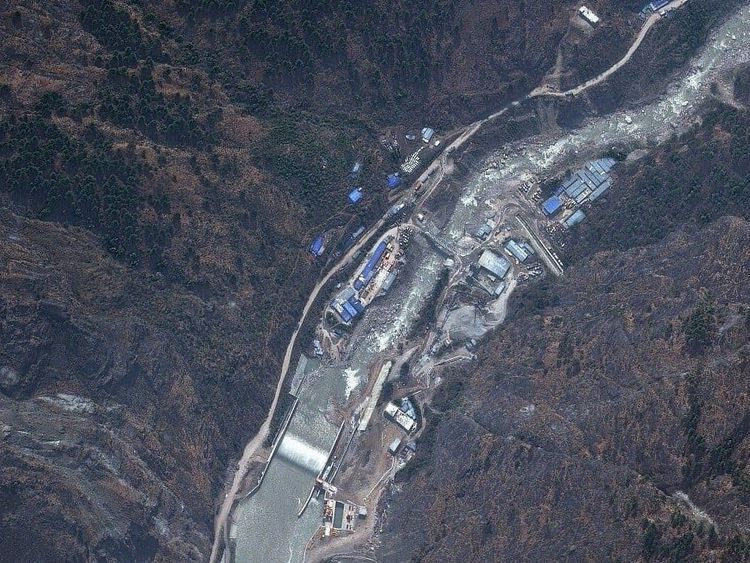
The floodwaters completely obliterated the Gyirong border crossing between Nepal and China's Tibet region. Aerial imagery shows nothing remaining of the checkpoint or surrounding buildings, with the entire area covered in debris and thick mud. The destruction has severely hampered rescue operations and information flow between the two countries.
Major hydropower projects along the Trishuli valley have been decimated. The Upper Trishuli-1 hydropower project, a $647 million 216-megawatt facility that was 84 percent complete and scheduled for completion in December 2026, suffered massive damage with over 90 percent of the upper dam reportedly destroyed.
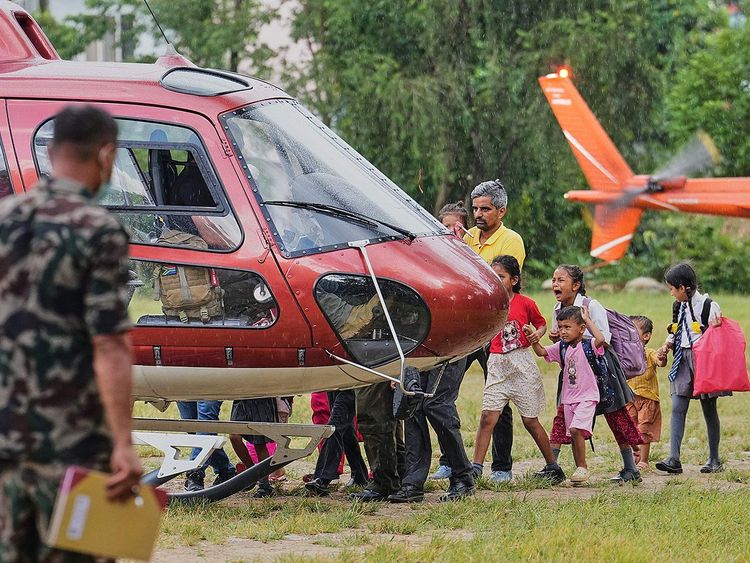
The military located people trapped in the tunnel of the Trishuli 3A hydropower project and dispatched helicopters to extract survivors, though locating entry points to the tunnel has proven challenging. Some 350 workers and residents have been brought to safety from the site, but efforts continue to rescue more than a hundred still trapped in the area.
Pilgrims among the missing
Scores of Hindu devotees from across the world are among those missing on the border, as many were on a pilgrimage to Mount Kailash. The Gyirong border crossing route serves as a major pilgrimage path, with devotees typically crossing from Kathmandu through the Rasuwagadhi-Gyirong border before reaching the sacred mountain.
Sivaranjani Muthunathan, 46, was traveling by bus with 56 others toward the Chinese border when they became trapped.
Then there was fog, smoke, something that seemed to suddenly engulf us.
She told AFP on Friday, showing a phone video of a torrent surging toward her. Around them, vehicles were swept away or buried under mud.
One by one, we also climbed out through the driver's side.
Then scrambled up a hill, she said.
Authorities said they evacuated 555 stranded tourists and 499 Chinese residents from Tibet.
Ongoing threats
Emergency teams racing to retrieve survivors face the threat of further flooding. The deluge of ice and mud caused huge lakes to form, and one formation became a direct threat to rescue workers. Nepali police urged all rescuers to immediately move to a safe location, saying they received information that a water dam has burst again on the Tibetan side.
In Tibet, Chinese authorities suspended rescue operations at the hardest-hit area of Gyirong over the risk of renewed flooding before later saying the threat had eased. State news agency Xinhua reported early Saturday that two villagers had been rescued in the area.
Pattern of increasing risk
Nepal has experienced 26 glacial lake outburst flood events since the 1970s, with projections indicating rising frequency and intensity under future climate scenarios. The country currently has 47 glacial lakes classified as potentially dangerous, with four lakes—Thulagi, Lower Barun, Lumding Tsho and Hongu 2—identified as urgent priorities requiring intervention.
Buddha Tamang, a worker who survived only because he was inside a tunnel at the dam where he worked when the flood struck, described a disaster that unfolded with terrifying speed.
The senior officers working on the other side, they were all swept away.
Tamang, who was airlifted Thursday after being marooned for more than 24 hours, told AFP.
In India, authorities said they had recovered seven bodies from rivers flowing from Nepal, believed to be flood victims swept downstream.
The Red Cross said the trauma of the catastrophe has been enormous, and as many as 93,000 people may have been affected. The death toll is expected to rise as search operations continue.
Samjhana Thing, who has been waiting three days for news of her missing brother, expressed the anguish of thousands of families.
We don't know anything. Hopefully he is in a safe place.
She said.