Families mourn victims of Haiti gang massacre as community remains under threat
More than 100 mourners attended funerals in Kenscoff, Haiti, for victims of a gang attack that killed 47 people and kidnapped over 50 others, as the community remains traumatized and fearful of further violence.
Families mourn victims of Haiti gang massacre as community remains under threat
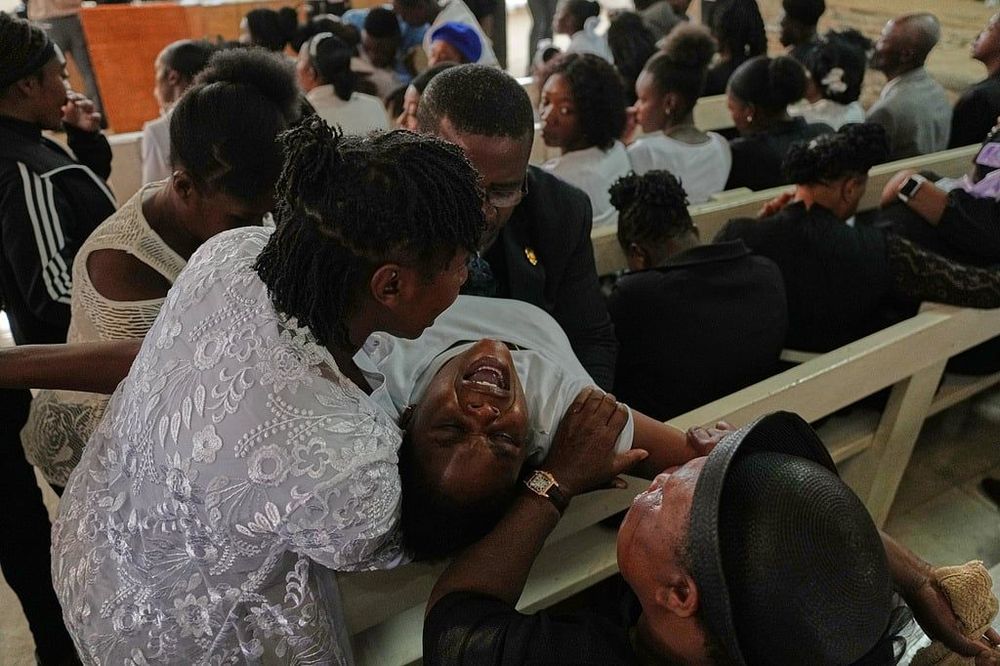
Grief-stricken families gathered Wednesday at a church in Kenscoff to bury five relatives killed in one of Haiti's deadliest gang attacks this year, as survivors expressed anger at police and fear that violence could return to their mountain community.
More than 100 mourners attended the funeral service for two brothers and three of their cousins at the same church where gang members had executed dozens of people just days earlier. The August 23 rampage left 47 dead and more than 50 kidnapped in the farming community located approximately 10 kilometers southeast of Port-au-Prince in the foothills of the Chaîne de la Selle mountain range.
The attack began when some 150 heavily armed gang members stormed the area, according to Marta Hurtado, a spokesperson for the UN Human Rights Office. The assailants first killed 13 people who attempted to flee, then pursued 50 others who had taken refuge inside the church. Gang members executed 22 people in the church courtyard and 12 more behind the building.
Following intervention by community leaders and UNICEF, a gang leader agreed to release six children and seven women several days after the mass kidnapping.
Patrique Saint-Hilaire, an official with Haiti's Civil Protection Agency in Kenscoff, said the government plans to provide support to affected families. So far, 17 of the 47 victims have been buried.
"Kenscoff is still under red alert. People are very traumatized."
The elevated community, sitting at approximately 1,500 meters and recognized as the highest permanent settlement in the Caribbean, had been considered relatively peaceful compared to areas closer to the capital. Residents and relatives of victims have organized protests and vigils, directing blame at police for failing to prevent the massacre. Haiti's National Police said it is investigating whether the attack occurred "due to complicity or negligence."
Tensions remained high during Thursday's funeral service, with mourners declining to speak to journalists. After the ceremony, some people attacked several reporters, including an Associated Press photographer who required medical attention.
Nationwide crisis deepens
The Kenscoff attack represents the latest escalation in a humanitarian catastrophe affecting the entire nation. An estimated 6.4 million people in Haiti will require emergency humanitarian assistance in 2026, representing more than half of the country's population, according to the UN Office for the Coordination of Humanitarian Affairs.
Gang violence has displaced a record nearly 1.5 million people across Haiti, with more than half of those displaced being women and girls, according to the International Organization for Migration. The organization also reported that more than 110,000 Haitians have been forcibly returned to the country since the beginning of 2026, adding further pressure to an already overwhelmed system.
From January to June 2026, more than 3,050 people were killed nationwide, according to UN figures. Gangs now control an estimated 70 percent of Port-au-Prince and have expanded their reach into Haiti's central region and beyond, including attempts to seize territory in areas like Kenscoff.
The security situation comes as Haiti prepares for its first general elections in a decade. Presidential and legislative elections are scheduled for December 13, 2026, with a possible second round set for February 21, 2027. The nation has not held national elections since October 2016, and has been without an elected president since July 2021, when President Jovenel Moïse was assassinated.
International response evolves
The international community has struggled to address Haiti's security crisis. The Kenya-led Multinational Security Support mission concluded in April 2026 and was replaced by a new Gang Suppression Force authorized by the UN Security Council, with a mandate to reach 5,500 personnel. However, gang violence has continued to spread despite these efforts.
Security experts estimate that around 300 criminal groups are now active in Haiti, with access to between 270,000 and 500,000 illegally circulating firearms, the majority controlled by gangs, according to the Global Centre for the Responsibility to Protect.
As families in Kenscoff continue to mourn their dead and fear for their safety, the community's ordeal highlights the broader collapse of security and governance across Haiti, where millions face violence, displacement and an uncertain future.