Anak Krakatau eruption grounds 1,500 flights across Indonesia, stranding 170,000 passengers
Mount Anak Krakatau's continuous eruptions have forced the closure of eight Indonesian airports including Jakarta's main hub, disrupting air travel and prompting school closures as volcanic ash spreads across Java and Sumatra.
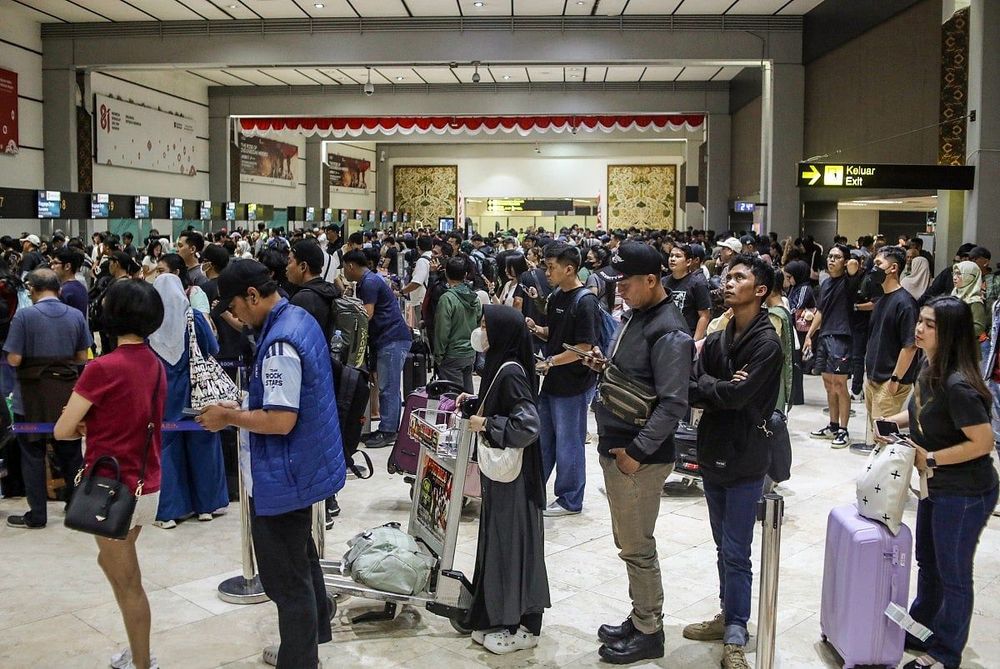
Indonesia's Anak Krakatau eruption grounds 1,500 flights, leaves 170,000 passengers stranded
More than 1,500 flights have been cancelled across eight Indonesian airports, leaving approximately 170,000 passengers stranded after Mount Anak Krakatau unleashed heavy volcanic ash clouds that have also disrupted education and local fishing activities.
The Indonesian Ministry of Transportation ordered the temporary closure of Jakarta's Soekarno-Hatta International Airport through Sunday night due to airborne ash, affecting 964 flights at the country's main hub alone. The airport, which recorded 13.49 million passengers in the first quarter of 2026 and normally handles around 177,000 passengers daily, represents the most significant disruption point in the crisis.
Erupting continuously since Friday in the Sunda Strait between Java and Sumatra, the volcano has produced massive ash plumes extending up to 15,000 metres high. The volcano experienced two significant eruptions early Sunday morning—one lasting approximately 30 seconds at 3:53 am, followed roughly three hours later by another eruption lasting about 16 seconds. Indonesian authorities described the latest activity as the strongest phase of the volcano's current eruptive period.
Aviation safety concerns prompt widespread closures
Volcanic ash poses severe risks to aircraft because it is composed of pulverized rock, glass particles, and minerals that are extremely hard and abrasive. When ingested by jet engines, the ash can melt at combustion temperatures and re-solidify on cooler engine parts, potentially causing catastrophic engine failure. Between 1953 and 2009, there were 79 documented encounters between aircraft and volcanic ash clouds worldwide, including 26 incidents involving significant to very severe aircraft damage and nine cases where engine failure occurred during flight.
Ash from the eruption has spread toward Jakarta, western Java and Lampung province on Sumatra, with wind patterns determining the extent of the dispersal. Aviation authorities suspended operations at affected airports, putting aircraft and passengers at risk from ash clouds reaching as high as 50,000 feet.
Schools close as communities take precautions
In response to the ashfall, authorities in Jakarta and Lampung mandated remote learning for schools while advising residents to limit outdoor exposure and wear protective masks. The eruption has also impacted local fishing communities operating in the Sunda Strait.
Mount Anak Krakatau, whose name literally means "Child of Krakatau" in Indonesian, emerged from the sea in 1929 within the caldera created by the catastrophic 1883 eruption of the original Krakatau volcano. That historic eruption killed more than 36,000 people, most as a result of tsunamis that swept the adjacent coastlines of Sumatra and Java, making it one of the deadliest volcanic eruptions in recorded history.
More recently, in December 2018, Anak Krakatau experienced a major flank collapse that generated a tsunami killing at least 437 people along the coasts of Java and Sumatra—the deadliest volcanic tsunami since the 1883 Krakatau eruption.
Multiple volcanoes on high alert
The current crisis extends beyond Anak Krakatau. Mount Semeru in East Java, the highest volcano on the island and one of Indonesia's most active, recorded a fresh eruption with a one-kilometre ash column. Semeru has experienced hundreds of eruptions throughout 2026, including pyroclastic flows reaching up to six kilometers from the summit.
Five Indonesian volcanoes, including both Anak Krakatau and Mount Semeru, are currently at Level 3 alert status under Indonesia's four-level volcano warning system, where Level 3 represents the second-highest warning level. Indonesia lies along the Pacific Ring of Fire and is home to approximately 127 active volcanoes, more than any other country in the world.
Mount Anak Krakatau had shown increasing activity since Friday, September 4, with the volcano's behavior escalating through the weekend before reaching the current critical phase that has paralyzed air travel across the region.