Honda trainer demonstrates electronic parking brake response at highway speed
A brief pull produced a noise; a sustained pull put the car into neutral. Those were the results Honda product trainer Jason, known as HondaPro Jason, showed in a TikTok demonstration of an electronic parking brake at highway speed. The response is not universal: other vehicles and tests described by automotive sources involve controlled braking.
 Mariam Al Mansoori
Two inputs, two responses
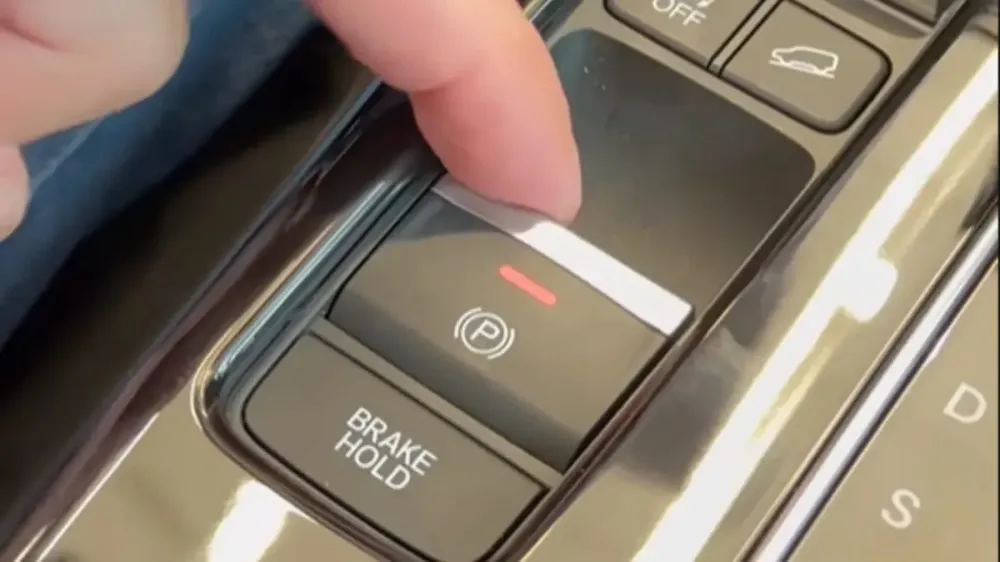
Jason's video compares a quick pull and release of the electronic parking brake switch with holding it up while driving. He says the momentary input makes a sound without stopping the car, reassuring viewers about an accidental activation by a driver or passenger.
When he holds the switch, the vehicle shifts into neutral rather than coming to a stop. The driver can then select Drive again and continue. Viewers responded with thanks and jokes about having wondered what would happen without being willing to try it themselves.
The result illustrates why drivers should not expect an identical response from every electronic parking brake. Operation depends on the vehicle and its braking systems.
Controlled stops in other tests
Consumer Reports reached a different result when it tested electronic parking brakes across a range of modern vehicles on a closed track: the systems brought the vehicles to a stop. In comments quoted by Capital One Auto Navigator, reviewer Mike Crossen called the experience "a noisy stop" and said it fell "somewhere between a panic stop and normal braking." Test drivers had to keep holding the switch or button until the vehicle stopped completely.
Ecoportal describes another demonstration involving two German police officers who activated an electronic parking brake at speed. Their car decelerated to a straight, controlled stop without skidding. According to the outlet, the electronic control unit interpreted the input as a possible emergency and sent the request through the main braking system. All four wheel brakes engaged, while ABS prevented wheel lockup.
How emergency braking can work
A traditional parking brake generally acts on the rear wheels. An aggressive pull while moving can lock those wheels and make the car harder to control, especially at higher speeds. Electronic parking brakes can instead coordinate with the vehicle's braking and stability systems, providing an emergency function if the conventional brakes fail.
HELLA's technical documentation describes a dynamic emergency braking function that remains active only while the driver holds the switch; releasing it ends the braking. The stated maximum deceleration is 8 m/s². Below 8 km/h, the parking brake itself supplies the braking force. At higher speeds, the ESP system distributes pressure among all four wheel brakes.
In the system HELLA describes, engine torque is also reduced if the accelerator is pressed, and active cruise control is switched off. If the driver accelerates again, emergency braking is canceled.
LegalClarity describes a different arrangement for a pull-and-hold input while moving. In its account, an electronic control unit uses wheel-speed sensor data to modulate brake pressure at the rear axle, operating similarly to anti-lock brakes rather than simply locking the wheels. It describes strong, controlled deceleration without wheel lockup, with braking canceled as soon as the driver releases the switch.
Operating mode can matter, too. According to ecoportal, the 2025 Ford Mustang Dark Horse has an electronic drift brake that functions like a standard electronic parking brake in everyday driving. In track mode, software changes its response to apply high-force, nearly instantaneous clamping at the rear wheels, rather than sending the request through the stability system for a controlled stop.
The requirements when parked
Electronic switches have increasingly replaced the traditional handbrake lever beside the seat, but keeping a parked vehicle stationary remains a required function.
According to LegalClarity, US Federal Motor Vehicle Safety Standard 135 requires passenger cars and light vehicles sold in the United States with a gross vehicle weight rating up to 3,500 kg (7,716 lb) to have a parking brake independent of the main hydraulic braking system. With the transmission in neutral, it must keep the vehicle stationary for five minutes on a 20 percent grade in both forward and reverse orientations.
The brake must remain engaged through purely mechanical means, including when its actuation is electronic.
Jason's demonstration is not something drivers should recreate on public roads. Such testing should be left to trained professionals under controlled conditions.