Dubai RTA Updates AI Strategy With Target to Cut Congestion by 3% to 5%
Dubai's Roads and Transport Authority (RTA) has announced an updated artificial intelligence strategy to ease traffic, speed up licensing and improve public transport operations. The authority expects the two-and-a-half-year implementation program to deliver more than AED 300 million ($81.7 million) in annual added value.
 Mariam Al Mansoori
Scope, targets and early progress
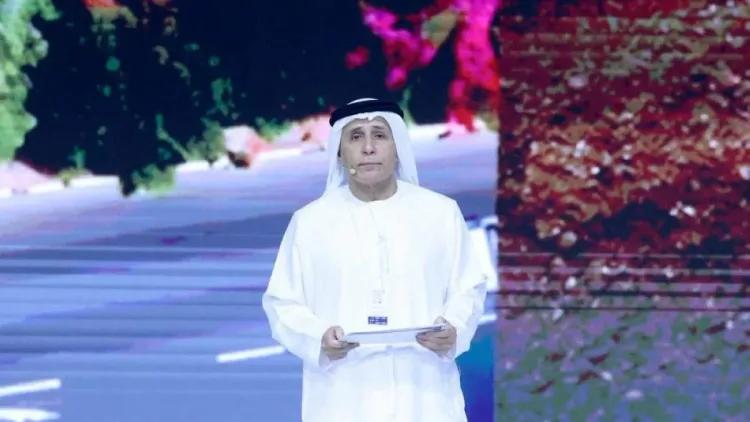
Launched by Mattar Al Tayer, RTA's director-general and chairman of its Board of Executive Directors, the strategy spans 41 areas of the authority. It calls for 40 AI products and a shift of 50% of operations and services to an agentic AI ecosystem, alongside four foundational projects.
The November 2026 update builds on RTA's Artificial Intelligence Strategy 2030, launched in April 2025. That program comprises 81 projects and initiatives organized around six pillars: people happiness, seamless and innovative mobility, intelligent traffic management, cognitive licensing, future-proof organization, and asset excellence.
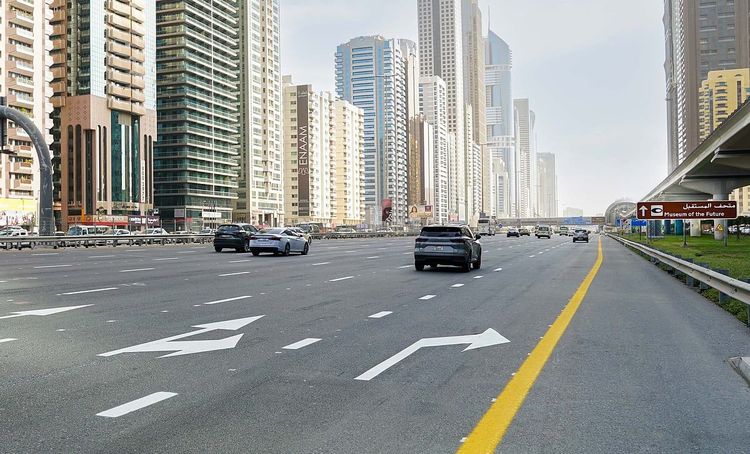
The updated strategy sets a congestion reduction target of 3% to 5%. Other goals include cutting the time spent processing cases and complaints by 20% to 30%. At Customer Happiness Centres, RTA wants waiting times to fall by 14% to 16% and service delivery times by 15% to 20%. It also targets 10% to 20% fewer accidents involving newly licensed drivers, procurement cycles that are 10% to 15% shorter, and savings of 10% to 15% in operational and engineering working hours.
Al Tayer described the update as a move beyond AI tools that assist existing operations toward systems that can forecast outcomes, inform decisions and handle services from start to finish. He said advanced technology would support road and public transport planning and management, as well as more personalized services.
The first two implementation waves encompass 11 business areas: Planning and Business Development, Vehicle Licensing, Right-of-Way, Traffic, Contracts and Procurement, Customer Happiness, Bus Operations and Maintenance, Driver Licensing, Roads, Roads and Facilities Maintenance, and Human Resources and Development.
Ahmed Hashem Bahrozyan, CEO of RTA's Corporate Technology Support Services Sector, said planning for the first wave was complete. RTA had identified more than 180 use cases and quick-win initiatives across 11 business areas, with 12 departments involved in implementation. Eleven of the planned 40 products have launched: five each in Planning and Business Development and Vehicle Licensing, and one in Right-of-Way.
Mahboub moves from inquiries to transactions
An upgrade to Mahboub, RTA's smart chatbot, allows customers to carry out transactions instead of using it only for answers to questions. Its agentic AI services are available through the authority's app, website and WhatsApp.
Mahboub offers five vehicle licensing services and about 100 information services. Connections to UAE PASS and Dubai Pay allow customers to complete vehicle-related transactions in under five minutes.
RTA's goals are to double service delivery speed and increase Mahboub's share of services to 10% by the end of 2026, then to 50% by the end of 2027.
Traffic control and bus planning
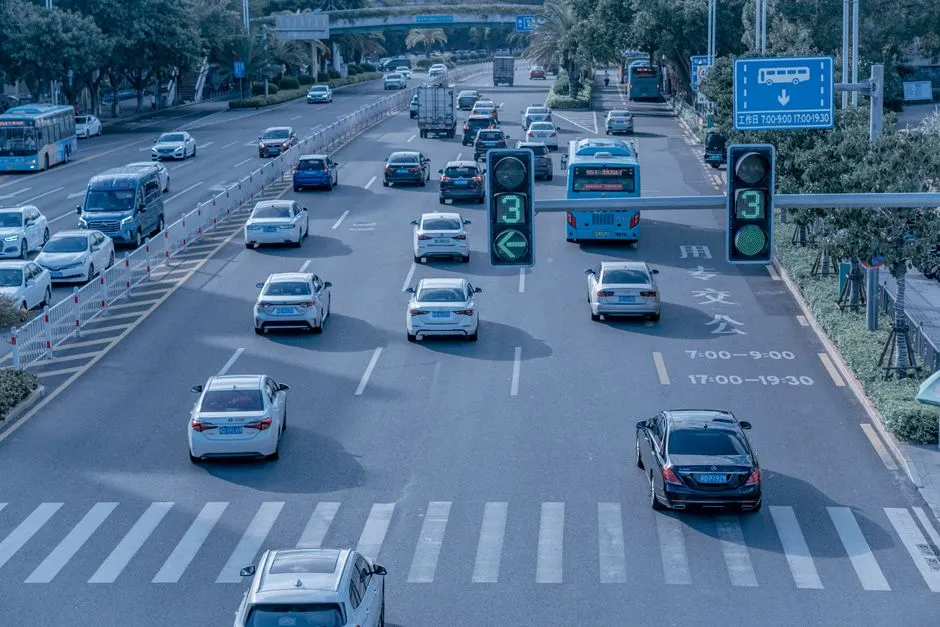
The congestion target follows an earlier traffic signal project. In February 2025, RTA began work on UTC-UX Fusion, a control system combining AI, predictive analytics and digital twin technology. The authority planned deployment at all major Dubai intersections and anticipated completion in the first half of 2026. That project's stated target was a 10% to 20% reduction in congestion at intersections.
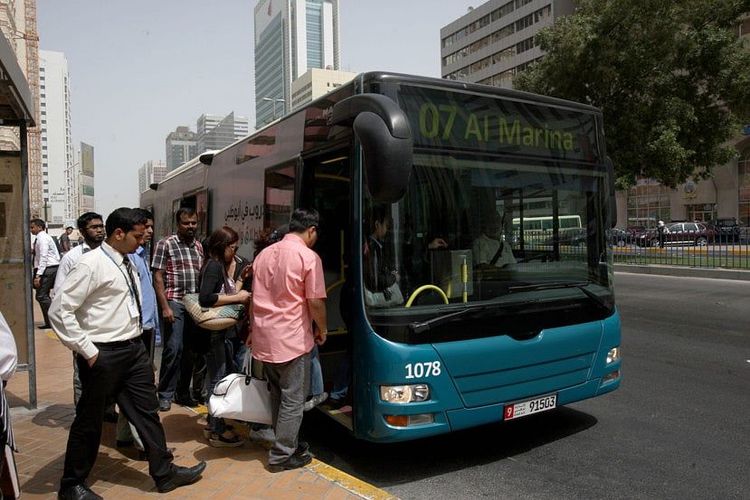
For buses, the Public Transport Agency and the AI and Data Science Centre are implementing a Network Planner powered by approximately 20 AI agents. The system will assess network performance, locate gaps in service and test alternatives before recommending route and operational changes.
RTA wants the planner to make analysis and assessment five times faster and shorten the time required to introduce service changes from approximately 60 days to 48 days. It also targets an improvement of up to 10% in on-time performance and an increase of 3% to 7% in the cost recovery ratio. The authority said the intended benefits are a better passenger experience and more attractive public transport.
A separate AI-powered Decision Support System launched in July 2026 monitors more than 1,100 buses and supports 26 operational scenarios. According to RTA, it reduced the time required for decisions and bus deployment from 30 to 60 minutes to less than one minute.
The Public Transport Agency developed that system through its Bus Operations Control Centre with the Artificial Intelligence Centre. It combines real-time data, machine learning and optimization algorithms to help bus operations respond to changes on the Dubai Metro and Dubai Tram.
Permit reviews, licensing audits and payment checks
The updated strategy also addresses applications for work near RTA assets. An agentic AI-powered electronic No Objection Certificate (eNOC) System will guide applicants through submissions, check their documents and supply engineering insights for reviewers. The Traffic and Roads Agency developed it with the Corporate Technology Support Services Sector.
RTA issues approximately 130,000 of these certificates annually, while demand is growing by around 11%. For the eNOC system, the authority targets a threefold acceleration in reviews, annual savings of more than 700,000 days, an improvement of over 5% in customer satisfaction and revenue growth of 5% to 10%.
Licensing checks are the focus of the Agentic AI Auditor, developed by the Licensing Agency and the AI and Data Science Centre. Using optical character recognition and machine learning, it examines documents for anomalies and recommends corrections.
The auditor covers seven priority services. RTA aims to review every document within that scope, make auditing up to 21 times faster and eliminate more than 25,000 hours of manual work each year.
Another tool, the Outsourcing Contracts Accountant, checks contracts before monthly payments receive approval. Developed by the Finance Department with the AI and Data Science Centre, the agentic AI system reviews attendance, work outputs and adherence to contract terms.
Wider 2030 goals and data infrastructure
The earlier Artificial Intelligence Strategy 2030 set distinct targets for travel, productivity and costs. It sought a 20% to 30% reduction in travel time through optimized traffic signals and intelligent pedestrian mobility, and a 25% to 40% productivity increase through AI tools for employees.
That strategy also targeted cost reductions of 10% to 20% using AI platforms for asset management, predictive maintenance and driver assessment. Its other goals included improving customer happiness by 35% and partner compliance by 30% to 50%.
RTA's data infrastructure predates both strategy announcements. Its Big Data Platform launched in 2017 and, according to the authority, has grown at an annual rate of 30%. It now holds more than 670 terabytes, equivalent to over 235 billion pages, and connects with 49 corporate systems while supporting more than 280 data points.
Since 2017, RTA has implemented more than 40 big data and AI use cases. These include predicting bus maintenance needs, analyzing the sentiment of passenger feedback and forecasting parking occupancy.
Employee tools and technology partnerships
Bahrozyan also reported wider employee use of Microsoft Copilot. Active usage exceeded 90% among its users, with a reported 10% saving in working time.
RTA has submitted 34 works for intellectual property registration and received approval for the "Rail AI Chatbot" work. It also won the AI World Series 2026 Award.
The authority has developed eight strategic initiatives with global technology partners, including Huawei, Boston Consulting Group and Microsoft. The updated strategy also emphasizes staff training, specialist AI expertise and broader use of intelligent tools across departments, with the stated aims of improving efficiency, supporting Dubai's growing transport network and advancing its use of mobility technology.