Philippines' ₱457-billion Maton hydropower project faces resistance from indigenous communities and environmental groups
The proposed 2,000-megawatt Maton pumped-storage facility in Apayao province could power over 2 million households, but indigenous residents and environmentalists have raised concerns over consent processes, habitat disruption and water quality impacts.
Philippines' ₱457-billion Maton hydropower project faces resistance from indigenous communities and environmental groups
A major hydropower initiative that could supply electricity to more than 2 million Filipino households is encountering significant opposition from local residents and indigenous communities concerned about environmental disruption, habitat loss and water quality in the project area.
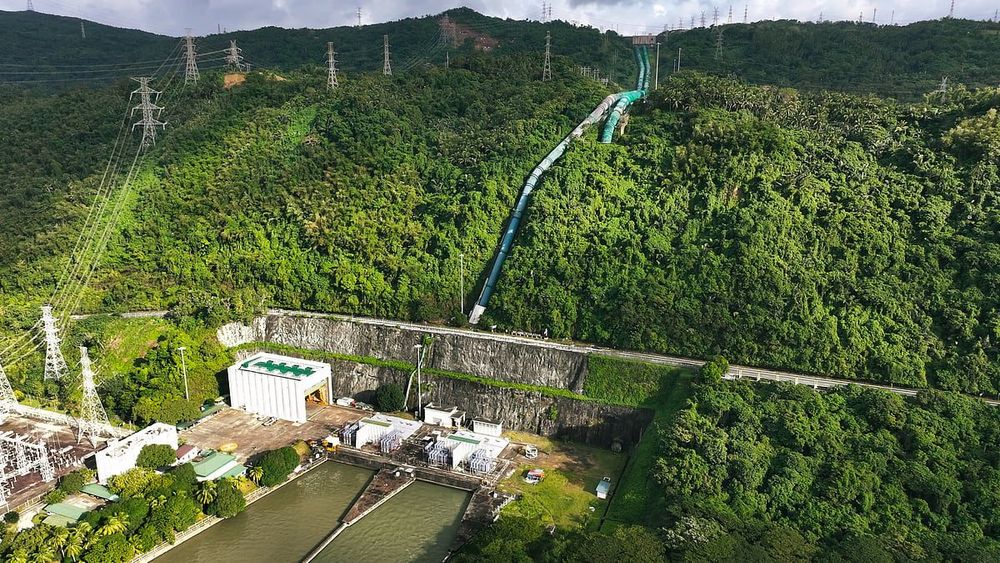
The Maton Pumped-Storage Hydroelectric Project, a planned 2,000-megawatt facility in Apayao province, is designed to function as a large-scale energy storage system that would help stabilise the Luzon electricity grid and enable greater integration of intermittent renewable sources such as solar and wind. The project carries an estimated price tag of ₱457 billion.
The facility would pump water from a lower reservoir to an upper reservoir during periods of low electricity demand, then release the water to drive turbines almost instantly when power needs surge. This pumped-storage approach is gaining traction worldwide as countries seek grid flexibility to accommodate variable renewables. Global pumped storage hydropower capacity surpassed 200 gigawatts for the first time in 2025, with a record 11.7 gigawatts added during the year, according to the International Hydropower Association's 2026 World Hydropower Outlook. An additional 243 gigawatts of pumped storage capacity is currently under construction globally, with the International Renewable Energy Agency projecting that over 420 gigawatts will be required by 2050 to meet net-zero scenarios.
Energy transition context
The Maton project comes as the Philippines accelerates its renewable energy deployment. The Department of Energy reported that the country installed a record 794.34 megawatts of renewable energy capacity in 2024, exceeding the combined capacity added from 2021 to 2023. Coal-fired power generation in the Philippines declined 5.5 percent in the first half of 2025, the first decline in nearly two decades, with coal's share of the power mix falling to 57.2 percent, according to the Independent Electricity Market Operator of the Philippines. Coal currently accounts for roughly 60 percent of actual electricity generation in the country.
The Philippines aims to triple its renewable energy capacity by 2030. The National Renewable Energy Program has set a target of 15.3 gigawatts from a 2010 baseline of 5.1 gigawatts. The country ranks third globally in geothermal energy production, with an estimated potential geothermal capacity of around 4,064 megawatts and installed renewable energy capacity of 9,520 megawatts in 2024, of which nearly 3,836 megawatts came from hydropower sources.
Community and environmental concerns
During an April 29, 2025 public scoping session conducted by the Environmental Management Bureau of the Department of Environment and Natural Resources in Upper Maton, Pudtol town, residents, indigenous groups and environmental advocates raised multiple concerns about the project's potential impacts.
Stakeholders warned that diverting and cycling water between upper and lower reservoirs could alter the natural flow of the Maton and Apayao rivers, affecting fish populations, spawning habitats and downstream water quality through increased turbidity and sedimentation. The Isnag indigenous communities and their advocates cautioned that the project could impinge on ancestral domains, restrict access to traditional harvesting and cultural sites, and disrupt livelihoods dependent on the river systems.
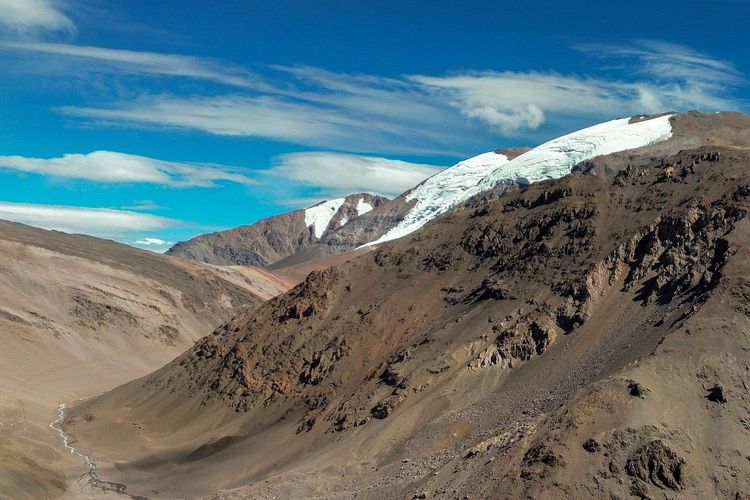
The Isnag people, also known as Isneg or Apayao, are the indigenous inhabitants of Apayao province, with a population estimated at approximately 50,000. They now comprise only about 30 percent of the province's predominantly Ilocano population. Apayao province is biologically diverse, serving as sanctuary to 139 bird species, of which 61 are endemic and four are threatened, including critically endangered rufous hornbills. The province is also home to 43 species of wild food plants and 50 species of medicinal plants used by indigenous people. In July 2024, UNESCO designated Apayao's forest areas covering 3,960 square kilometers, including the Apayao River, as a Biosphere Reserve, making it the fourth biosphere reserve in the Philippines.
Participants at the scoping session also raised questions about potential changes in surface water temperature and quality, as well as long-term effects on soil and groundwater from reservoir operations and underground works. Residents and agencies highlighted risks from tunneling, drilling and blasting, including noise, vibration, landslides and habitat fragmentation in the mountainous, forested area. Stakeholders sought assurance that the environmental impact statement would assess effects on local flora and fauna, including any threatened or endemic species that could be affected by habitat loss or altered hydrology.
History of consent controversies
Large hydropower projects in Apayao have faced scrutiny over Free, Prior and Informed Consent processes with Isnag indigenous communities. Pan Pacific Renewable Power Philippines Corporation's earlier Gened 1 and Gened 2 hydropower projects in Apayao faced allegations that signatures on key FPIC documents, including resolutions and the Memorandum of Agreement, were forged, with community leaders claiming their signatures were signed by others without their knowledge. The National Commission on Indigenous Peoples previously deferred decisions amid alleged irregularities and local opposition.
On January 15, 2021, Isnag communities of Kabugao, Apayao signed a resolution strongly opposing Pan Pacific's proposed Gened 1 hydropower project and banning the company from continuing the FPIC process, stating the dam is
undoubtedly perilous to our culture and values of oneness, our life and limb, our properties or our ancestral domain.
While the Maton project is a separate undertaking, its development in the same province by the same developer means FPIC compliance and community engagement remain critical to project timelines and social acceptance.
Project details and approvals
The Philippine Department of Energy approved converting the project from an initial run-of-river configuration to a pumped-storage hydroelectric plant on December 27, 2024, formalising Maton's role as a grid-scale storage asset rather than a conventional hydro plant. Pan Pacific Renewable Power Philippines Corporation holds Hydropower Service Contract No. 2022-02-918, awarded by the Department of Energy on March 25, 2022.
In June 2026, the Board of Investments granted green-lane status to 11 renewable energy projects totaling ₱509.2 billion, led by Maton's ₱457-billion valuation. The move is intended to fast-track permitting and approvals. As of early 2026, the Maton project had the highest proposed capacity among energy projects undergoing system impact studies with the National Grid Corporation of the Philippines.
The facility will be sited in Barangays Upper Maton and Lt. Balag in Pudtol, with associated works affecting nearby Kabugao, Apayao, along the Maton River system. If completed, it would be one of just a handful of pumped-storage hydroelectric plants in the country. The only existing facility of this type in the Philippines is the Caliraya-Botocan-Kalayaan Hydroelectric Power Plant in the provinces of Laguna and Quezon, just outside Manila. The 789-megawatt facility, the first of its kind in Southeast Asia, was energised in 1983 and serves as a critical energy buffer for the Luzon grid.
The Environmental Management Bureau said the scoping session was intended to gather issues to define the scope and terms of reference for the project's Environmental Impact Statement. Pan Pacific Renewable Power Philippines Corporation committed to incorporate the raised concerns into its environmental impact statement and to continue consultations as the review proceeds.