Endangered eagle rescued from Middle East smugglers returns to Serbian skies
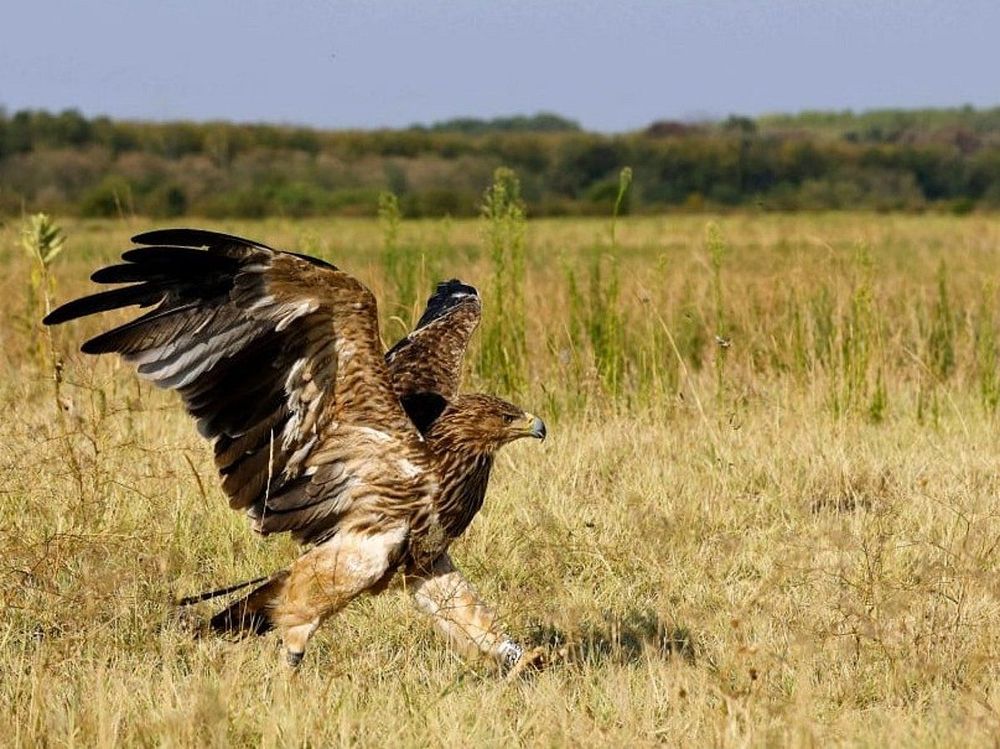
Feliks, a critically endangered eastern imperial eagle, has been released back into the wild in Serbia after being rescued from bird smugglers during his first migration, ending a months-long international recovery effort.
Endangered eagle rescued from Middle East smugglers returns to Serbian skies
A young eastern imperial eagle is once again soaring through Serbian skies after being rescued from bird smugglers who captured him during his inaugural migration journey last year, conservationists announced this week.
Feliks, fitted with a tracking device, was released back into the wild near Subotica on August 7, 2026, following a complex international rescue operation that spanned nearly a year. The eastern imperial eagle has been classified as Vulnerable on the IUCN Red List since 1994, with a global population estimated at just 3,500 to 15,000 individuals.
The young raptor's ordeal began in July 2025 when he left his nest for the first time. Conservationists tracking his movements grew concerned when his flight path deviated from typical migration routes toward the Middle East and northeastern Africa, regions where young eagles can travel up to 8,000 kilometers in approximately six weeks.
"At that point, we started to worry because we could see that he was heading towards an extremely unsafe region," said Uros Stojiljkovic of the Bird Protection and Study Society of Serbia.
In late October, Feliks's tracking signal vanished, with his last recorded location in Syria. The region has become a hub for bird trafficking, with smuggled raptors often routed through Lebanon toward Gulf destinations.
Initially hoping the signal loss indicated only a faulty tracker, Stojiljkovic soon learned through a partner organization in Lebanon that Feliks had been captured. The unnamed captors demanded ransom for the bird's return.
"We categorically refused. By doing so, you are effectively supporting that smuggling chain," Stojiljkovic explained.
After prolonged negotiations, the captors handed Feliks to a wildlife center in Beirut, where he remained for six months while conservationists arranged his safe return. The rescue was facilitated by Michel Sawan, head of the Lebanese wildlife organization that secured the bird.
In June 2026, Serbian troops returning from a United Nations peacekeeping mission in Lebanon flew Feliks home aboard a military aircraft. Serbia has maintained a peacekeeping presence in southern Lebanon since 2010, with approximately 140 personnel deployed under Spanish command in the UNIFIL mission.
Following his arrival, Feliks underwent careful rehabilitation at Palic Zoo before being deemed ready for release this week.
"We hope he will manage to fly at least as far as the first time, when he reached the shores of Asia and Africa," said zoo director Sonja Mandic.
Conservation success amid persistent threats
The rescue highlights both the threats facing eastern imperial eagles and the growing success of conservation efforts in Serbia and across Europe. In Europe, the breeding population consists of approximately 1,300 to 1,900 pairs, representing 2,500 to 3,800 mature individuals.
Serbia's population had plummeted to just one breeding pair in 2017, but intensive conservation work has helped the species recover. Conservationists monitored 29 breeding pairs in 2026, with four chicks born this year.
The new chicks have been named Jelena, Princ, Atila and Michel, with the last honoring Sawan for his role in rescuing Feliks.
Despite these gains, eastern imperial eagles face multiple threats across their range. Population declines are primarily attributed to persecution, habitat loss, prey depletion, electrocution on power lines, poisoning, and illegal trafficking including nest robbing. The species typically raises only one or two fledglings per breeding season, making each individual critical to recovery efforts.
European populations have shown positive trends in recent decades thanks to sustained conservation programs, with the species even returning to breed in countries like Austria after long absences. Conservationists hope Feliks will contribute to this recovery, building on the remarkable international effort that brought him home.