Khorfakkan Port to receive record 6,068 BYD vehicles as China-UAE shipping route launches
A roll-on/roll-off vessel carrying 6,068 BYD electric vehicles departed from Shenzhen's Xiaomo Port, marking the inaugural voyage of a new direct maritime route to Khorfakkan Port in the UAE that cuts transit times by up to five days.
Record shipment launches new China-UAE maritime route
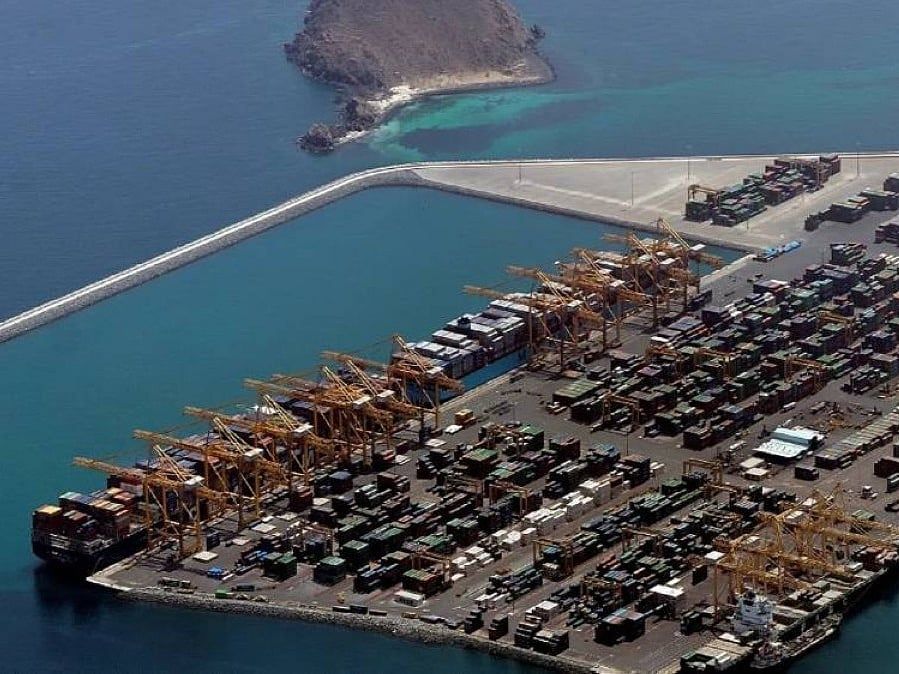
Khorfakkan Port is preparing to receive a giant roll-on/roll-off vessel carrying 6,068 new energy vehicles manufactured by Chinese automaker BYD, marking the launch of a new direct maritime shipping route between China and the UAE.
The vessel departed from Xiaomo International Logistics Port in Shenzhen, southern China's Guangdong province, in the inaugural voyage of the new service linking the two ports. The shipment also set a new operational record at Xiaomo Port, representing the largest single vehicle shipment ever handled by the Chinese facility since it began operations in December 2021.
The direct shipping route is expected to provide a strategic logistics corridor for Chinese exports to the UAE and the wider Middle East, reducing maritime transit times by three to five days while improving the efficiency and reliability of transporting vehicles and heavy equipment.
Strategic expansion amid export boom
The new route comes as BYD accelerates its overseas expansion, with the company targeting exports of 1.5 to 1.6 million vehicles globally in 2026, approximately 15% above its prior goal of 1.3 million units. The push into international markets is driven in part by efforts to offset a slowdown in China's domestic automotive market.
The Middle East has emerged as an important growth market for BYD, with the company exporting 26,593 new energy vehicles to the region in the first two months of 2026 alone. The UAE, Israel and Saudi Arabia have all entered BYD's top 10 export destinations, underlining the strategic importance of improved shipping infrastructure to the region.
China exported 59,739 new energy passenger vehicles to the UAE in the first half of 2026, representing a 34.7% year-over-year increase, as Chinese automotive manufacturers accelerate their push into Middle Eastern markets.
Efficient factory-to-port logistics
The record shipment benefits from highly efficient logistics enabled by BYD's manufacturing facility at Shenshan BYD Auto Industrial Park, located just 4 kilometres from Xiaomo Port. Under a factory-port linkage model, vehicles can be transported to the port within five minutes, a key factor in BYD's decision to establish its megafactory in the zone.
Xiaomo Port has expanded rapidly since obtaining its international logistics permit in late 2022, growing from three domestic and international routes in 2023 to 12 international vehicle shipping routes by 2026. These routes now connect China with destinations across the Middle East, Southeast Asia, the Mediterranean, Europe, South America, Africa and Australia.
The port's future development plans include building a total of 49 berths with a gross annual throughput capacity of 75 million tonnes. Phase II construction, which started in January 2025 and is scheduled for operation in 2028, will increase annual automobile transportation capacity to 1 million vehicles.
Khorfakkan's growing automotive hub role
Operated by the Sharjah Ports, Customs and Free Zones Authority, Khorfakkan Port has continued to strengthen its position as a regional automotive logistics hub. The port's commercial terminal, managed by Gulftainer, has recorded strong growth in vehicle handling throughout 2026.
By August, the terminal had handled 24,675 vehicles, with an average unloading rate of 141 vehicles per hour since the start of the year. Peak operations reached 197 vehicles per hour, while the implementation of the Discharge and Drive model has enabled vehicles to complete customs clearance and leave the port within 96 hours.
The UAE serves as a transshipment hub for vehicles headed to East Africa, with the country playing an important role in the regional roll-on/roll-off shipping network. This positions Khorfakkan Port not just as a destination for the UAE domestic market, but as a regional distribution centre serving wider markets.
China's automotive export dominance
The BYD shipment is part of a broader wave of Chinese automotive exports. China's total automotive exports are projected to reach approximately 10 million units in 2026, up 41% from 7.1 million units in 2025, making China the world's largest vehicle exporter at about 2.5 times Japan's export volume.
While the Middle East remains a smaller market for BYD compared to other regions—with the company exporting only 2,646 vehicles to the region in April 2026, ranking seventh among destinations—the growth trajectory and establishment of direct shipping routes suggest significant potential for expansion in the coming years.