UAE AI Minister: Artificial intelligence systems must prove reliability before receiving expanded authority
Omar Sultan Al Olama tells World Economic Forum gathering that AI agents require risk-based oversight and clear accountability before being entrusted with critical decisions affecting people's lives.
 Layla Haddad
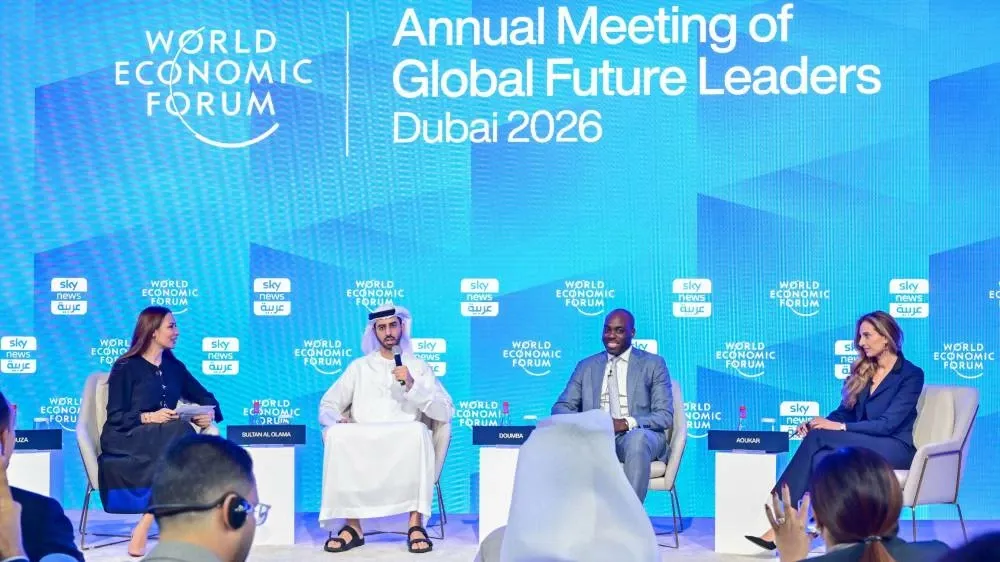
Omar Al Olama: Artificial Intelligence must earn trust before being granted broader powers
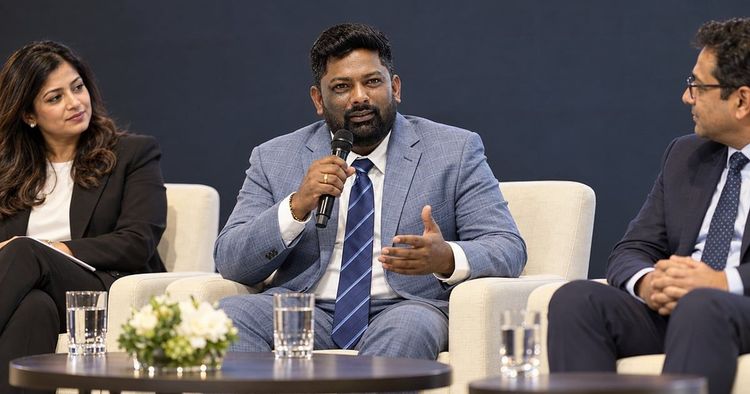
Artificial intelligence systems must demonstrate trustworthiness through rigorous oversight and accountability measures before societies grant them broader decision-making authority, according to Omar Sultan Al Olama, UAE Minister of State for Artificial Intelligence, Digital Economy and Remote Work Applications.
Speaking at the inaugural Annual Meeting of Global Future Leaders in Dubai on October 14, Al Olama outlined a framework for AI governance that balances innovation with human control. The gathering, organized by the World Economic Forum in collaboration with the UAE Government, brought together more than 500 leaders and experts, including 15 ministers and nearly 150 CEOs and chairs, at Madinat Jumeirah from October 13-15, 2026.
The Trust Question: Humans or AI?
During the session on proxy AI trust testing, Al Olama challenged participants to consider a fundamental question: whether trust in humans should precede trust in artificial intelligence. He argued that the answer depends on the nature of tasks and the severity of potential risks.
The minister was clear that AI agents cannot currently be granted full authority over critical decisions that affect individuals' lives and opportunities. However, he noted that these systems can reliably handle low-risk services. As an example, he cited the UAE's automated passport renewal system for senior citizens and people of determination, where documents nearing expiration are renewed automatically and delivered to their residence without requiring any action from beneficiaries.
Building and Maintaining Trust
Al Olama emphasized that building trust begins with proper system design and clearly defined tasks and powers. He explained that individuals may be willing to delegate certain responsibilities, such as low-value payments, to AI systems, provided there are transparent controls and oversight of the decisions made by these agents.
The minister warned that trust in AI systems can erode quickly and proves difficult to restore once lost. This reality underscores the importance of mitigating risks and holding developers accountable for the impact their systems have on people's lives.
UAE's Pioneering Role in AI Governance
Al Olama's perspective reflects the UAE's pioneering position in AI governance. Appointed in October 2017 at age 27, he became the world's first Minister of State for Artificial Intelligence, making the UAE the first country to create such a ministerial position. His role was expanded in July 2020 to include Digital Economy and Remote Work Applications, and in 2023 he was appointed Director General of both the Prime Minister's Office and the Dubai Crown Prince's Office.
The UAE has pursued an innovative approach to integrating AI into government operations. In January 2026, the country integrated a National AI System as an advisory member of the UAE Cabinet, Ministerial Development Council, and boards of federal entities and state-owned companies. More recently, in June 2026, the UAE established a federal Artificial Intelligence and Data Authority, consolidating AI, data, and digital-government functions under a single Cabinet-level body.
A Flexible Regulatory Framework
The country's regulatory framework for AI reflects the layered approach Al Olama described. Rather than enacting a single comprehensive AI law, the UAE employs a flexible framework that includes the UAE Strategy for Artificial Intelligence 2031, the UAE Charter for AI issued in June 2024, federal data protection legislation, and sector-specific rules.
The UAE Charter for the Development and Use of Artificial Intelligence establishes 12 principles for responsible AI development, addressing human welfare, safety, algorithmic bias, data privacy, transparency, human oversight, governance and accountability. These principles align with global governance frameworks emphasizing that AI trust requires verifiable identity, defined scope of authorization with clear limits set by humans, and accountability mechanisms ensuring actions can be traced back to responsible persons who retain the authority to withdraw permissions.
Al Olama's remarks at the Global Future Leaders meeting reinforce a central theme in international AI governance: that technological capability must be matched by institutional safeguards and human oversight before AI systems can be entrusted with decisions that shape people's lives and opportunities.