Samsung launches Galaxy Z Fold8 lineup with higher prices as memory costs surge
South Korean tech giant unveils three new foldable phones and AI-powered smartwatches at London event, but rising chip costs driven by AI demand push prices upward across the premium device range.
Samsung launches Galaxy Z Fold8 lineup with higher prices as memory costs surge
Samsung Electronics introduced its latest foldable smartphones and smartwatches at the Galaxy Unpacked event in London on Wednesday, betting that consumers will embrace higher prices for devices enhanced with artificial intelligence capabilities despite mounting cost pressures from the global memory chip shortage.
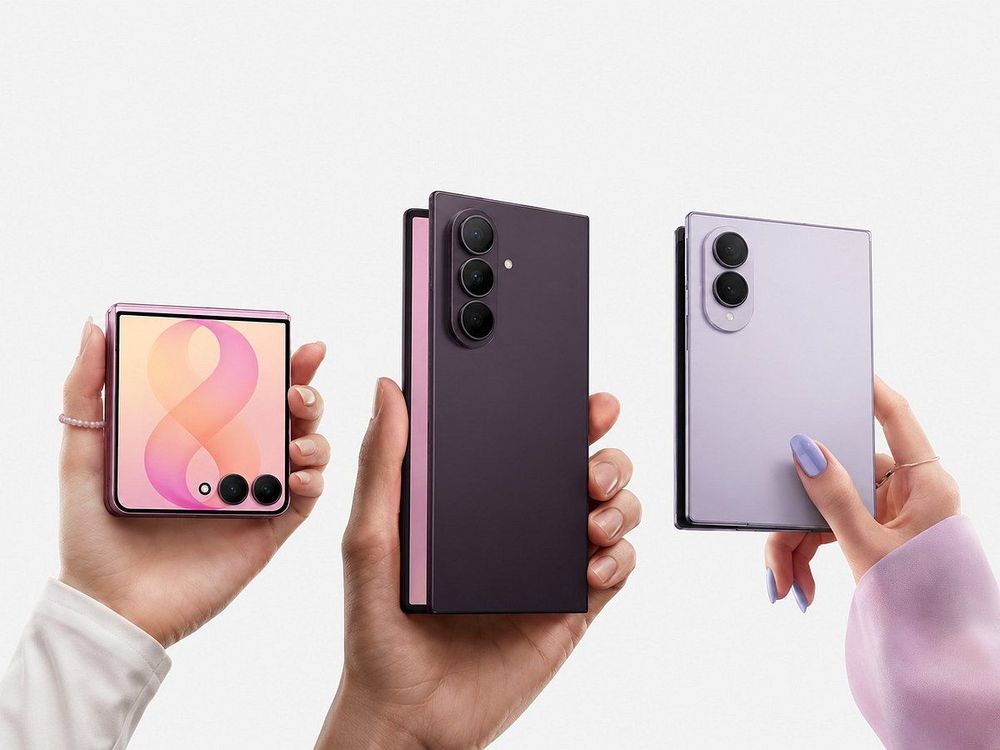
The company revealed three new foldable models: the Galaxy Z Fold8, Galaxy Z Fold8 Ultra, and Galaxy Z Flip8, alongside the Galaxy Watch9 and Galaxy Watch Ultra2 smartwatches. The devices feature thinner designs, lighter builds, and deeper integration with Google's Gemini AI assistant, but come with price increases that reflect the dramatic rise in memory component costs.
Memory chip shortage drives price increases
The Galaxy Z Fold8, featuring a redesigned book-style form factor, starts at Dh7,599. The device measures just 4.5mm thick when opened and sports a 7.6-inch inner display with a 4:3 aspect ratio designed for multitasking and media consumption. The premium Galaxy Z Fold8 Ultra, at 4.1mm thick and weighing 215g, begins at Dh8,399, while the compact Galaxy Z Flip8 is priced from Dh5,099.
Samsung attributes much of the price increase to soaring memory chip costs driven by the artificial intelligence boom. Consumer electronics grade DRAM increased by approximately 85% in the second quarter of 2026, the steepest rise among all memory categories, as chip manufacturers redirected capacity toward AI applications. A single AI server requires 8-10 times more memory than conventional servers, forcing manufacturers to prioritize data center components over consumer electronics.
The memory shortage stems from surging demand for high-bandwidth memory, which uses 3D stacking architecture to vertically layer multiple DRAM chips—typically 4-16 layers—to achieve the transfer speeds required for AI processing. Data centers now consume an estimated 70% of all memory chips produced worldwide, with the four major North American cloud providers expected to invest USD 600 billion in AI infrastructure by the end of 2026.
According to Gartner estimates, the soaring memory costs will reduce global smartphone shipments by 8.4% in 2026 as manufacturers struggle to absorb component price increases. Apple cited similar factors when raising prices on Mac and iPad models earlier this year.
AI-powered ecosystem expansion
All three foldable phones integrate Google's Gemini assistant and software features designed to leverage the larger displays for document handling, content creation, and multitasking. The devices represent Samsung's strategy to position AI as a core value proposition justifying premium pricing.
Samsung expanded its wearable lineup with the Galaxy Watch9, starting at Dh1,449, and the Galaxy Watch Ultra2, priced from Dh2,669. The Watch9 targets everyday users with improved display quality, lighter construction, and enhanced health tracking, while the Ultra2 caters to outdoor enthusiasts and athletes with extended battery life, rugged design, and advanced workout analytics.
Both smartwatches feature AI-powered wellness capabilities, including personalized insights for heart health, sleep patterns, and fitness metrics. The devices form part of Samsung's broader ecosystem strategy, where phones, wearables, and AI services share data to deliver integrated health monitoring, productivity tools, and contextual assistance.
Market dynamics and competition
Samsung's launch comes amid persistent speculation about Apple's long-anticipated foldable iPhone. Industry analysts expect Apple's device to arrive in September 2026 alongside the iPhone 18 lineup, featuring a book-style design with a starting price exceeding USD 2,000. Market research firms project Apple could capture 22-25% of the foldable market in its first year.
Samsung pioneered the modern foldable smartphone category when it unveiled the first Galaxy Fold on February 20, 2019, and released it globally beginning September 6 that year. The company has maintained market leadership since then, though analyst projections suggest Samsung's share will decline to approximately 32% in 2026 as competition intensifies from Apple's expected entry and Huawei's strong performance in China.
Apple is about to do for foldables what it has done for every category it has entered, which is legitimise it for the mainstream
IDC analyst Francisco Jeronimo said.
This competitive pressure has driven Samsung to expand its product range, offering three distinct foldable models targeting different user segments rather than a single flagship device.
Growing niche market
Foldable smartphones remain a small segment of global phone sales, but analysts forecast significantly faster growth compared to the broader market. The foldable category is valued at approximately USD 34-39 billion in 2026 and is projected to expand at a compound annual growth rate of 20-26% through the early 2030s.
Global foldable smartphone shipments are expected to grow 21-30% year-over-year in 2026, substantially outperforming the overall smartphone market, which is projected to decline 8-12% due to economic headwinds and component cost pressures.
For Samsung, the challenge has evolved from proving foldable technology works to convincing consumers that thinner designs, larger screens, and AI features justify prices approaching or exceeding USD 2,000, particularly as Apple prepares to enter the market with its own interpretation of the foldable form factor.