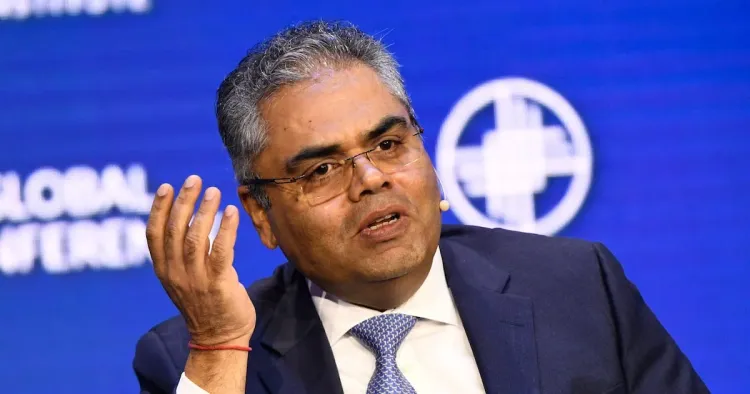
Mashreq's Al Shimmari calls for "PPP 2.0" to mobilize sustainable investment
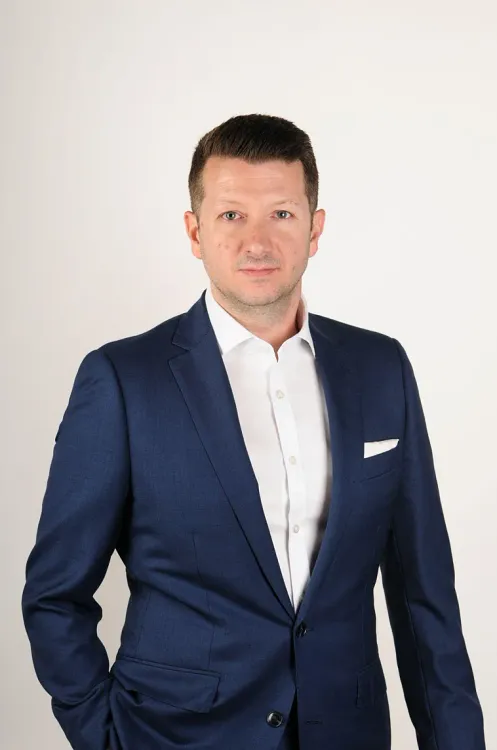
Governments need to share more investment risk with private financiers and put community needs at the heart of sustainable finance, Mashreq's Head of ESG Faisal Al Shimmari said on AB Majlis. His proposed overhaul of public-private partnerships would combine public priorities, private capital and incentives to advance the United Nations Sustainable Development Goals.
 Layla Haddad

Sharing risk and mobilizing capital
Al Shimmari's case for "PPP 2.0" centers on coordination rather than a shortage of money. As the SDGs' 2030 deadline approaches, he wants governments, banks, family offices and individual investors to work more closely, with public authorities helping make projects commercially attractive.
"Capital exists," he said. "The mobility or finance mobilisation requires an ecosystem to exist."
For projects serving essential needs or long-term national priorities, he argued, public support could include subsidies, incentives and tax measures. Housing, desalination, water scarcity, agriculture and food security were among his priorities. "You cannot expect the private sector to take the risk alone."
One specific proposal would allow banks to deduct losses on government-designated, high-priority SDG projects from their corporate tax. Gulf News reported in September 2024 that Al Shimmari had advocated that approach, citing the European Union.
The financing commitments are substantial. AGBI reported in February 2025 that Mashreq had pledged to facilitate AED110 billion in sustainable financing within the UAE Banks Federation's AED1 trillion green financing commitment by 2030. Al Shimmari's professional profile also identifies the bank as a contributor to the UAE's AED1 trillion target.
In its September 2023 announcement, Mashreq set a $30 billion sustainable financing target for 2030. The bank said that by the first half of 2023, it had facilitated $20 billion in sustainable finance and adaptation-related investments across the UAE, Egypt, India, Bahrain and Qatar.
AGBI put the global sustainability financing market at $6 trillion in 2024, with an expected increase to $28 trillion by 2033—more than four times its size. Gulf sustainability bond sales, however, fell to $16.7 billion in 2024, the publication reported in February 2025.
A proposed accelerator for the UAE
Al Shimmari wants a UAE accelerator to connect sustainable investment priorities with ways to lower project risk and secure funding. The proposal depends on agreement about the outcomes financing should deliver, including a better balance between environmental and social goals.
Gulf News reported in September 2024 that Mashreq had presented its considerations and recommendations to strategic government and semi-government stakeholders and potential partners. Named the UAE ESG and Sustainable Finance Government Ecosystem Accelerator, the proposed initiative envisages accomplishing complex objectives involving multiple organizations within six to nine months.
Social needs and credible standards
Al Shimmari said environmental, social and governance frameworks have given emissions and carbon reduction so much attention that other needs have become less visible. Decarbonization remains essential, he stressed, but hunger, water access, livelihoods and community well-being should help shape investment frameworks from the outset, not be considered afterward.
"Social should be the north star for us," he said.
He described an approach in which environmental and social objectives are balanced, while governance oversees delivery. That also requires consistent definitions and measurements of sustainable activity, safeguards against greenwashing, bluewashing and social washing, and checks against counting the same investment more than once.
Such standards would give banks and investors a clearer basis for allocating capital and help governments connect financing to national development priorities, he said.
Mashreq's own record includes a $3.25 billion sustainability-linked facility for GEMS Education, which Al Shimmari's professional profile describes as the region's largest at the time. Separately, Gulf News reported in September 2024 that the bank had moved from "severe risk" to "medium risk" in its Sustainalytics ESG risk rating within one year, improving its position by 300 places.
Water, food production and energy
Water is one area Al Shimmari believes deserves greater attention from sustainable finance. "If we look at the ESG taxonomy globally, they are focusing on green. Where is the blue? Where is water? Where is biodiversity? Where is aquaculture?"
For the UAE, he called for water circularity to be a central priority. Investment in desalination, he said, must also consider how brine is managed, addressing the environmental consequences alongside the need to supply water.
He also pointed to agritech and vertical farming as ways to develop domestic food production. Regional logistics disruptions and the experience of COVID-19 had reinforced the importance of that capacity, he said.
On energy, Al Shimmari favored investment across a broad range of sources and technologies: solar, hydrogen, biogas and nuclear, as well as fossil fuels. He identified rooftops, agricultural sites and building materials as opportunities for incorporating solar generation.
The UAE needs more than AED600 billion ($163 billion) in clean and renewable energy investment to achieve net-zero emissions by 2050, AGBI reported in February 2025. That requirement may increase as AI adoption and energy-consuming data centers expand.
Lessons from the UAE's development
Al Shimmari linked his views to the UAE's development and his work across government, banking, digital transformation and child protection. He cited agricultural incentives and tree-planting programs as examples of public policy supporting both livelihoods and environmental stewardship.
Government assistance encouraged people to farm and plant palms and indigenous trees, he said. Using different parts of date palms for food, animal feed and other purposes also demonstrated circular practices. "So circularity was part of the ecosystem in the UAE."
In that understanding of sustainable development, housing, public safety, accessible services and well-being belong alongside environmental concerns.
Connecting lending with government services
Drawing on his experience connecting digital government services with the SDGs, Al Shimmari said private institutions should pursue similar links. He envisages a business seeking funding for an eligible project being able to access lending, public services and relevant incentives through a connected process, with less friction and support for national objectives.
Open banking and UAE Central Bank-led initiatives could help make that possible, he said. The model remains a proposed way to bring public and private institutions together around shared outcomes.
"The lending journey around SDG could be an integrated service between government and private."