India-UAE Agreements Set Out Local-Currency Trade and Payment Links
India and the United Arab Emirates signed two agreements on July 15, 2023, to support trade payments in rupees and dirhams and link their payment systems, aiming to lower transaction costs and facilitate real-time cross-border transfers.
 Layla Haddad
A framework for rupee-dirham payments
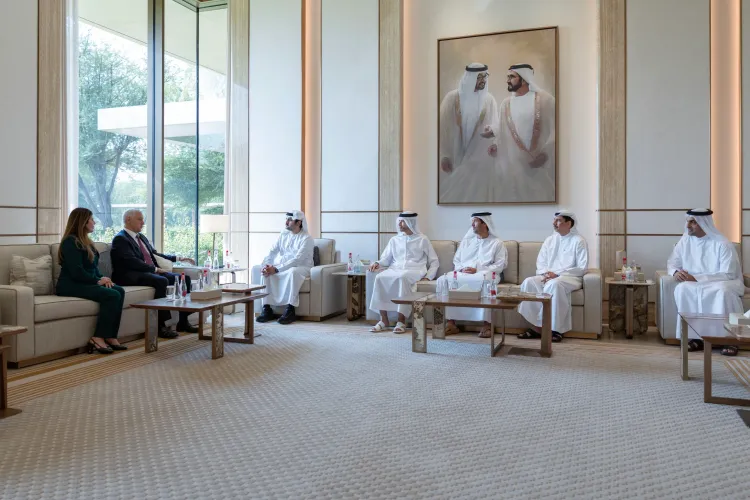
The agreements were signed in Abu Dhabi during Indian Prime Minister Narendra Modi's visit. According to the Reserve Bank of India, RBI Governor Shaktikanta Das and Central Bank of the UAE Governor Khaled Mohamed Balama signed the memoranda in the presence of Modi and UAE President Sheikh Mohamed bin Zayed Al Nahyan.
One memorandum establishes a framework for a Local Currency Settlement System (LCSS), allowing importers and exporters to pay in their domestic currencies: the Indian rupee (INR) and Emirati dirham (AED). It is intended to develop an INR-AED foreign exchange market and reduce the cost of converting payments through dollars. The RBI said the framework extends to all current account transactions and permitted capital account transactions.
The second memorandum sets out plans to connect India's Unified Payments Interface (UPI) and the UAE's Instant Payment Platform (IPP) for real-time cross-border transfers. Such payment arrangements have become more common across Asia and generally lower payment costs.
The payments agreement also calls for connecting the RuPay switch in India with UAESWITCH in the UAE, according to the RBI. Separately, the central banks agreed to explore connecting India's Structured Financial Messaging System (SFMS) with the UAE's messaging system.
Trade covered by the initiative
India-UAE trade totaled $84.5 billion between April 2022 and March 2023. In the following financial year, 2023-24, bilateral trade was about $83 billion, making the UAE India's third-largest trading partner, according to government figures cited by Reuters.
Those figures included more than $17 billion in Indian imports of oil and related products from the UAE. India recorded a $12.4 billion merchandise trade deficit with the UAE in 2023-24.
Early transactions and subsequent adoption
According to The Economic Times, the first reported transaction using the local-currency mechanism occurred in July 2023: a leading UAE gold exporter sold 25 kg of gold to an Indian buyer, with an invoice of about Rs 12.84 crore. A subsequent transaction involved the sale of 1 million barrels of crude oil by Abu Dhabi National Oil Company (ADNOC) to Indian Oil Corporation.
The RBI later pressed banks to make greater use of direct rupee-dirham settlement. Reuters reported in August 2024, citing five banking sources, that banks handling UAE business had been told to settle at least some trade payments in the two currencies and report their use regularly. The central bank set no specific target.
As of June 2026, India's ambassador to the UAE, Deepak Mittal, said local currencies had been used to invoice more than 15% of bilateral trade over the period from July 2023 through March 2026, according to The Economic Times. Industry executives cited by the newspaper said use remained concentrated in oil and precious-metals transactions, with dirham invoicing accounting for a larger share than rupee invoicing.