Etihad Credit Bureau launches 3i model with longer credit histories and faster recovery potential
Etihad Credit Bureau's new 3i credit assessment model allows improved repayment after a settled default to affect an individual's score within six months, though recovery is not guaranteed. The UAE rollout also extends the review period from 24 to 36 months and brings eligible newcomers and first-time borrowers into the assessment.
 Layla Haddad
How recovery after a default works
The bureau launched 3i at its new Abu Dhabi office on October 29. The model updates data daily and examines a broader set of indicators covering payment consistency and how individuals manage their financial obligations.
For customers who have settled defaults, six-month recovery depends on continued timely payments, subsequent financial behavior, the full credit record and the model's criteria. The bureau cautioned that another default or other negative information could delay a score improvement and require a longer period of consistent repayment.
The changes also address lengthy restrictions on financing for customers whose nonpayment exceeds 180 days, placing them on a "write-off" list. In September, the bureau introduced a revised credit report format intended to support people who had encountered financial difficulties but returned to regular payments.
Kredit.ae reports that the previous model kept a person in a delinquency category for 24 months after more than three consecutive missed payments. It says the bureau describes 3i as allowing a customer to leave the "red zone" within six months and improve their score in less than a year. Those possibilities remain subject to the bureau's conditions, rather than a fixed recovery timetable.
Who receives a score, and what it costs
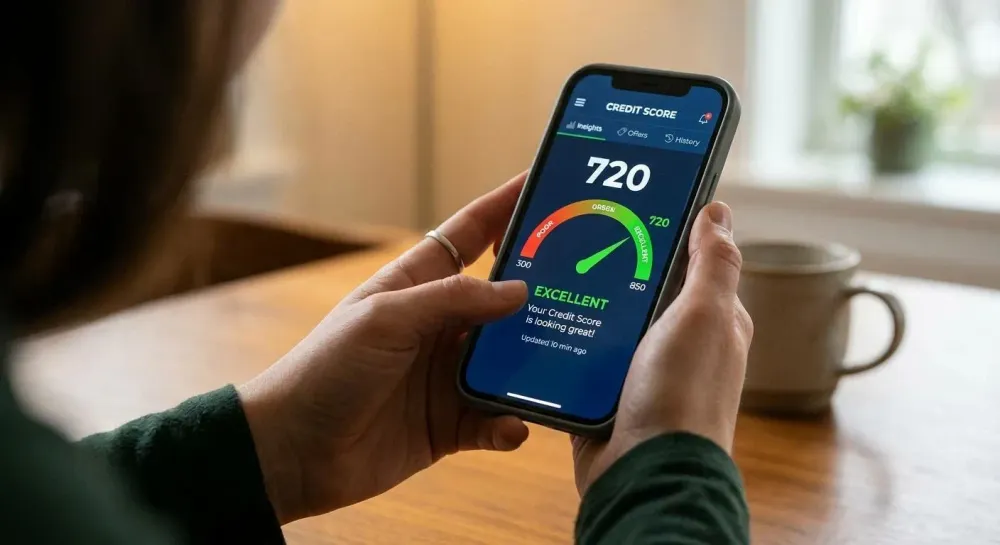
Under 3i, customers with established credit histories receive scores between 300 and 850. A separate range of 300 to 650 applies to eligible new borrowers and recent residents with shorter records. The bureau uses a different calculation for each group, taking account of the customer's category and credit-history length.
People who had only recently started borrowing, along with new residents whose records were limited, had previously been difficult to assess. The expanded coverage brings those eligible groups into the model, while the longer review period gives lenders more history to consider than the previous two-year window.
According to Paisabazaar.ae, the bureau previously described its individual score range as 300 to 900. Company scores remain on that scale; the change applies to individuals. The same source cites the bureau's published price of AED 10.50 for a standalone 3i credit score.
The UAE government's official platform identifies Al Etihad Credit Bureau as a public joint-stock company entirely owned by the federal government. It produces credit reports for businesses and individuals, including UAE nationals and residents.
Broader data, but no automatic loan approval
General Manager Marwan Ahmed Lutfi said the calculation draws on 2,000 indicators and factors, including measures addressing prolonged restrictions on customers' access to financing. It also shows customer income and accounts for support from the National Social Security Fund (NAFS) and federal pensions.
Kredit.ae reports that 3i expands the bureau's sources beyond banks to telecommunications companies, water and electricity providers, courts, real estate registries and buy now, pay later providers. The bureau also said it added buy now, pay later accounts and short-term credit products to its reporting data in 2026.
Reports identify factors that help or hurt a customer's score and offer recommendations for improvement. Banks, financial institutions and other authorized organizations, including fintech companies and eligible digital platforms, receive broader indicators for assessing risk.
The bureau emphasized that a score does not automatically qualify a customer for a loan or other financing. Each lender still applies its own lending policies and criteria.
The bureau's reporting footprint
By September 2026, the database covered about 11.6 million individuals and entities. It also held records for 20.2 million active credit facilities and contracts, alongside 25.3 million active international bank account numbers.
Annual issuance of credit reports and assessments grew from roughly 1 million in 2015 to more than 17 million in 2025.