Investcorp exceeds fiscal 2026 targets, seeks another $7 billion in funding
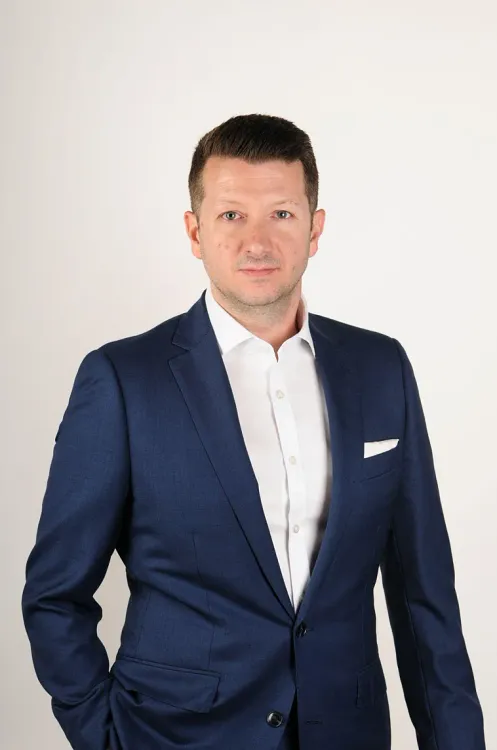
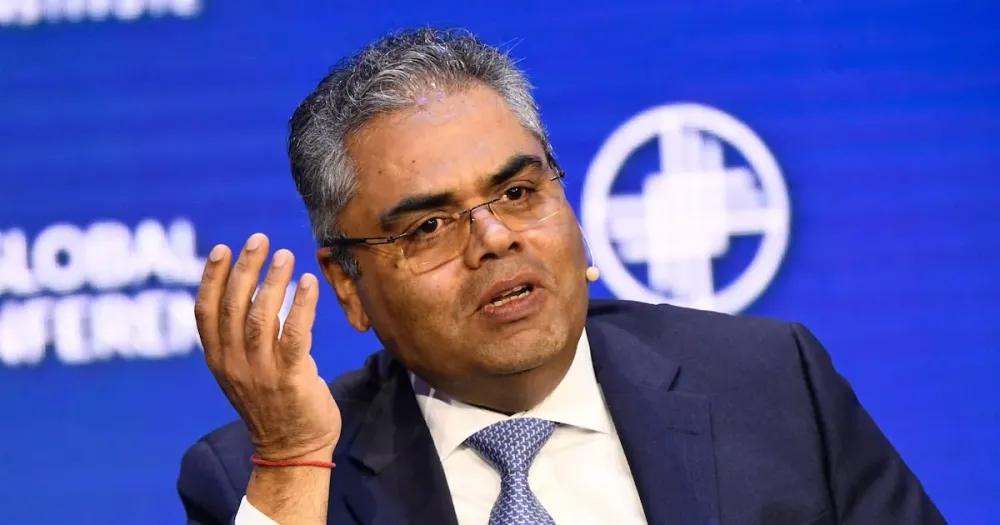
Investcorp raised more than $7 billion and brought assets under management to $64 billion in the fiscal year ended June 30, beating both targets despite war-related disruption in the Gulf. The Bahrain-based alternative asset manager plans to raise at least $7 billion again this fiscal year, chief investment officer and vice chairman Rishi Kapoor told The National.
 Layla Haddad
Fundraising continues beyond the fiscal year
Kapoor said Investcorp, which is backed by Abu Dhabi's Mubadala Investment Company, expects to maintain a similar fundraising pace despite the uncertainty. Its range of businesses allows different investment strategies to drive fundraising from year to year, he said.
One subsequent fund closing came on October 1, when Investcorp announced that its North American Private Equity Fund II had raised $1.22 billion. The total exceeded the fund's $1.1 billion target and the size of its inaugural 2021 Fund I, according to the company's announcement. Investcorp described the fundraising environment as difficult.
Fund II focuses on middle-market companies in business and professional services and commercial services, targeting businesses with EBITDA of $10 million to $50 million. Its investments include Nashville-based Guardian Fire Services and Berger Financial Group in Plymouth, Minnesota.
Asset growth and the $100 billion goal
The $64 billion asset total at the end of June put Investcorp above its $63 billion goal. Kapoor was less definite about growth in fiscal 2027, saying exits and calls make net changes in assets difficult to forecast. He nevertheless said the firm remains on course for its longer-term $100 billion target.
Investcorp's June 30, 2026, asset breakdown shows the breadth of its operations: more than $16 billion in Real Assets, covering global real estate and infrastructure; approximately $22 billion in Credit Management; and about $9 billion in Liquid Strategies, comprising Absolute Return Investments and Insurance Solutions. The company describes itself as the Middle East's largest alternative asset manager.
The $100 billion ambition also featured in Kapoor's January 2025 comments to Reuters. At that time, he said Investcorp could consider a public listing within three to five years, potentially in London or New York, as it sought to double assets under management to $100 billion.
He also said in that interview that Investcorp could pursue opportunities in the roughly $12 trillion U.S. 401(k) retirement savings market if rules permitting alternative investments were introduced.
An international business with Gulf roots
Although Investcorp has deep ties to the Gulf, 90% of its investing activity is in the U.S. and Europe, and more than three-quarters of its fundraising comes from outside the Gulf, Kapoor said. The firm intends to strengthen that international profile to limit its exposure to periodic regional geopolitical and energy-market uncertainty.
Kapoor described Investcorp as a channel for capital and investment opportunities moving both into and out of the Gulf. Founded in 1982 and known for early investments in Tiffany & Co and Gucci, the firm operates across six business lines: private equity, real estate, absolute return investments, infrastructure, credit management and strategic capital.
Investcorp continued buying businesses during the COVID-19 pandemic to take advantage of lower valuations and has kept expanding its portfolio since. The U.S., India and China are among the markets where it seeks to increase its asset base.
Gulf deals proceed amid conflict
The Iran war has disrupted regional investment activity, and repeated diplomatic efforts have yet to produce a permanent agreement to end it. President Donald Trump warned last week of a possible new military operation against Iran. U.S. media reported that an offensive could begin after the November 3 midterm elections.
Investment and fundraising in the Gulf have nonetheless remained relatively resilient. Brookfield's new private equity fund focused on Saudi Arabia and the wider Middle East reached a $2 billion first close in July, with Saudi Arabia's Public Investment Fund among its anchor investors.
July also brought a $16 billion lease and leaseback agreement between Kuwait Oil Company and Blackstone, Brookfield and KKR. The three investors took a combined 49% stake in the company's crude oil pipeline network.
Blackstone, which manages $1.3 trillion in alternative assets, announced a $250 million investment in Abu Dhabi's Advanced Digital Gaming Technology in March. The following month, it partnered with Dubai Aerospace Enterprise on plans to invest about $1.6 billion a year in aircraft leasing.
Investcorp has retained its appetite for Middle Eastern investments. The region, together with the firm's broader Asian holdings, represents 10% of its portfolio. Earlier this week, its Saudi Pre-IPO Growth Fund joined an AlTouq Group- and Thara Future Investments-led consortium to acquire Saudi Arabia's Reda Gulf Holding.
Infrastructure and resilience underpin regional outlook
Kapoor acknowledged that the conflict has affected some exits from Investcorp's regional holdings, but called the disruption a "bump on the road" in the context of long-term global investing.
"The prospects for the region from an investment perspective are still pretty much the same, if not stronger, and I'm not minimising the short-term disruption of the conflict here," he said.
While describing conflict as distressing, Kapoor said it had done little to alter the economic diversification plans guiding Gulf economies. The region's infrastructure expansion continues to offer investment opportunities, he said.
In his view, the conflict has reinforced governments' determination to build resilience across infrastructure, supply chains, logistics and transportation, energy, utilities, defense and food security. He expects that effort to build on existing diversification plans and prompt more considered government spending and capital investment alongside private investors.