UAE airfares set to remain elevated through 2026 amid prolonged Middle East aviation disruption
Disruption to Gulf airspace, airline capacity and fuel markets could keep UAE ticket prices 5-10% above pre-crisis levels well into 2026, with Dubai International's record 95 million passengers highlighting the scale of impact on one of the world's busiest aviation corridors.
UAE airfares set to remain elevated through 2026 amid prolonged Middle East aviation disruption
Airfares in the UAE are likely to remain elevated throughout 2026, with a new industry analysis warning that disruption affecting Gulf airspace, airline capacity and fuel markets could take months to resolve even after immediate security concerns ease.
A joint report by Tourise and Oxford Economics projects that global airfares could stay 5 to 10 per cent above pre-crisis expectations in 2026 under a relatively positive resolution scenario. In a prolonged crisis, ticket prices could climb significantly higher as airlines grapple with higher fuel costs, longer flight paths and reduced capacity.
Scale of the disruption
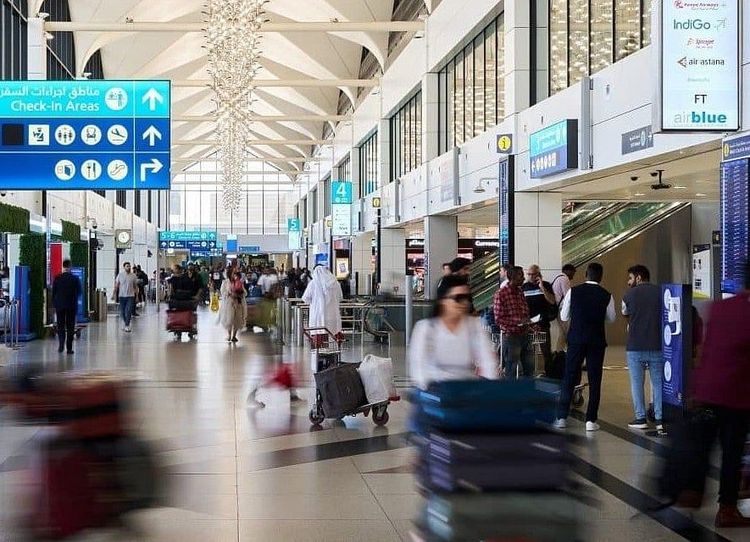
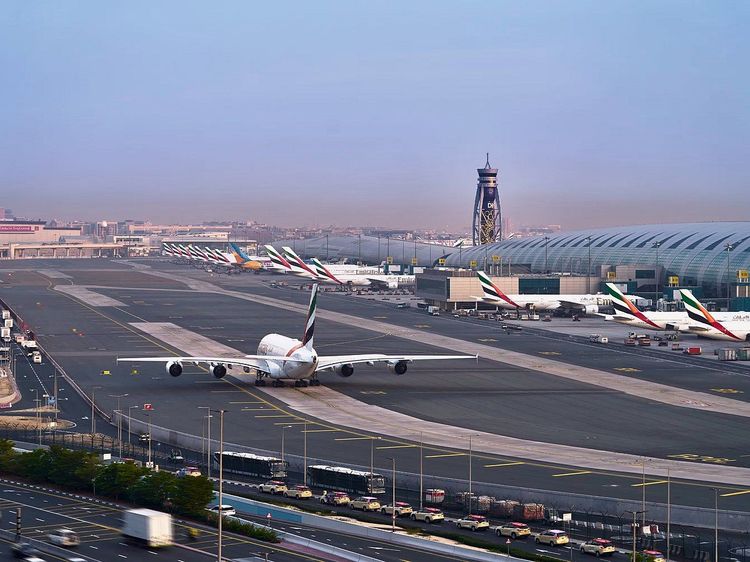
The timing could not be more significant for Gulf aviation. Dubai International Airport handled 95.2 million passengers in 2025, the highest annual international passenger traffic ever recorded by any airport. Traffic was forecast to approach 99.5 million passengers in 2026 before the current disruption began reshaping airline operations across the region.
The UAE sits at the centre of one of the world's most critical aviation corridors. Around 14 per cent of global transit traffic passes through Gulf hub airports, while roughly one-fifth of Europe-Asia travel typically connects through the region. That means disruption to Gulf airspace affects not only passengers travelling between the UAE and neighbouring countries, but also long-haul travellers using Dubai and other Gulf hubs to connect between Europe, Asia and other global markets.
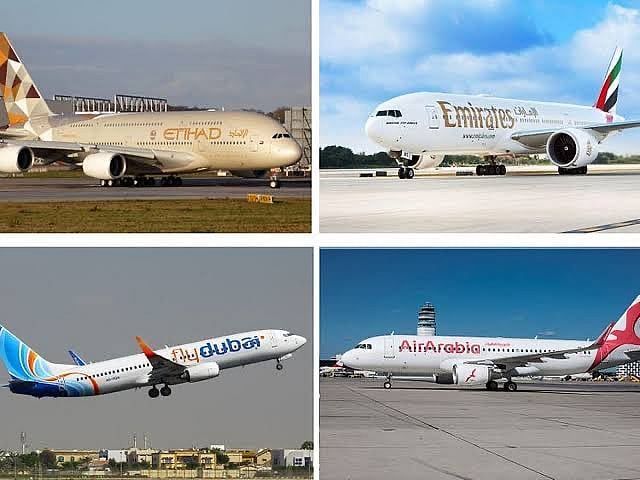
Middle East international air traffic fell 61 per cent year-over-year in March 2026, with Emirates and Etihad operating at approximately 90 per cent of planned network levels as of mid-March. The scale of the cuts was substantial. More than 12,000 flight cancellations were recorded in May alone, representing around two million seats.
Fuel markets under pressure
Jet fuel prices have surged from an average of $90 per barrel in 2025 to a forecast of $152 per barrel in 2026, representing almost a 70 per cent increase. Prices peaked above $200 per barrel by mid-April 2026 as disruption of energy exports through the Strait of Hormuz put upward pressure on oil and fuel markets.
The strait carries approximately 20 to 21 million barrels of oil per day, representing about 20 per cent of global petroleum consumption and roughly 34 per cent of global crude oil trade. About 96 per cent of the UAE's liquefied natural gas exports also transit through the strait, underscoring the region's exposure to disruptions at this critical chokepoint.
The report notes that jet fuel prices have risen more sharply than crude oil prices because of refining margins and concerns over storage and supply capacity. Even if restrictions begin to ease, UAE passengers may not immediately see cheaper tickets because airlines hedge fuel purchases and many flights are booked months in advance.
Capacity constraints
IATA data cited in the study shows international capacity to and from Middle Eastern countries was nearly 40 per cent lower in April compared with a year earlier, while passenger demand fell by almost 50 per cent. Middle East airline capacity reached 30.6 million seats in June 2026, with international services accounting for 26.4 million seats, underlining the region's heavy dependence on long-haul connectivity.
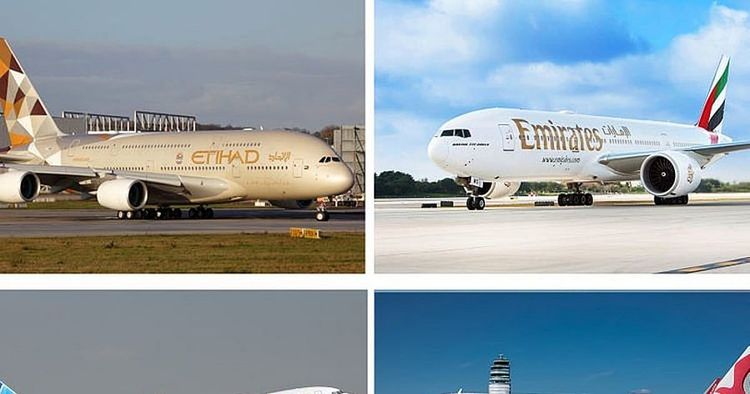
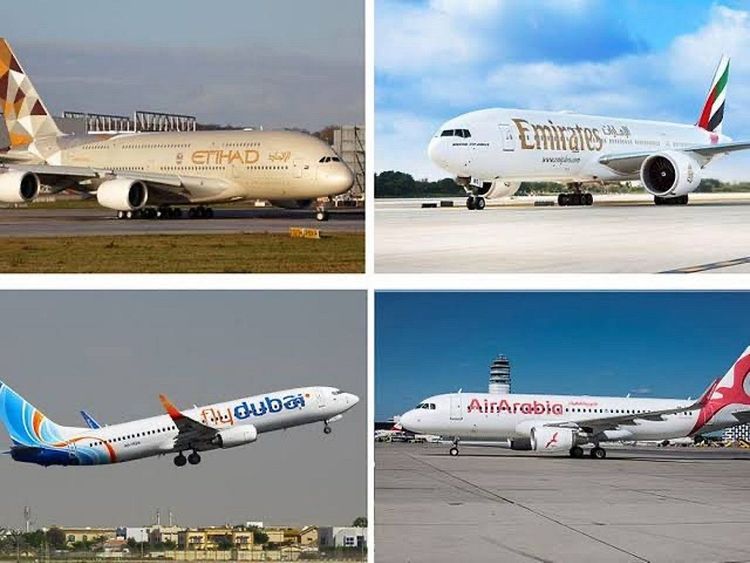
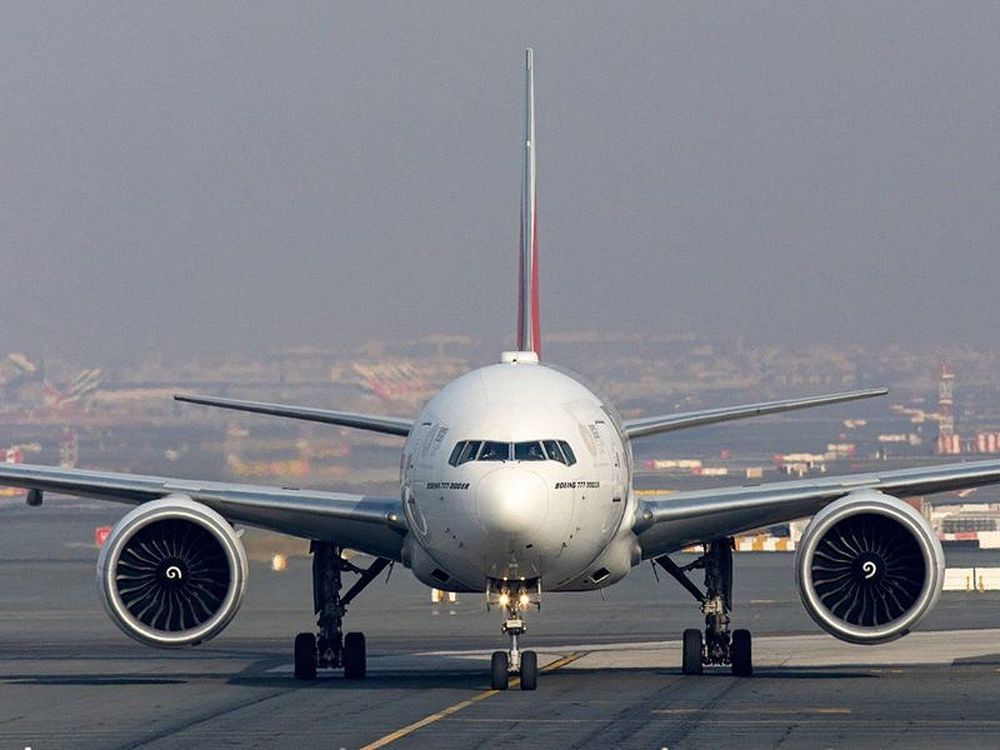
Gulf carriers have responded by seeking temporary capacity. Global widebody aircraft leasing demand increased 30.1 per cent year-over-year in the first quarter of 2026, with activity linked to Emirates, Etihad Airways, Saudia and Turkish Airlines. Emirates operates a fleet of 273 aircraft, including the world's largest Airbus A380 fleet of 118 active aircraft and 141 Boeing 777 family aircraft.
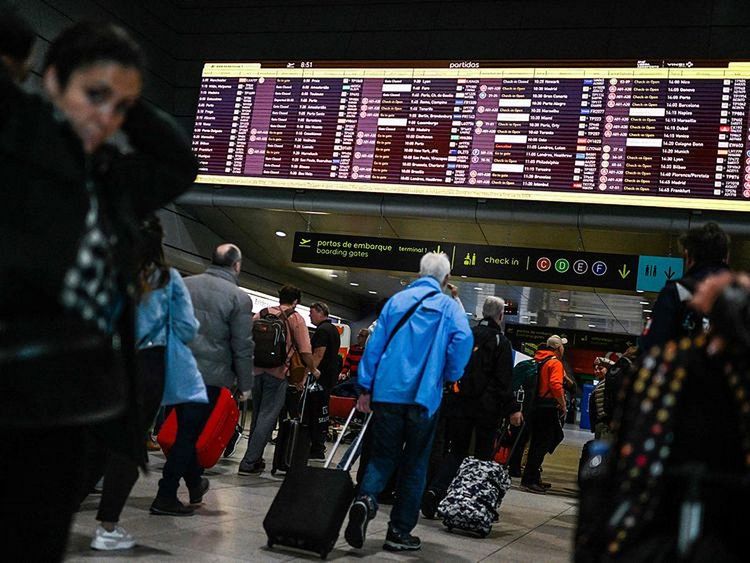
Forward bookings through major Gulf hubs for the second and third quarters fell by more than 40 per cent, according to Cirium Ascend data cited in the report. Some reductions were concentrated on lower-yield routes with weaker load factors, indicating that carriers are also responding to uncertainty and protecting profitability.
Long-term competitive risk
One of the report's more significant warnings concerns the long-term impact on Gulf hub airports. If airlines are forced to operate alternative routes for a prolonged period, they could begin redesigning their networks and permanently incorporate new long-haul routings. That could put pressure on the competitive position of Gulf hubs if alternative networks become embedded after the crisis.
Industry analysis suggests European and Asian network carriers may emerge as beneficiaries of the Middle East crisis, potentially capturing premium traffic flows that have migrated to Gulf carriers over the past decade. For Dubai, which handled passengers from India (11.9 million), Saudi Arabia (7.5 million), the UK (6.3 million), Pakistan (4.3 million) and the US (3.3 million) in 2025, the question is whether airlines change their networks in ways that reduce their reliance on Gulf connections.
Three scenarios
The report models three possible outcomes. If a ceasefire holds, global travel is expected to grow by around 6 per cent in 2026. If hostilities resume, global travel growth could fall by around 1 per cent. Under sustained disruption, global travel could decline by about 3 per cent, with weakness extending into 2027.
For Gulf aviation, even a ceasefire would not mean an immediate return to normal. Connectivity would recover progressively, with airspace restrictions and travel advisories gradually easing. But airline capacity would not necessarily return immediately, meaning some routes could remain limited while carriers rebuild their networks.
In a world that does not reset between crises, disruption is a constant feature of the global tourism landscape. The real test for destinations measures how they prepare for volatility, protect traveller confidence, and maintain continuity ahead of such events.
Ahmed Al-Khateeb, Minister of Tourism of Saudi Arabia and Chairman of Tourise, said preparation before disruption occurs is key to resilience.
The study's broader finding is that tourism has become faster at recovering from individual shocks, with average recovery times falling from around 24 months in the early 2000s to 10 to 12 months today. But the report warns that increasingly complex, multi-country crises could slow that progress.
For UAE travellers, the implications are clear. Prolonged disruption could make passengers more price-sensitive, encourage more regional and domestic travel, lead to later bookings and increase the importance of value for money. Flexibility, refundability and access to real-time information are becoming increasingly important to travellers when geopolitical uncertainty is high.
Adam Sacks, president of Tourism Economics, said the lesson learned is that resilience can be built before disruption occurs, in the actions destinations take to prepare. For UAE passengers, that leaves a simple reality: even if the immediate crisis eases, the impact on Gulf aviation may not stop immediately.