Qantas completes crucial 19-hour certification flight for Sydney-London route
An Airbus A350-1000ULR flew nearly 17,000 kilometres from Toulouse to Melbourne in a key test for Qantas' Project Sunrise, bringing the airline closer to launching nonstop Sydney-London services in October 2027.
Qantas completes crucial 19-hour certification flight for Sydney-London route
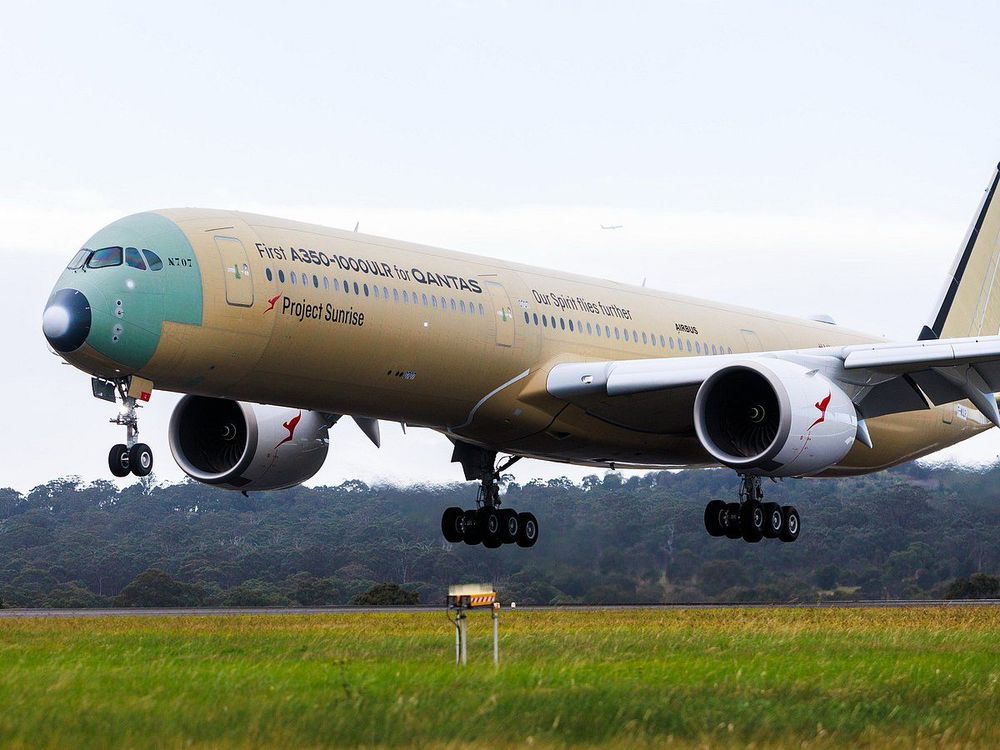
An Airbus A350-1000ULR departed Toulouse on a mission that had nothing to do with passengers but everything to do with the future of long-haul aviation. The aircraft stayed airborne for nearly 19 hours, covering almost 17,000 kilometres before landing in Melbourne. On board were Airbus test pilots and flight-test engineers conducting certification work for what will become the backbone of Qantas' Project Sunrise.
When the jet touched down, it marked a significant step toward making nonstop Sydney-London flights a commercial reality by October 2027.
The flight wasn't the first time an aircraft has connected Europe and Australia without stopping. Qantas has operated nonstop services from Perth to London since March 2018, a route covering approximately 14,498 kilometres in around 17 hours and 45 minutes. More than 1.7 million passengers have travelled on the airline's Perth-based nonstop services to London, Rome and Paris since launch. But the Melbourne test flight served a different purpose: proving the specialized aircraft variant that will enable Sydney-London operations.
As the A350 crossed Europe, the Middle East and the Indian Ocean, it briefly became the most-tracked flight on Flightradar24. Thousands followed its progress in real time, unusual attention for an aircraft that has yet to carry a paying passenger.
Engineering for endurance
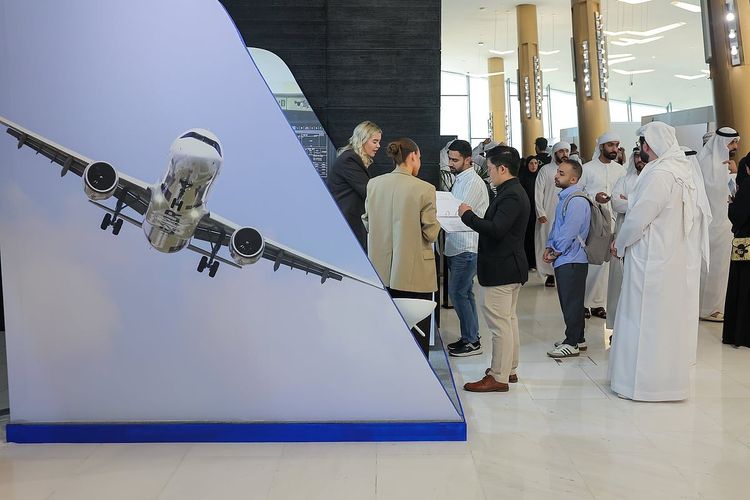
The aircraft remains under Airbus ownership and operated with four test pilots and five flight-test engineers as part of the manufacturer's certification programme. Central to the mission was evaluating an additional 20,000-litre rear centre fuel tank that extends the A350-1000ULR's total capacity to over 170,000 litres, compared to 156,000 litres in the standard variant. This modification extends operational range by approximately 1,000 nautical miles to a total of 9,700 nautical miles, enabling flights of up to 22 hours.
The aircraft also features a new galley air cooling system that saves approximately 300 kilograms while improving refrigeration efficiency for extended missions. This technology will become standard across the A350 family.
After completing tests in Australia, the aircraft will return to Toulouse for further certification work before Qantas receives its first Project Sunrise aircraft, named Vega, in April 2027.
A decade in development
Qantas first announced Project Sunrise in 2017 with services initially planned for 2025. Regulatory requirements for modifications to the additional fuel tank delayed certification, pushing deliveries back over a year. The programme now targets ticket sales in February 2027 and daily nonstop Sydney-London flights starting in October that year, with Sydney-New York services to follow. The journey from concept to operation will span nearly a decade.
In May 2022, Qantas ordered 12 A350-1000ULR aircraft for Project Sunrise alongside 12 standard A350-1000s for other long-haul routes, representing a major fleet modernization investment. The ULR variant is the fourth passenger version of the A350 family, which has accumulated 1,579 orders from 68 customers, with over 700 aircraft now flying with 41 operators.
Redefining passenger experience
Each A350-1000ULR will carry just 238 passengers across four cabins, a reduction of approximately 30 to 40 percent compared to the 350 to 410 seats typically installed in standard A350-1000 aircraft. The lighter passenger load allows for the extra fuel while providing significantly more personal space. A dedicated Wellbeing Zone will enable passengers to stretch, walk and move during the flight, addressing research into the physiological challenges of ultra-long-haul travel.
Those challenges are considerable. Ultra-long-haul flights expose passengers to low cabin pressure, humidity levels between 5 and 15 percent, extended immobility, circadian rhythm disruption across multiple time zones, and mild hypoxia. Research shows increased gastrointestinal symptoms and headaches on longer flights, with aircrew studies documenting reduced psychomotor performance and vigilance.
In 2019, Qantas operated experimental Boeing 787 flights from New York and London to Sydney. Those missions focused less on route feasibility and more on understanding how nearly 20 hours aloft affects pilots and passengers. Researchers monitored sleep patterns, alertness, meal timing, movement and cabin lighting. The findings directly influenced the A350 cabin design.
Closing the gap on history
The route Qantas aims to operate nonstop first launched in 1947. The original Kangaroo Route from Sydney to London took four days with seven stops in Darwin, Singapore, Calcutta, Karachi, Cairo, Castel Benito and Rome. Project Sunrise represents the endpoint of that evolution: one aircraft, one crew, one flight.
Qantas will continue operating its Perth-London service alongside the new Sydney route. For travellers, the difference is straightforward. No transit airport. No connection to make. Just departure and arrival.
For the engineers and pilots who spent 19 hours crossing half the world this week, it was another validation that what once seemed impossible is becoming routine.