Sharjah announces 74-day partial closure of Sheikh Saqr Road for major drainage works
Sheikh Saqr bin Khalid Al Qasimi Road will be partially closed until October 1 as part of the emirate's Dh500 million Central Stormwater and Groundwater Drainage Line project, with alternative routes provided for motorists.
74-Day Partial Closure Begins
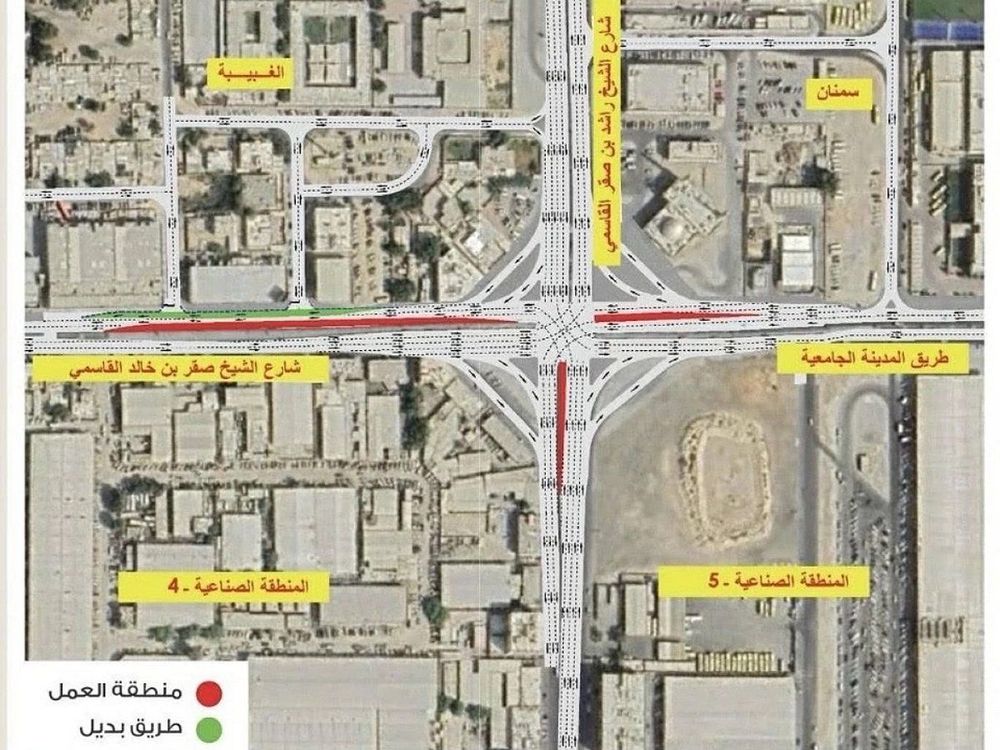
Sharjah's Public Works Department has announced a 74-day partial closure of Sheikh Saqr bin Khalid Al Qasimi Road to accommodate construction works on the emirate's Central Stormwater and Groundwater Drainage Line project. The closure, which began at 9pm on Monday, July 20, will remain in effect until Thursday, October 1, 2026.
The affected section runs from the Sheikh Rashid bin Saqr Al Qasimi intersection towards the Al Wahda Street junction in the Al Ghubaiba area, in accordance with the approved traffic management plan. An alternative route has been established to maintain traffic flow and reduce disruption for road users during the construction period.
Major Infrastructure Investment
The road closure forms part of the Dh500 million Central Stormwater and Groundwater Drainage Line project, which covers approximately 4,000 hectares across the emirate. The project employs micro-tunnelling technology at depths ranging from 13 to 20 metres, with the network extending 16 kilometres in total length.
More than 651 workers have contributed to the project, which has achieved two million safe working hours as of April 2026. The project budget has already exceeded its initial allocation, reflecting the complexity and scale of the infrastructure works.
The construction relies primarily on micro-tunnelling to minimize surface disruption, with 15 kilometres of the network installed using this method compared to only 800 metres of open excavation. The system uses 5,267 Glass Reinforced Plastic pipes, each 3 metres long with a lifespan exceeding 50 years.
Response to Flooding Challenges
The drainage project addresses critical infrastructure gaps exposed by severe weather events. In April 2024, the UAE experienced its largest single day of rainfall in 75 years, causing widespread flooding in Sharjah that required emergency response including deployment of 65 community service patrols, water tankers, and boats for resident evacuation.
As recently as March 2026, just months before the current road closure, Sharjah Municipality deployed dozens of water tankers to drain floodwaters from affected areas including Al Majaz 2, Muwailah, Al Qasimia, Abu Shagara and Al Khan following heavy rainfall, demonstrating the ongoing urgency of completing the drainage infrastructure.
Sharjah's rapid urbanization has significantly increased flood frequency and severity due to changed land cover and modified hydrological characteristics. The emirate historically lacked proper drainage infrastructure due to infrequent rainfall events, but increasingly unpredictable rainfall patterns linked to climate change have made such systems essential.
System Design and Timeline
The drainage system operates through gravity flow, directing water to two main pumping stations at Al Ghubayba and Al Sour before discharging into the sea. The project aims to improve stormwater management and reduce flood risks across the emirate.
The first phase is scheduled for completion by the end of 2026, covering areas including Al Nad, Abu Danig, Al Mahatta, Al Yarmook, King Abdulaziz Street and Abu Shaghara Tunnel. Full system completion is expected in February 2027.
The department said the works are intended to enhance road preparedness, improve traffic safety and support the long-term sustainability of the emirate's public infrastructure. The project reflects Sharjah's vision to develop resilient infrastructure capable of handling increased rainfall due to climate change.
The authority urged motorists to follow designated diversions, use alternative routes and comply with traffic signs and road safety instructions to ensure their safety during the construction period.