Black bear dies after becoming trapped on utility pole in remote New Mexico
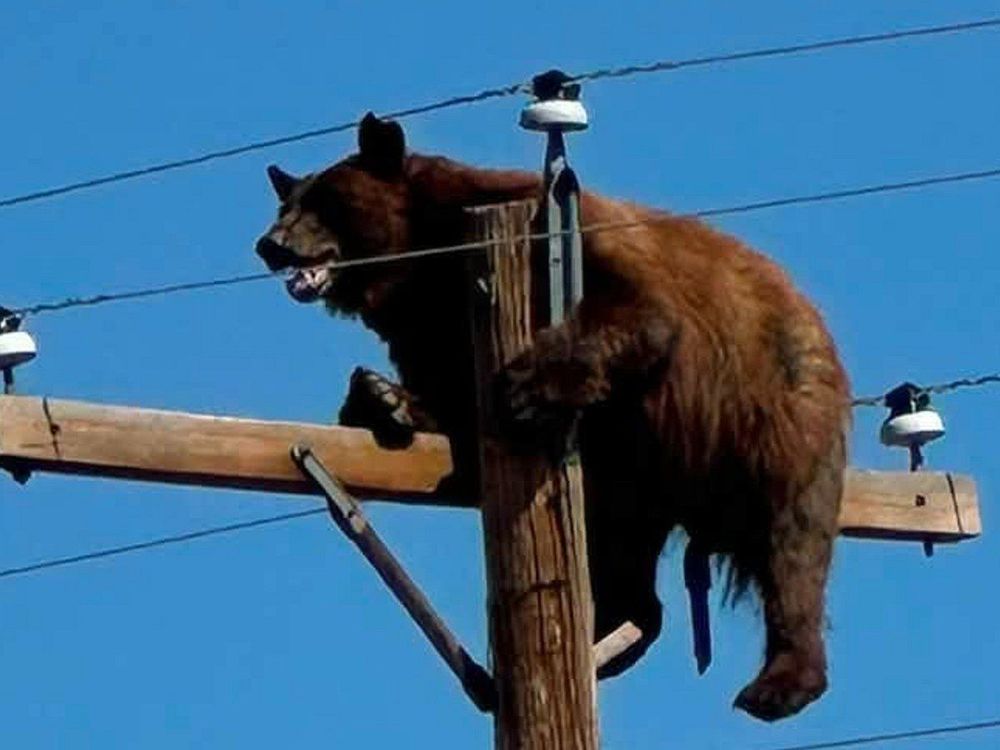
A black bear that climbed a power pole near Gladstone, New Mexico on July 20 was fatally electrocuted after wildlife officials determined a rescue attempt would be too dangerous for the stranded animal.
Black bear dies after becoming trapped on utility pole in remote New Mexico
On July 20, motorists traveling along Highway 56 near Gladstone, New Mexico encountered an unusual and alarming sight: a black bear stretched across the crossarm of a utility pole, trapped high above the ground with no safe way down.
The incident unfolded in one of the most remote corners of northeastern New Mexico. Gladstone is an unincorporated community in Union County with just five residents, located at the intersection of US Route 56 and Union County Road C001 in a flat, barren landscape. The area is far from the mountainous and forested regions in northern and western New Mexico where the state's estimated 5,000 to 6,000 black bears typically live, making the sighting particularly unusual.
At first, some passing drivers thought the bear was already dead. Then it moved. Word spread quickly, and motorists began stopping along the roadside. Phones came out. Videos were recorded. The bear remained motionless for long stretches, clinging to the pole surrounded by live electrical equipment.
Wildlife officials from the New Mexico Department of Game and Fish were called to the scene. They faced a difficult decision. Tranquilizing the bear was not an option. Sedatives take effect gradually, causing animals to lose coordination before becoming fully unconscious. A bear falling from that height could suffer fatal injuries before rescuers could intervene. The ongoing activity around the base of the pole may have also discouraged the frightened animal from attempting to descend on its own.
Officials instructed witnesses to leave the bear alone in hopes it would climb down without human interference. But the crowd lingered. Traffic continued to slow. The bear stayed where it was.
Before a safer rescue could be arranged, the animal came into contact with the electrical equipment and was fatally electrocuted.
Why bears climb utility poles
Black bears instinctively climb when startled by traffic, dogs or people, treating wooden utility poles like trees. But unlike trees, poles offer no cover, few escape routes, and exposed high-voltage electrical equipment with limited room to maneuver safely. Once atop a pole, bears can become trapped by fear or disorientation, unable to safely navigate back down.
Similar incidents have occurred elsewhere in the Southwest. In June 2021, a young black bear climbed a 40-foot power pole in Willcox, Arizona and became stranded beside a 7,200-volt power line. Wildlife officials successfully rescued that bear. More recently, in December 2025, a bear in Cochise County, Arizona was saved when a lineman de-energized the equipment and used a fiberglass stick to help guide the animal safely down.
Those rescues highlight what made the New Mexico incident different: timing, location and the ability to quickly shut off power. In remote areas with limited resources and ongoing public presence, the window to act can close before help arrives.
Growing bear population
The New Mexico black bear population has been steadily growing thanks to improved conservation efforts. Wildlife biologists conduct annual surveys in northern New Mexico to monitor population health and adaptation to climate change. While the growth reflects successful management, it also means bears are occasionally appearing in areas where they are less commonly seen.
The footage from Gladstone has since circulated widely online. What began as an improbable wildlife encounter became a reminder of the risks animals face when human infrastructure and wild instincts collide.