Abu Dhabi to host first Middle East Data Center World amid Gulf AI expansion
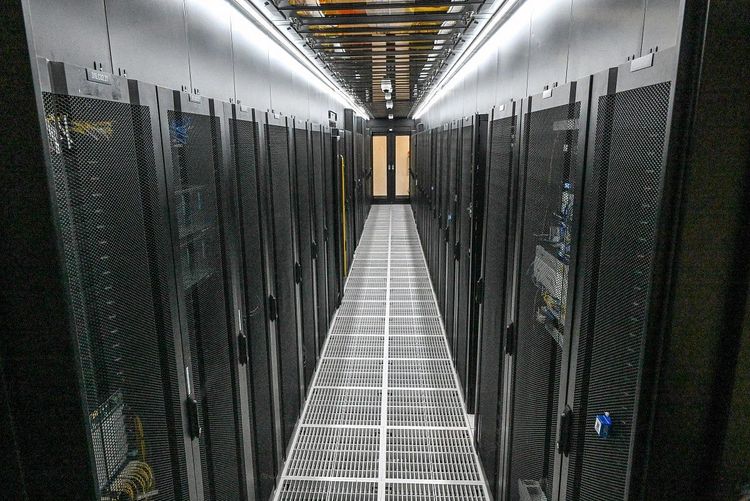
Data Center World will bring its first Middle East conference to Abu Dhabi on November 17-18, 2026, as AI adoption, cloud computing and growing data consumption drive investment in the region's computing infrastructure.
 Layla Haddad

A new venue for a growing market
The two-day event at Dusit Thani Abu Dhabi extends the four-decade-old conference series into the Gulf. Organizer inD, a joint venture between Informa Group and Dubai World Trade Centre, is bringing the series to the Middle East after launches in Australia, Latin America and Europe earlier in 2026.
Research firm Omdia estimates that the Middle East added 1 GW of IT capacity in 2025 and that its data center capacity is expanding by nearly 25% a year. Tara Gibb, senior event director for Data Center World, described the Gulf as "one of its most important growth markets" and said its demand for AI capacity is reshaping the global data center industry.
Government officials, hyperscalers and infrastructure suppliers are expected to attend. Participants include the UAE's Ministry of Energy and Infrastructure and Ministry of Investment, along with Khazna Data Centers, Core42, AWS, Google, Oracle and NVIDIA.
The opening panel will examine the risks and practical challenges surrounding the Gulf's 3 GW target for AI, power and sovereign demand. Another session, Market Outlook 2030, will consider investment prospects in the UAE, Saudi Arabia, Oman, Qatar and Bahrain.
Cooling efficiency and volatile power demand
Power supply and efficiency are pressing concerns for the AI infrastructure buildout, while the Gulf's extreme heat makes cooling a major operational challenge. The conference will address those conditions through closed-door workshops covering AI hall design, cooling and electrical design for AI loads in 50°C conditions.
The UAE Ministry of Energy and Infrastructure and Khazna Data Centers have already launched a pilot focused on reducing energy use in data centers and district cooling systems. The technology carries a claim of up to a 40% reduction in cooling-related consumption; that figure is not presented as a demonstrated result of the pilot.
Eng. Mozah Alnuaimi, chief AI officer at the ministry, linked cooling savings directly to computing capacity: "Every megawatt saved in cooling is a megawatt of compute the grid does not have to build for." She added, "In our climate, water efficiency and energy efficiency are the same discipline." The ministry regards data centers as "a national efficiency opportunity, not only a load", she said.
NVIDIA's Sean James, distinguished engineer for energy systems, pointed to another challenge: the speed at which AI power demand can change. "Hundreds of megawatts moving in seconds is a power quality problem before it is a capacity problem," he said. He urged operators to manage those fluctuations with energy storage and advanced controls rather than treating AI workloads like traditional power loads.
Government cloud plans and the Stargate buildout
The infrastructure expansion accompanies the UAE's goal of increasing the digital economy's share of GDP from 9.7% to 19.4% within a decade. Abu Dhabi's Department of Government Enablement has an AED 13 billion digital strategy that calls for full migration to sovereign cloud as part of its push for an AI-native government by 2027, supported by a Unified Government Data Centre.
Khazna is also developing G42's planned 1 GW Stargate UAE cluster with partners including OpenAI, Oracle, NVIDIA, Cisco and SoftBank. The cluster is part of the larger 5 GW UAE–U.S. AI Campus in Abu Dhabi.
OpenAI describes Stargate UAE as the first international deployment of its Stargate AI infrastructure platform and the first partnership under its OpenAI for Countries initiative. Under that partnership, the UAE is set to become the first country to enable ChatGPT nationwide. OpenAI says the cluster could provide AI compute across a 2,000-mile radius, potentially reaching as much as half the world's population.
G42's October 16, 2025, construction update said work on the first 200 MW was proceeding on an accelerated schedule toward planned delivery in 2026. By that update, procurement of all long-lead equipment was complete and the first mechanical systems had arrived at the site.
Also in October 2025, Khazna CEO Hassan Al Naqbi described a five-phase project covering about 10 square miles. At the time, he said the company aimed to build out the first operational campus over the following 18 to 24 months and complete the full 1 GW cluster within three years.