Abu Dhabi targets 100% carbon-free cooling for data centres by 2035 amid AI-driven expansion
Khazna Data Centers sets ambitious sustainability goals as AI infrastructure growth intensifies energy and water demands across Abu Dhabi's rapidly expanding data centre sector.
 Layla Haddad
Abu Dhabi data-centre expansion accelerates as 100% carbon-free cooling power set as 2035 goal
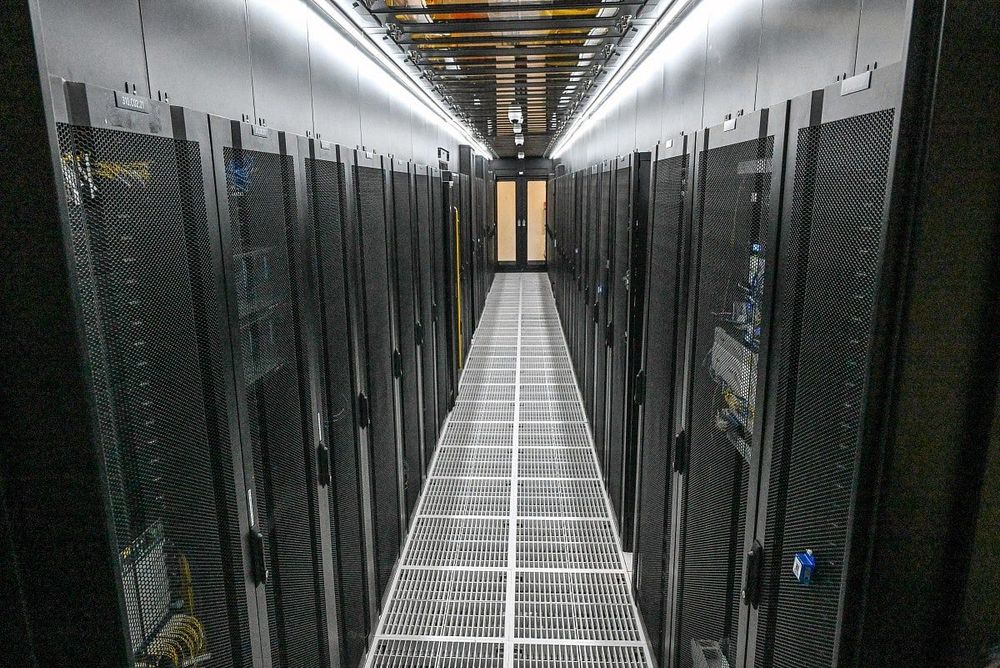
Abu Dhabi's data centre industry is accelerating its expansion to meet surging demand for artificial intelligence infrastructure, with operators setting aggressive sustainability targets to curb the environmental impact of increasingly power-intensive facilities.
Khazna Data Centers, a subsidiary of G42 and e&, has committed to achieving 50% carbon-free electricity coverage for mechanical cooling load by 2030 and 100% by 2035, according to Elisabetta Baronio, the company's ESG Director. Founded in 2012 by Mubadala Investment Company to build digital infrastructure supporting the UAE's transformation, Khazna now holds approximately 74% of the UAE data centre market with 24 operational facilities and eight under construction.
The company's 2035 target specifically addresses mechanical cooling systems rather than total electricity consumption including computing load. In 2025, Khazna consumed 246,468 MWh of grid electricity for cooling across its fully owned facilities, with 27% already sourced from carbon-free power. Approximately 20% came from onsite solar generation, while the remainder was covered through certified clean-energy instruments.
AI driving unprecedented demand for data centre capacity
Hassan Alnaqbi, CEO at Khazna Data Centers, noted that demand for data centre capacity is accelerating at an unprecedented pace driven by AI growth. AI workloads consume substantially more power than traditional computing, with AI-optimized server racks requiring 40-60+ kW compared to traditional racks at 5-15 kW, and some AI training facilities reaching power densities exceeding 100 kW per rack. Global data centre electricity consumption is projected to reach approximately 945 TWh by 2030, with AI workloads accounting for a significant portion of this growth, according to the International Energy Agency.
The expansion comes as Abu Dhabi implements its 2025-2027 Government Digital Strategy, backed by AED13 billion in investment, with plans to become the world's first fully AI-native government by 2027. The UAE data centre market now holds more than 400 MW of operational colocation capacity, the largest base in the GCC region, with over $30 billion in announced AI and data centre investment. Market projections indicate growth between 11.9% and 17.33% annually from 2026 to 2031.
Major investments and expansion plans
Microsoft and G42 have announced a 200 MW expansion of data centre capacity in the UAE through Khazna, expected to come online by the end of 2026 as part of Microsoft's $15.2 billion commitment to the country. The Stargate UAE project, backed by G42, OpenAI, Oracle, NVIDIA, and SoftBank, targets a 1 GW AI compute campus with an initial 200 MW phase also set for 2026, representing one of the largest AI infrastructure projects globally.
Khazna's current capacity stands at 360 MW with plans to reach 850 MW by 2029. New facilities are designed with power usage effectiveness ratings of 1.5 or lower, matching the industry average, though trailing hyperscale operators like Google and Microsoft which achieve PUE ratings between 1.09-1.12. The company's approach includes modular construction, efficient cooling systems and real-time energy monitoring.
Water management and environmental challenges
Water management presents another challenge in Abu Dhabi's high-temperature environment, where cooling demands are especially intensive. In 2025, recycled water accounted for 19.8% of the water used for cooling at Khazna facilities, according to the company's ESG report.
Alnaqbi emphasized that growth brings expectations for operators to reduce environmental impact and report progress more consistently. The next phase of Abu Dhabi's data centre development will be measured not only by new capacity additions but also by whether operators can secure cleaner power sources, improve cooling efficiency and limit water consumption as AI workloads continue to expand.