Aster Hospital Mankhool introduces advanced cardiac imaging technology in Gulf-first procedure
Dubai hospital successfully performs first coronary intervention in the Gulf region using next-generation OCT imaging system, offering cardiologists unprecedented detail for treating blocked arteries.
Aster Hospital Mankhool introduces advanced cardiac imaging technology in Gulf-first procedure
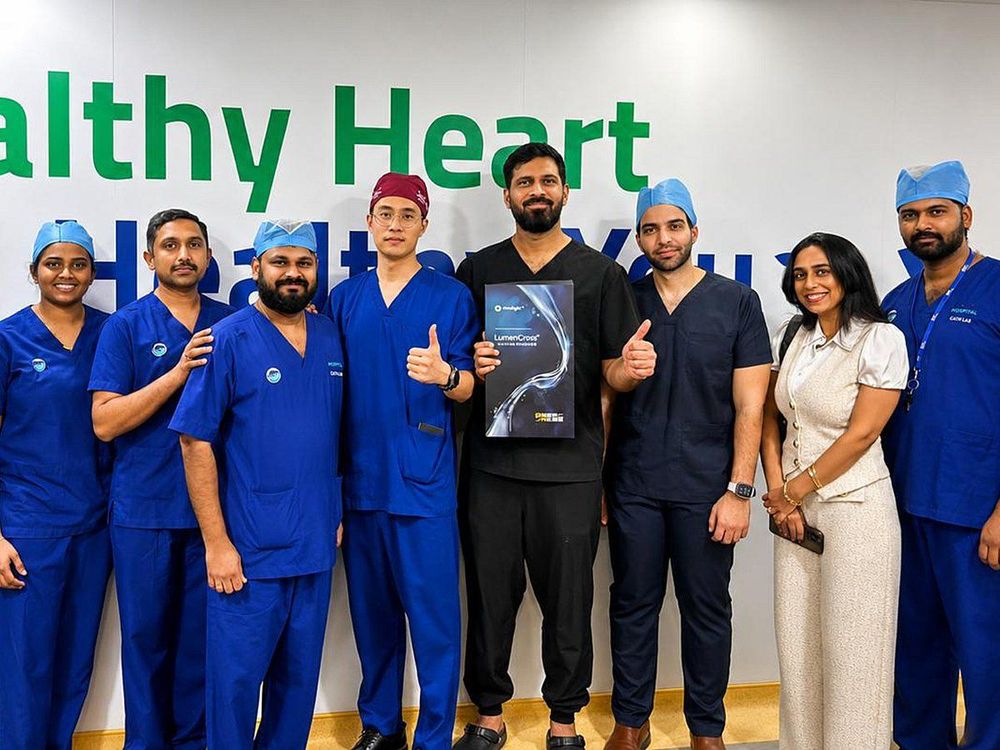
Aster Hospital Mankhool has become the first medical facility in the Gulf region to deploy an advanced cardiac imaging system that provides cardiologists with highly detailed, real-time views inside coronary arteries during complex heart procedures.
The Dubai-based hospital, which ranked fourth in the UAE in Newsweek's World's Best Hospitals 2026 list, successfully performed its first coronary intervention using the Cornaris P80/P80-E Optical Coherence Tomography platform developed by Vivolight. The technology represents a significant advancement in interventional cardiology, offering resolution capabilities 10 times greater than intravascular ultrasound, the previous standard for coronary imaging.
Technology with global regulatory approval
The OCT platform, which received FDA 510(k) clearance in April 2025 as the world's first multimodality OCT system to gain FDA approval, uses near-infrared light to create high-resolution cross-sectional images of artery walls. This approach differs fundamentally from conventional angiography, which relies on X-ray imaging to show only the outline of blood vessels.
The enhanced imaging capability allows physicians to closely examine blockage characteristics, calcium deposits and blood flow patterns before determining optimal treatment strategies. With over 100,000 coronary OCT procedures performed worldwide annually since 2017, the technology has gained substantial clinical acceptance in interventional cardiology, having originally been developed for ophthalmology applications.
Precision in complex cases
Dr Naveed Ahmed, Head of Cardiac Services at Aster Hospitals & Clinics UAE, explained the clinical advantages of the new platform.
Instead of relying only on traditional images, we can now assess the structure of the blockage and the surrounding artery in much greater detail. This helps us perform complex procedures with greater precision and make better treatment decisions for our patients.
The imaging system offers multiple scanning modes that enable doctors to examine different artery segments in one to three seconds while maintaining high image quality. The rapid scanning capability proves particularly valuable during Percutaneous Coronary Intervention, a minimally invasive procedure that uses balloons and stents to open blocked arteries without requiring open-heart surgery.
Successful first patient outcome
The inaugural case involved a 52-year-old Dubai resident with diabetes, hypertension and high cholesterol who presented with worsening chest pain. Medical teams diagnosed the patient with Acute Coronary Syndrome (NSTEMI), a serious form of heart attack requiring immediate intervention. The condition carries five-year mortality rates of 11-15% according to prospective follow-up studies.
Diagnostic imaging revealed severe narrowing in a major coronary artery along with additional disease in another vessel section. Using the OCT system for detailed assessment, the medical team treated the blockages with a drug-eluting stent, drug-coated balloon and additional interventions to restore normal blood flow. The patient underwent the procedure on June 2, 2026, was discharged the following day and has remained symptom-free.
Addressing regional health burden
The technology introduction comes as cardiovascular disease accounts for 40% of all deaths in the UAE, making it the country's leading cause of mortality. The UAE has the second-highest cardiovascular mortality rate among Gulf Cooperation Council countries, with age-standardized death rates of 204-309 per 100,000 population, surpassing rates in Western Europe and North America. Heart attacks in the UAE typically occur nearly 10 years earlier than in many Western countries, with men presenting in their 40s and women in their early 50s.
Dr Sherbaz Bichu, CEO of Aster Hospitals & Clinics for the UAE, Oman and Bahrain, emphasized the hospital's commitment to advancing cardiac care through proven medical innovations. He noted that the system's ability to capture detailed artery scans within seconds improves management of complex heart conditions and supports better patient outcomes.
International studies have demonstrated that OCT-guided procedures can improve treatment accuracy, reduce stent-related complications and lower cardiac death risk compared with procedures guided solely by conventional angiography.