Senate permitting bill nears possible vote amid environmental and tribal opposition
The Senate could vote Thursday on a bipartisan permitting overhaul that pairs faster infrastructure approvals and power-grid upgrades with limits on environmental challenges. Environmental and Native American groups are urging lawmakers to reject the measure, warning that its safeguards are too weak.
 Mariam Al Mansoori
A possible vote before the recess
The Bipartisan American Affordability and Jobs Act of 2026, or BAAJA, advanced in the Senate on Wednesday, according to AFP. A floor vote could follow Thursday before the Thanksgiving recess, with House consideration still to come.
The measure, S.5653, was introduced September 30, 2026, by the leaders of two Senate committees. Environment and Public Works Chair Shelley Moore Capito, R-W.Va., and ranking member Sheldon Whitehouse, D-R.I., joined Energy and Natural Resources Chair Mike Lee, R-Utah, and ranking member Martin Heinrich, D-N.M., in sponsoring it.
Senators voted 73-25 to invoke cloture on November 9, clearing a procedural hurdle for floor consideration and possible final passage during the week of November 16. To sidestep a possible filibuster, lawmakers attached BAAJA to an unrelated, popular bill that had already passed the House. A substitute amendment released November 7 expanded the package to nearly 500 pages, largely by adding sector-specific exemptions from the National Environmental Policy Act, or NEPA.
Lawmakers in both parties support overhauling the overlapping laws that have governed permitting for decades. Whitehouse, widely regarded as a congressional climate champion, argued on X that BAAJA would cut costs and pollution, expand clean energy, restore America's ability to build large projects and create union jobs.
Transmission upgrades and energy approvals
The legislation would accelerate energy, industrial and infrastructure projects by restricting challenges under NEPA, the Clean Water Act, the National Historic Preservation Act and the Endangered Species Act. Its grid provisions come as AI data centers, electric vehicles, heat pumps and extreme weather place increasing demands on the electricity system.
Utilities would have to modernize existing transmission lines and use advanced technologies. States would also have less power to block projects. A rewrite of Section 216 of the Federal Power Act would allow the Federal Energy Regulatory Commission, or FERC, to permit interstate transmission lines operating at 230 kV or above after a state has had a year to act.
For that federal approval, FERC would need to find that a line serves the public interest, protects ratepayers and reliability, and maximizes use of existing rights-of-way. BAAJA would eliminate the requirement for a Department of Energy National Interest Electric Transmission Corridor designation and extend FERC's siting powers to state-owned land.
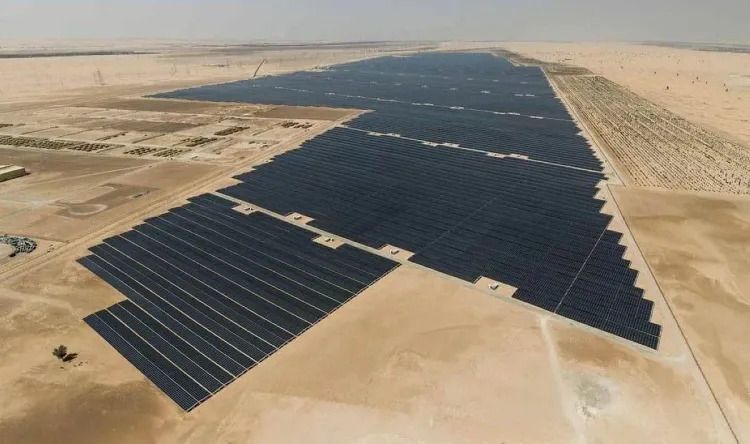
A supporter familiar with the negotiations told AFP that transmission improvements were essential to carrying power from desert solar installations and offshore wind farms to places with high demand. Permitting reform "has been talked about forever, and meanwhile we continue pumping carbon into the atmosphere, so we don't have any time to lose," the source said.
Another provision would constrain presidents from favoring or obstructing particular energy sources. It could prevent President Donald Trump from blocking renewable projects while also preventing a future Democratic president from revoking oil and gas pipelines. Democratic supporters expect clean energy to outperform fossil fuels in market competition.
The Trump administration took steps last week to advance some wind projects, a move seen as an effort to attract Democratic support.
Who would pay for data center demand
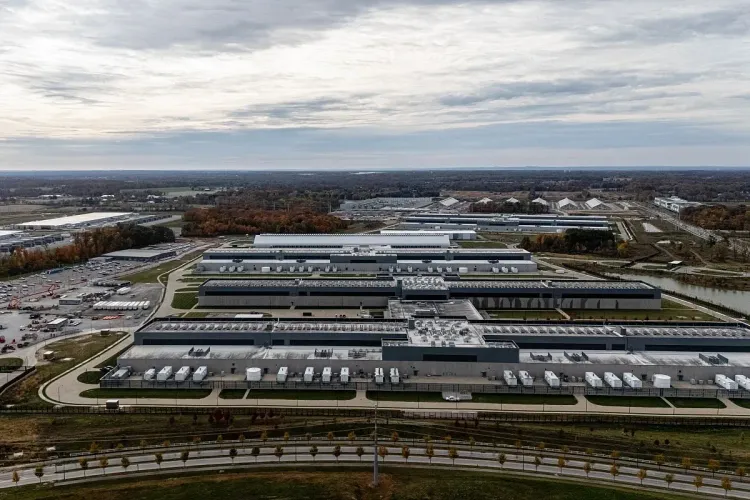
BAAJA would make it national policy that data centers and other computational loads cover the full additional grid infrastructure costs they create, along with embedded transmission service costs, rather than shifting those expenses to other electricity customers.
The November 7 manager's substitute removed a 20-megawatt cutoff from the earlier text, extending the provisions to data centers of all sizes. FERC would be directed to issue a policy statement within 90 days, and the legislation would establish a Data Center Community Assistance Program at the Department of Energy.
Grid Strategies estimates in a white paper that the transmission pricing changes could bring in $55 billion from data centers over a decade, about $35 billion more than current policy would collect.
Making data centers pay for their grid impact has been a major demand as household electricity rates have climbed. The bill does not, however, address the facilities' air pollution or water use.
Shorter legal deadlines and fewer housing reviews
For NEPA lawsuits, BAAJA would replace the Administrative Procedure Act's default six-year filing window with a 150-day deadline. Only parties that submitted substantive comments during the public comment period and can demonstrate direct harm would have standing to sue.
Courts finding a NEPA violation would be limited to remand without vacatur: sending the matter back to the agency without setting aside its decision. Judges would also have to give agencies substantial deference over the scope and contents of environmental documents.
The revised bill would exempt a broad range of housing projects supported by the Department of Housing and Urban Development or the Agriculture Department from federal historic preservation review. Those projects would also likely receive reduced environmental review. The changes would affect roughly $10 billion in annual federal housing programs, including CDBG and HOME.
Housing groups estimate that streamlined Clean Water Act reviews could cut costs by as much as about $425,000 per project.
Water pollution concerns drive opposition
Support for the transmission provisions has not persuaded environmental organizations to accept the broader package. Erik Olson, an attorney with the Natural Resources Defense Council, told AFP: "Our position is that as the bill is currently written, we oppose it."
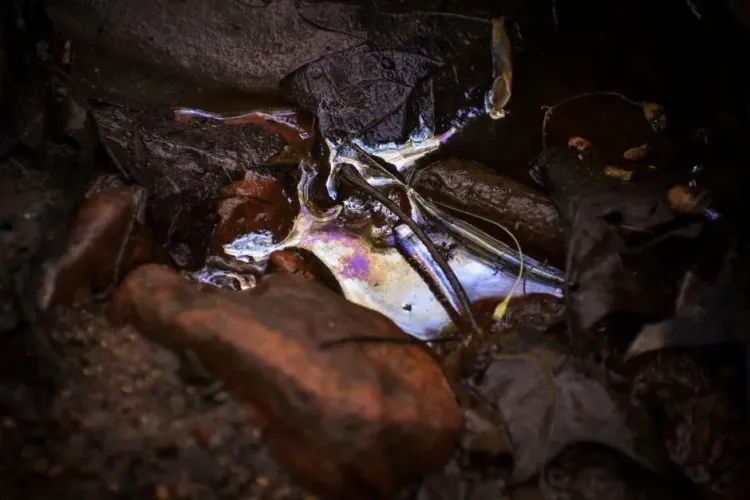
The Environmental Working Group warns that BAAJA could entrench toxic water pollution. Its senior policy analyst Jared Hayes said the bill would give industry greater scope to contest the scientific benchmarks used to set pollutant levels in water. Chemical manufacturers could use those opportunities to delay or litigate restrictions on PFAS, often called "forever chemicals," he said.
Hayes also objected to extending the maximum duration of discharge permits from five years to 10. That "doesn't align with science," he said, because regulators would find it harder to respond when a new contaminant is identified.
Emily Donovan, co-founder of Clean Cape Fear, described the permit extension as "an incredible concern for us." Speaking to AFP from Wilmington, North Carolina, she described a community facing a major PFAS crisis associated with the chemical GenX.
Donovan said testing at her children's elementary school found the highest PFAS levels ever recorded in tap water. Her husband recently recovered from a brain tumor that the family associates with PFAS exposure, she said.
Tribal objections and the next Congress
Native American organizations have also firmly rejected the legislation. The National Congress of American Indians said in a statement: "Congress must reject BAAJA in its entirety. Native sovereignty, sacred places, and cultural heritage are not negotiable."
Some Democrats have suggested pursuing a better measure after their party takes control of Congress next year following a sweeping midterm election victory. But the pro-bill source familiar with the talks argued that a new Congress would still face the same president.
"The president for the next two years will be Donald Trump. The idea that there is some better bill to be had in the next Congress, I think, is entirely illusory," the source told AFP.