AI Expansion Must Account for Resources and Social Equity, Former UAE Minister Argues
Disputes over US data center permits underscore the need to weigh AI development against environmental demands and social costs, former UAE minister Dr. Abdullah Belhaif Al Nuaimi argues in a Khaleej Times commentary. His case for a broader approach to sustainability comes as states suspend permit reviews and communities challenge new projects.
 Mariam Al Mansoori
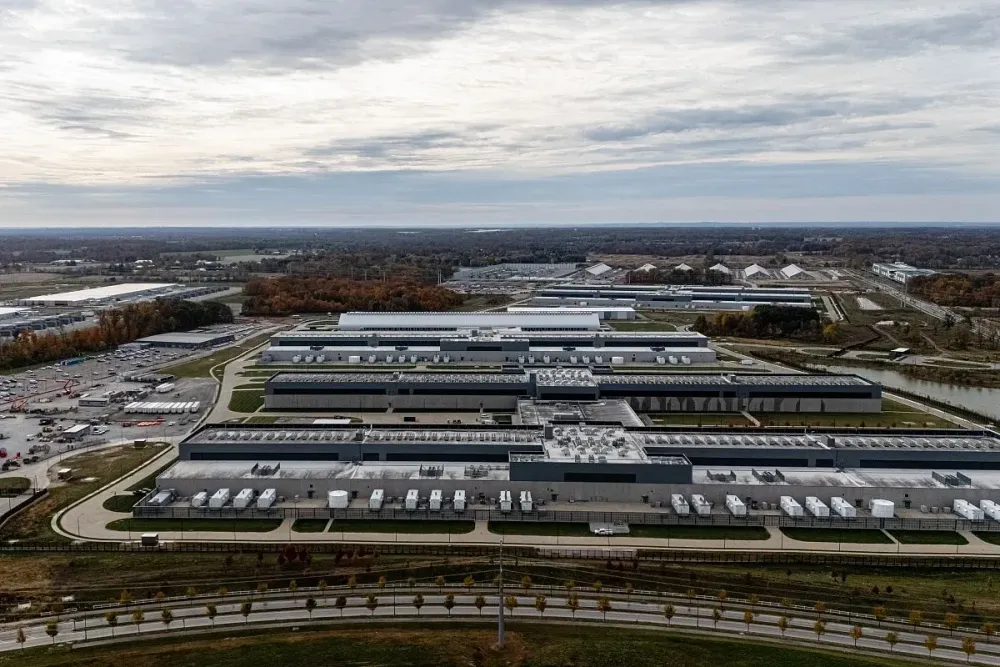
States and communities challenge data center growth
New York became the first US state to impose a statewide moratorium on large data centers when Gov. Kathy Hochul signed Executive Order No. 62 on July 14, 2026. The order puts state environmental permits on hold for new facilities and expansions with capacity of at least 50 megawatts. The pause lasts until completion of a generic environmental impact statement, expected to take up to a year, and does not apply to local government permits.
Texas followed with a separate review pause. On September 21, 2026, Gov. Greg Abbott directed state environmental regulators to suspend reviews of data center permits while officials audit the facilities' potential effects on water quality and the power grid.
Local restrictions have also spread. Axios reported on October 31 that opposition had resulted in more than 300 local moratoriums. S&P Global Commodity Insights reported that local governments adopted 294 moratoriums and bans from January through July 2026. It also reported that 34 data center-related measures were set to go before voters in the November midterms across 30 counties in eight states.
The resistance has affected proposed investments: research firm Data Center Watch counted at least 45 projects, together valued at nearly $68 billion, that were blocked or delayed between April and June 2026.
Electricity demand and the less visible water footprint
The International Energy Agency puts the infrastructure's growing electricity needs in perspective. Worldwide data center electricity demand rose 17% in 2025; consumption at AI-focused facilities increased 50%. The agency forecasts that total data center use will climb from 485 terawatt-hours in 2025 to 950 terawatt-hours in 2030, roughly doubling to about 3% of global electricity demand.
The IEA also projects a doubling of emissions associated with data centers, reaching approximately 350 million metric tons in 2035. Even at that level, the sector would account for about 2% of emissions from global electricity generation.
Much of the sector's water footprint occurs away from the data centers themselves, at power plants supplying their electricity. This indirect consumption dominates the total. According to Meta's sustainability report, it represented about 96% of the company's 2024 water consumption of 21 billion gallons, or 80 billion liters. Meta's total consumption was nearly 120% higher than in 2021.
Estimates of annual indirect water consumption by US data centers vary widely. A 2024 Lawrence Berkeley National Laboratory study put it at 211 billion gallons, or 800 billion liters, while an analysis by the nonprofit Ceres estimated as much as 4 trillion gallons.
In Arizona, potential increases in demand coincide with cuts to water supplies. The federal government announced a 27% reduction in the state's Colorado River allocation in August 2026. Bloomberg Intelligence estimates that AI data center projects under construction in Arizona could bring onsite water demand to 5 billion gallons a year in coming years, equivalent to about 4.5% of Phoenix's current annual water production.
Sustainability beyond climate policy
Al Nuaimi, a sustainable development professor at the American University of Sharjah and a former UAE minister of climate change and environment, approaches these disputes through a question a student asked during one of his public lectures: why does sustainability so often mean climate change, even in discussions of education, leadership, health or governance?
His answer treats climate change as a reason sustainability gained urgency, rather than its origin. Rising temperatures, more frequent and intense disasters, and changing disease patterns threaten not only ecosystems but also the food, water, health, economic and governance systems on which societies depend.
AI brings the same broader questions into focus, he argues. Its potential gains in productivity, medicine, education and innovation must be considered alongside the energy, water and land needed to support it. The issue is how to pursue those gains responsibly, including how resources are shared and how the costs and benefits are distributed.
Who bears the costs
For Al Nuaimi, social justice is central to that assessment. Low-income families often face greater harm from extreme heat, polluted air, higher food prices and interruptions to health services. He also stresses that decisions in one country can affect environmental, economic and social conditions elsewhere, making international solidarity necessary.
He connects this argument to Ibn Khaldun, the Arab Tunisian scholar who linked a state's prosperity more than six centuries ago to justice, production and social solidarity. Al Nuaimi interprets those principles as counterparts to equitable societies, resilient and diversified economies, and the ability to adapt collectively.
In his reading, growth that disregards justice erodes social cohesion; weak productive capacity leaves a society exposed to outside shocks; and a lack of solidarity undermines its response to crises. Sustainability therefore concerns the institutions and relationships that allow a society to withstand disruption, not environmental policy alone.
The UAE example
Al Nuaimi presents the UAE as an example of this approach. It was the first country in the region to commit to net-zero emissions by 2050, and its investment in clean energy projects exceeds $50 billion across more than 70 countries.
He also cites the UAE's health system during the pandemic and its continuing preparations for climate-related health risks. Sustainability is part of education curricula, while research spanning climate, health and governance is expanding.
In government, he points to the country's AI strategy, circular economy initiatives, and food and water security programs as examples of planning that combines innovation and data with a long-term outlook. His argument is that durable development requires these efforts to work together with economic prosperity, social inclusion and environmental protection.