Abu Dhabi's clean energy output grew more than 1,000% from 2020 to 2025
Nuclear, solar and wind now produce about 46% of Abu Dhabi's electricity, up from less than 5% in 2020, according to the Emirates Water and Electricity Company (EWEC). Their combined output exceeded 49,300 gigawatt-hours in 2025, compared with approximately 4,100 GWh five years earlier.
 Mariam Al Mansoori
A shift in the generation mix
EWEC's latest consolidated operating figures show that electricity generation from clean and renewable sources increased by more than 1,000% between 2020 and 2025. The company attributed the expansion to its long-term capacity planning and the integration of these sources into Abu Dhabi's electricity system.
The shift was already evident in 2024. In an August 1, 2025, report, Middle East Economic Survey (MEES) said nuclear, solar and wind had supplied more than 40% of the emirate's electricity that year, bringing power-sector gas demand to its lowest level in 14 years.
Mohamed Al Marzooqi, EWEC's chief assets officer, said the five-year progress demonstrated the value of long-term planning and a diversified mix of clean and renewable generation. He said using nuclear, solar and wind at scale helps lower carbon emissions intensity while preserving the reliable, secure electricity supply needed for economic growth.
Barakah and large solar plants expand supply
The addition of Barakah Nuclear Energy Plant's four units over the 2020-2024 commissioning period gave Abu Dhabi a source of emissions-free baseload electricity. Commercial operations began at Unit 1 in April 2021, followed by Unit 2 in March 2022, Unit 3 in February 2023 and Unit 4 in September 2024.
EWEC says all four APR1400 reactors are fully operational and prevent up to 21 million metric tons of carbon emissions annually.
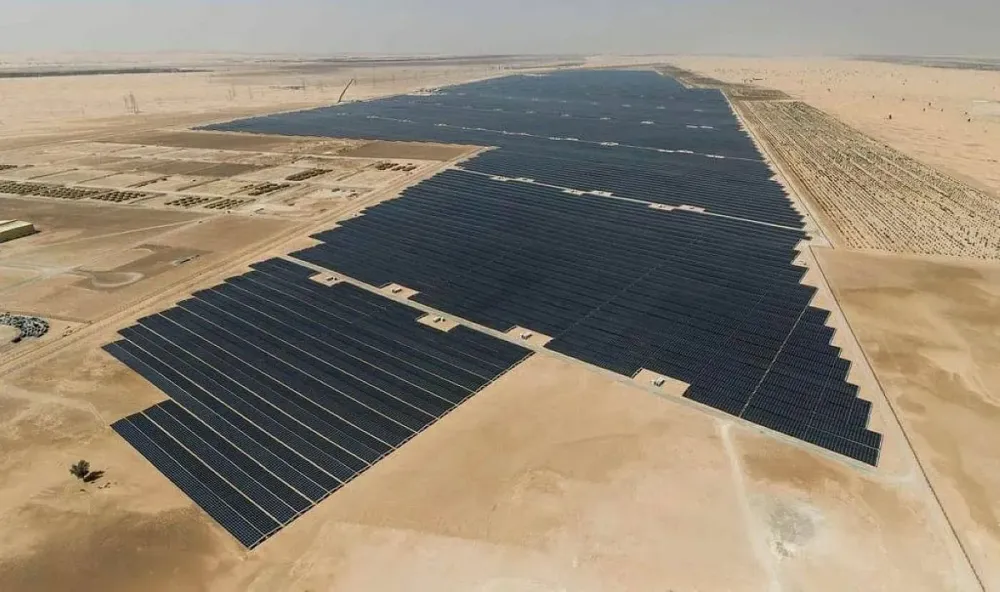
Solar development has expanded alongside nuclear generation, including at Al Dhafra Solar Photovoltaic (PV) Plant and Noor Abu Dhabi. Both rank among the world's largest single-site solar plants. Al Dhafra has 1.5 GW of AC capacity and approximately 4 million bifacial panels, according to EWEC, which credits the plant with cutting Abu Dhabi's carbon emissions by more than 2.4 million metric tons a year.
Solar forecasts and the 2035 target
EWEC is responsible for implementing the Abu Dhabi Department of Energy's Clean Energy Strategic Target 2035: sourcing 60% of the emirate's electricity production from clean and renewable energy by 2035. Al Marzooqi said the company remains committed to adding capacity and making the electricity system more resilient to support the long-term sustainability of the energy sectors in Abu Dhabi and the UAE.
The company's solar capacity figures have changed between announcements. On December 24, 2024, EWEC set out targets of 10 GW of installed solar PV capacity by 2030 and 18 GW by 2035. In a May 16, 2026, statement, it forecast 17.5 GW by 2030, describing an increase of almost 2,000% from 2020.
That May statement projected solar capacity above 30 GW by 2035, when EWEC expects solar to supply approximately 40% of Abu Dhabi's total electricity generation.
EWEC is also working with Abu Dhabi Future Energy Company (Masdar) on a round-the-clock renewable power project. As described in the May 16 statement, the development pairs a 5.2 GW solar PV facility with 19 GWh of battery storage and is designed to deliver 1 GW of continuous renewable baseload power.
Projected reductions in emissions
EWEC's May 16, 2026, forecasts also put the average carbon dioxide intensity of electricity generation at 162 kilograms per megawatt-hour by 2030, a 51% decline from 335 kg/MWh in 2019. For water production, it expects intensity to fall 94%, from 13.5 kilograms per cubic meter in 2019 to 0.7 kg/m3 by 2030.
The company projects that its total CO2 emissions will be nearly 46% below 2019 levels by 2035. EWEC said further clean and renewable energy development would support the Abu Dhabi Clean Energy Strategy 2035 targets and the UAE's initiative to reach net-zero emissions by 2050.