COP31 ends without a deal after record-long talks in Turkey
Countries rejected a proposed climate agreement in Antalya on Sunday, November 22, after two days of overtime failed to resolve disputes over fossil fuels and financing. COP31 became the first UN climate summit since Copenhagen in 2009 to close without a headline agreement.
 Mariam Al Mansoori
Fossil fuel language dropped
The proposed Antalya Pact drew opposition from European countries, Pacific island states and other delegations. Its final version contained no mention of fossil fuels and offered no specific financial commitments.
That outcome followed a retreat from the initial negotiating text. According to CNN, the first draft of the overarching agreement, published Monday, called for "the immediate transition away from fossil fuels in energy systems". Every later draft omitted fossil fuels, despite efforts by more than 100 countries to retain the language.
For some negotiators, the omission marked a reversal of progress made three years earlier at COP28 in the United Arab Emirates, where countries reached their first agreement to "transition away" from fossil fuels.
Observers told Reuters that Saudi Arabia and other major oil producers pressed for an agreement that excluded explicit references to fossil fuels but included carbon-removal technologies. DW reported that Russia also backed the omission of language on accelerating a fossil-fuel phaseout, arguing that the fuels remained necessary for power and that countries should choose their own emissions-reduction paths.
Disputes over warming, technology and money
DW reported that COP31 was the first such summit held with explicit knowledge that global temperatures were set to exceed 1.5°C above preindustrial levels. That threshold has been the central global climate target for a decade. The compromise drafts acknowledged this overshoot and proposed expanding carbon-removal technologies to eventually reverse it.
The rejected agreement also sought to expand carbon capture and storage to "gigaton scale" by 2035. Saudi Arabia defended the technology against accusations of greenwashing. Vanuatu's climate minister, Ralph Regenvanu, said it "had been singled out for special attention that it doesn't deserve".
Financing remained unresolved as well. According to DW, the final draft proposed more discussions on "an implementation pathway for tripling adaptation finance by 2035", without attaching a funding figure to that proposal. It separately acknowledged that developing countries need about $300 billion a year for adaptation through 2035.
Overtime ends in recriminations
Negotiators continued roughly 44 to 48 hours beyond the scheduled Friday, November 20, close before the talks collapsed on Sunday. CNN and AFP described COP31 as the longest UN climate conference on record.
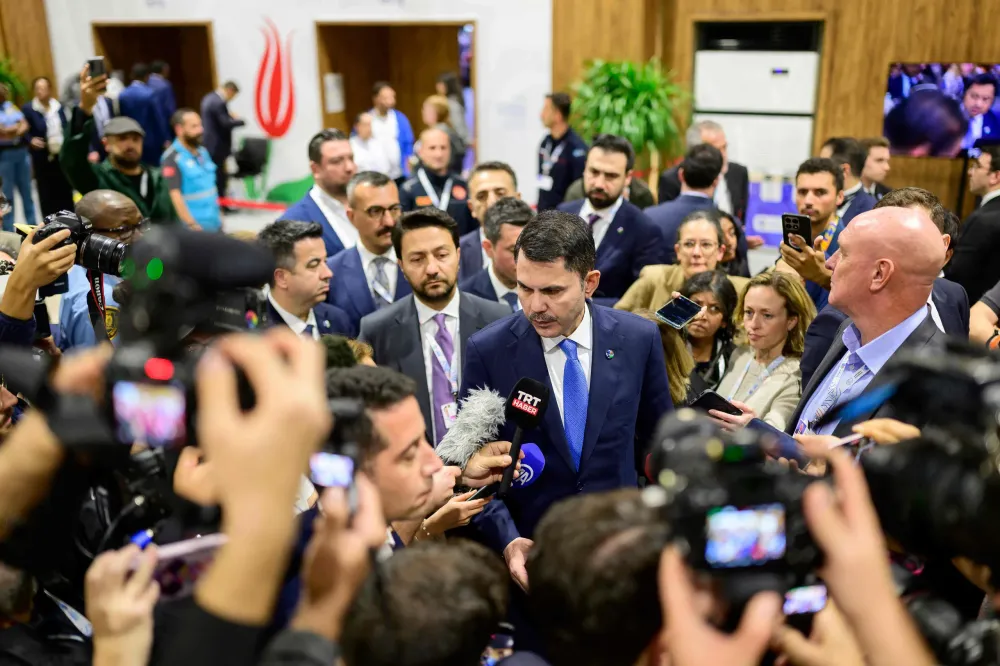
COP31 President Murat Kurum had expressed optimism earlier on Sunday, describing the remaining proposed changes as "minor requests". By the afternoon, the final text still could not secure agreement.
African negotiators accused Kurum of disrespect, and he waved away UN climate chief Simon Stiell when Stiell tried to speak. Kurum, in turn, said some countries had "got hung up on a single word or phrase" and raised issues he considered irrelevant.
"There is nothing more to be done. We did everything in our power. The decision belongs to 196 countries. Therefore, we will respect their decision," Kurum said.
Tuvalu criticized a lack of engagement and transparency during the two-week meeting. Its minister for home affairs, climate change and environment, Maina Vakafua Talia, said: "Listening to parties who diminish the credibility of signs of climate change is disappointing."
Egyptian negotiator Wael Aboulmagd also rejected the text. He said Egypt would draw lessons from the session and continue working constructively to restore momentum and deliver support owed to the most vulnerable.
Warnings from the UN and climate advocates
UN Secretary-General Antonio Guterres said he was "deeply disappointed" by the outcome.
"Temperatures keep shattering records. Climate extremes keep intensifying. Emissions remain far too high. And every delay makes our task harder and more costly," he said.
Ani Dasgupta, president of the World Resources Institute and a former World Bank official, called the result a "hollow outcome" that reflected a "failure of political leadership".
"People on the front lines of the climate crisis cannot afford for governments to spend more than two weeks with almost nothing to show for it," he said.
The annual summits aim to advance action on climate change. This year's negotiations took place amid setbacks including the US withdrawal from climate treaties under President Donald Trump and an energy crunch caused by the Iran war.
A separate electricity pledge and the next summit
Outside the formal negotiations, about 75 countries, including China, adopted a Turkey-backed pledge known as "35 by 35". It calls for electricity's share of final energy demand to rise from around 20% to 35% by 2035. The pledge is nonbinding and does not require the additional electricity to come from clean sources.
The failure to adopt a political declaration does not cancel obligations from earlier summits or dismantle the technical and legal frameworks for international climate action, Reuters reported.
COP32 is scheduled for 2027 in Addis Ababa, Ethiopia, with Ethiopian Foreign Minister Gedion Timothewos set to preside.