Spain's largest wildfire on record reduces campsite to ash as nearly 100,000 evacuated
The historic blaze in Ávila province has burned 50,000 hectares and destroyed the Pantano del Burguillo camping ground, leaving owners and residents devastated as authorities declare a national emergency.
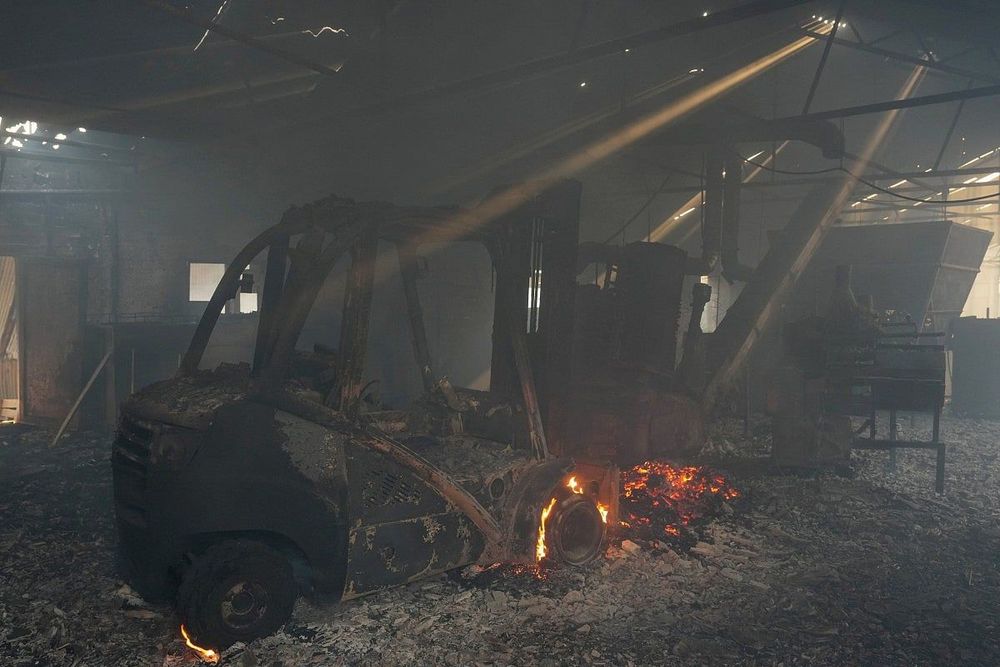
Everything lost
Magaly Vargas stood weeping over a square of grey ash that once held her caravan at the Pantano del Burguillo camping ground, approximately 80 kilometers west of Madrid along the Alberche River. Around her stretched the scorched remains of what had been a thriving holiday destination on the shore of the Burguillo reservoir in Ávila province.
"This is where I used to live," the 64-year-old public relations manager cried. "There's nothing left of it. It's awful. Awful."
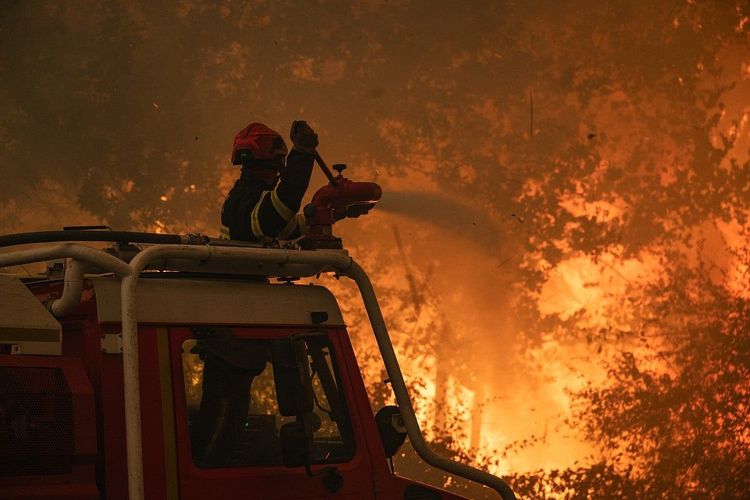
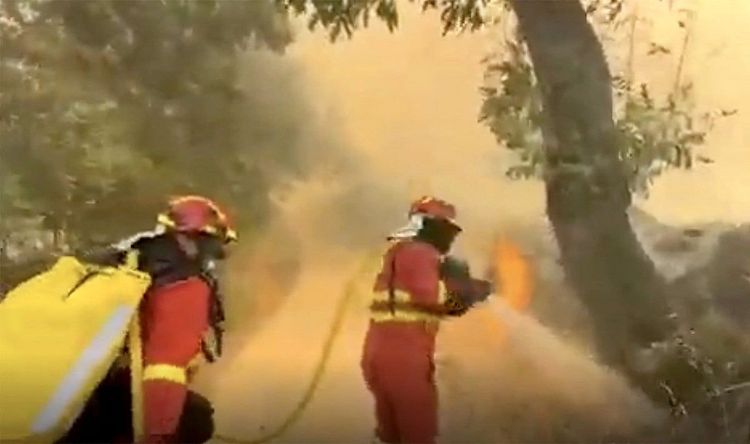
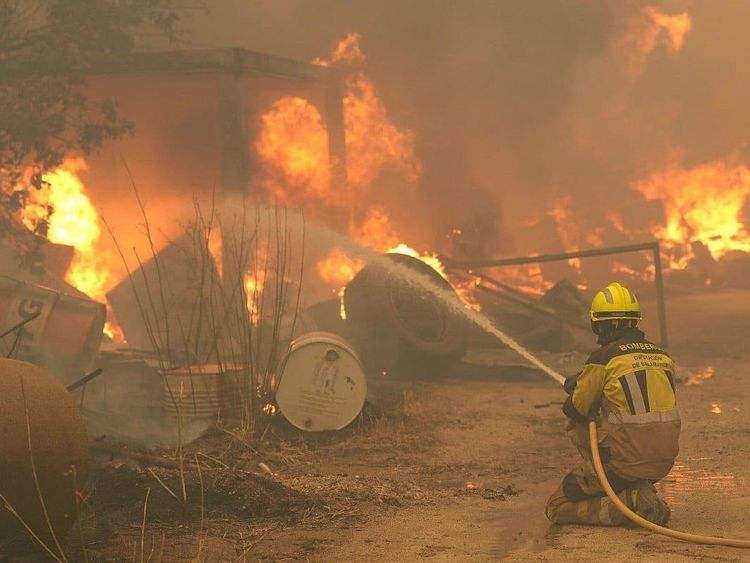
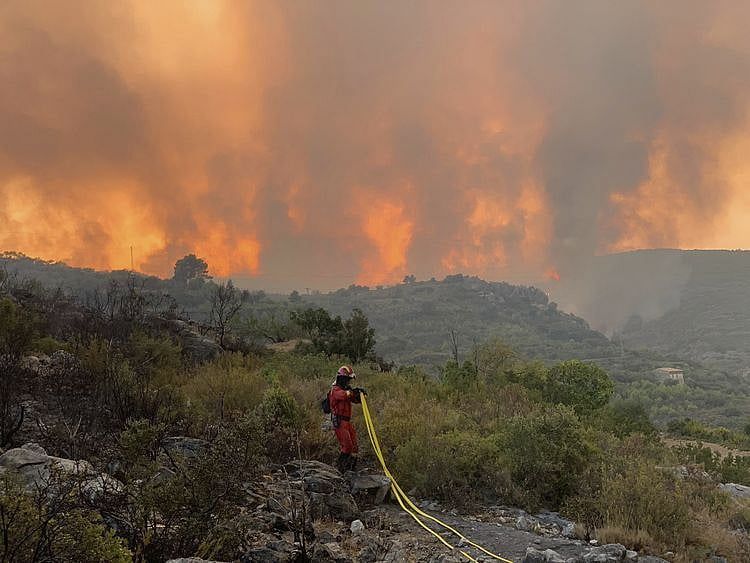
The campsite was consumed by Spain's largest wildfire in recorded history, which has burned 50,000 hectares in Ávila province by July 27, 2026. Spanish authorities declared a national emergency across the provinces of Madrid, Ávila and Toledo as the blaze forced nearly 100,000 people to evacuate or shelter indoors across the affected regions.
More than 30 people fled the Pantano del Burguillo site when flames attacked on Friday, joining tens of thousands ordered from their homes across the region. The inferno left behind crumpled sheet roofs and twisted metal bars jutting from the ruins.
"This is a house. This was a mobile home," said co-owner Maria Angeles Canete, 54, pointing to structures whose plastic walls had melted and disappeared. She and her husband Manuel Pascual, 58, owned two nearby camping grounds. Both were destroyed.
"We lost everything," Canete said, fighting tears. "We have nothing."
When the fire approached on Friday, Canete and Pascual escaped by boat onto the reservoir. "The trees lit up with flames," she recalled. "Then something went bang and we heard the gas canisters exploding."
Their desperate situation reflected the fire's severity. Carlos Novillo, the Madrid regional government's emergency management chief, stated on July 25 that the wildfire was "at its peak and currently beyond the capacity of firefighters to contain."
The couple returned later to find the entire camp burnt to the ground, with stacks of smashed porcelain plates and pots lying in the embers. "I don't sleep at night," Canete said. "It's a horrible memory. It's the worst thing that could happen to you in life — to see your business burning down bit by bit and no one coming to help you."
Landscape of devastation
Around the site stretched acres of charred earth, rocks and pines, with burnt houses and outhouses, their walls and windows scorched black. Columns of grey smoke billowed from the ground and a sharp smell of smoke hung in the air. On a track up the hill from the reservoir, a baby deer lay dead where it fell, legs splayed, its hair burnt off.
The wildfire also burned through the Madrid Deep Space Communications Complex, demonstrating the blaze's path through both residential areas and critical infrastructure as it spread across Castilla y León, Spain's largest autonomous community covering 94,200 square kilometers.
In the nearby town of El Barraco, firefighters sat exhausted at a cafe in dirty overalls after working through the night. Meanwhile, some residents began returning to their villages following last week's evacuations.
Returning to ruins
David Sanchez, 48, a decorator, went back to work in the village of Cebreros on Monday after two nights at his brother's home. White smoke still clouded the sky and specks of ash floated down onto cars. At the edge of town, dry vegetation smouldered by the roadside.
Sanchez had a small parcel of land where he grew olives and pistachios — all now destroyed. "Now it's time to clean up and plant again and that's it. It's a shitty situation to be honest," he said. "And the fire has flared up again down there" in the valley, where local people were working to isolate the flames.
His workmate Oscar Espinosa, 20, said he left the village on Thursday but returned on Friday to help stop the fire's spread by clearing ground with tools. "It's hell — everything is burning," he said. "All our hills have been burnt. All the greenery that we had has been devastated."
Unprecedented fire season
The disaster forms part of Spain's worst wildfire season on record, with over 171,000 hectares burned by late July 2026 — 80 percent above the 20-year average. The fires have been exacerbated by European heatwaves, with Europe warming at approximately twice the global average since the 1980s.
The trend extends across the continent. According to WHO Europe data, wildfires destroyed 2.2 million hectares of land in Europe in 2025, up 57 percent from 1.4 million hectares in 2022.
To the east, in the historic town of El Escorial, a larger campsite reopened on Monday after evacuating 5,000 guests. Holidaymakers queued at reception as manager Miguel Gil reported strong demand: "A lot of people are calling because they have seen on the news that we have reopened. They're very keen to come back and start their holidays."
But at Pantano del Burguillo, Maria Angeles Canete had no such hope. "It was a lovely campsite," she said. "A family place where people felt good all year round. People came from countries all over. They can't come anymore."