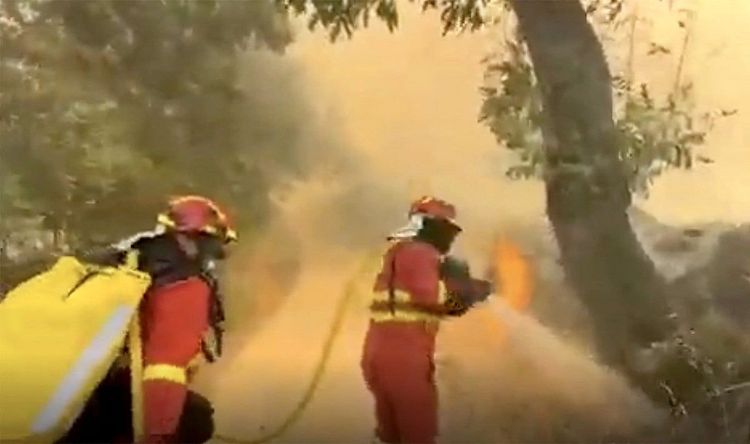
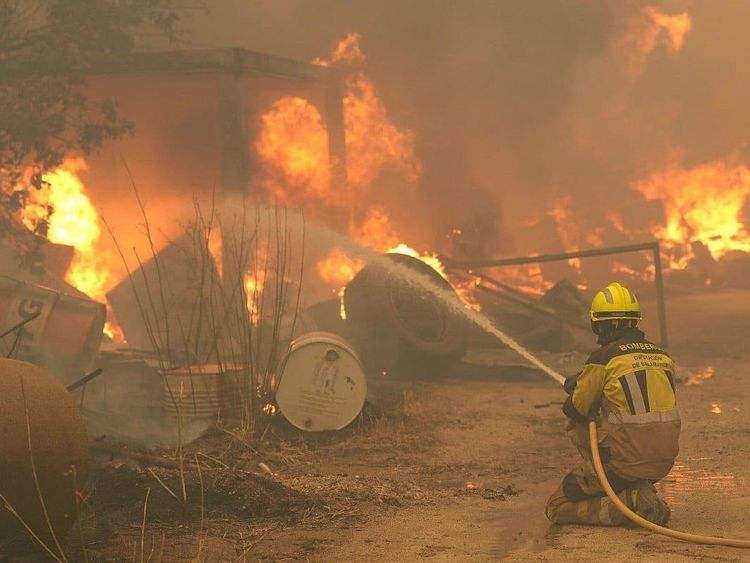
Spain declares national emergency as wildfires force mass evacuations in Madrid region
Spanish authorities have declared a national emergency in Madrid and Avila province as multiple wildfires burn out of control, forcing more than 10,000 people to evacuate amid the country's third heatwave of the summer.
Spain declares national emergency as wildfires force mass evacuations in Madrid region
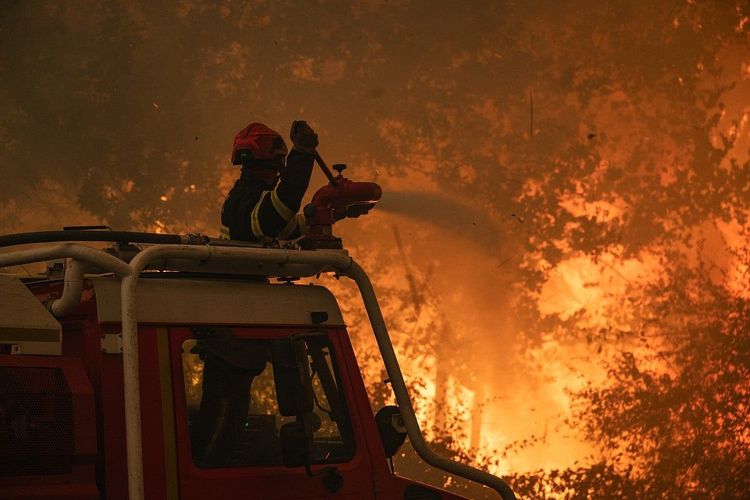
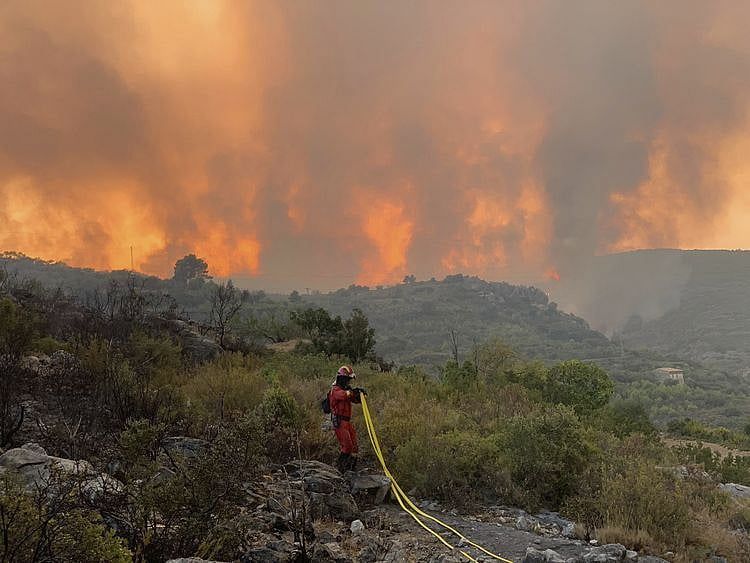
Spanish authorities declared a national emergency late Thursday in the Madrid region and neighbouring Avila province as multiple wildfires continued to burn out of control, forcing the evacuation of more than 10,000 people across central Spain.
The emergency declaration, announced by the interior ministry, places the crisis response under the command of the Military Emergency Unit, Spain's specialized disaster response force established in 2005 and based at Torrejón Air Base near Madrid. The measure aims to accelerate the deployment of resources to combat the fires.
More than 10,000 residents have been evacuated from communities across the Madrid region in recent days as several forest fires burn simultaneously. Early Thursday morning, authorities sent evacuation orders to 3,500 people in Aldea de Fresno, approximately 60 kilometres from the capital.
Multiple fires spread across central Spain
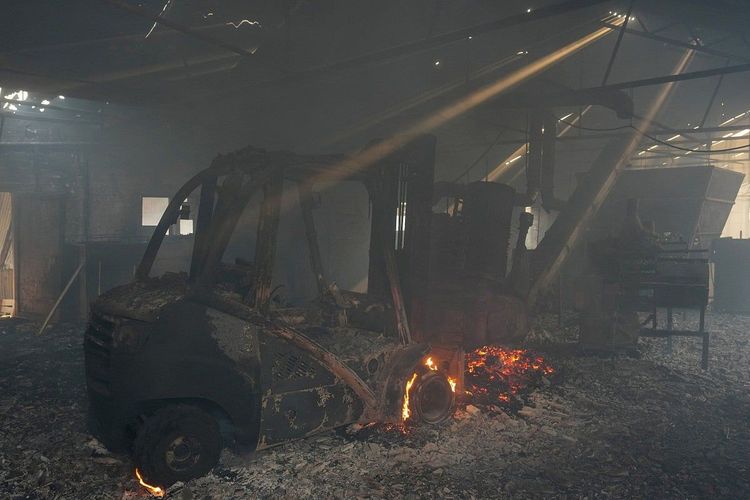
A fire that erupted Thursday in Avila province is advancing rapidly out of control. Residents in the municipalities of Burgohondo, El Tiemblo and Navaluenga have been ordered to remain indoors as flames approach populated areas. Authorities evacuated 1,500 people from a rural tourism complex and housing development in El Tiemblo due to the rapid advance of the fire front.
The largest blaze is burning in Guadalajara province, about 100 kilometres north of Madrid, and has devastated 32,000 hectares since igniting last Thursday. Prime Minister Pedro Sanchez said on social media that the government has deployed every available resource to stop the fires affecting Avila, Leon, Toledo, Madrid and other regions, urging the public to exercise great caution and follow official instructions.
Record-breaking fire season amid extreme heat
Spain is experiencing its third heatwave of the summer, with temperatures forecast to reach above 40 degrees Celsius in some areas and up to 44 degrees predicted in certain regions on Friday. The extreme heat has fueled the rapid spread of the fires and complicated containment efforts.
Spain has already burned approximately 1,140 square kilometres by mid-July 2026, more than five times the area burned during the first half of 2025, according to Spain's Minister for the Ecological Transition. The country has experienced more than 29 major fires this year, damaging a surface area five times greater than at the same stage in 2025.
Nearly 125,000 hectares have burned in Spain this year, compared with 393,000 hectares for all of 2025, according to the European Forest Fire Information System. Last year's fires were the worst in three decades, almost quadrupling the average annual area burned during that period.
Part of broader European crisis
The Spanish emergency occurs as wildfires continue to ravage southern Europe. In France, authorities ordered the evacuation of approximately 63,000 people from the Cap Ferret peninsula on the Atlantic Coast, many brought to safety by boat, as fires threatened the popular tourism destination.
Wildfires have already burned more land across Europe in 2026 than the annual average over the past two decades, as the continent endures three virtually back-to-back heatwaves this year. The combination of extreme temperatures and prolonged drought conditions has created ideal circumstances for fire ignition and spread.
Rural depopulation and the abandonment of traditional forest management practices have increased Spain's vulnerability to wildfires. The disappearance of farmland buffer zones around villages means trees and undergrowth now often reach right to homes, leaving communities more exposed when fires break out.