Pakistan announces merit-based free technology university to expand youth opportunities
Prime Minister Shehbaz Sharif unveils Daanish University offering free tech education alongside expanded China scholarships for AI and IT, as country grapples with 25 million out-of-school children and lowest literacy rate in South Asia.
Pakistan announces merit-based free technology university to expand youth opportunities
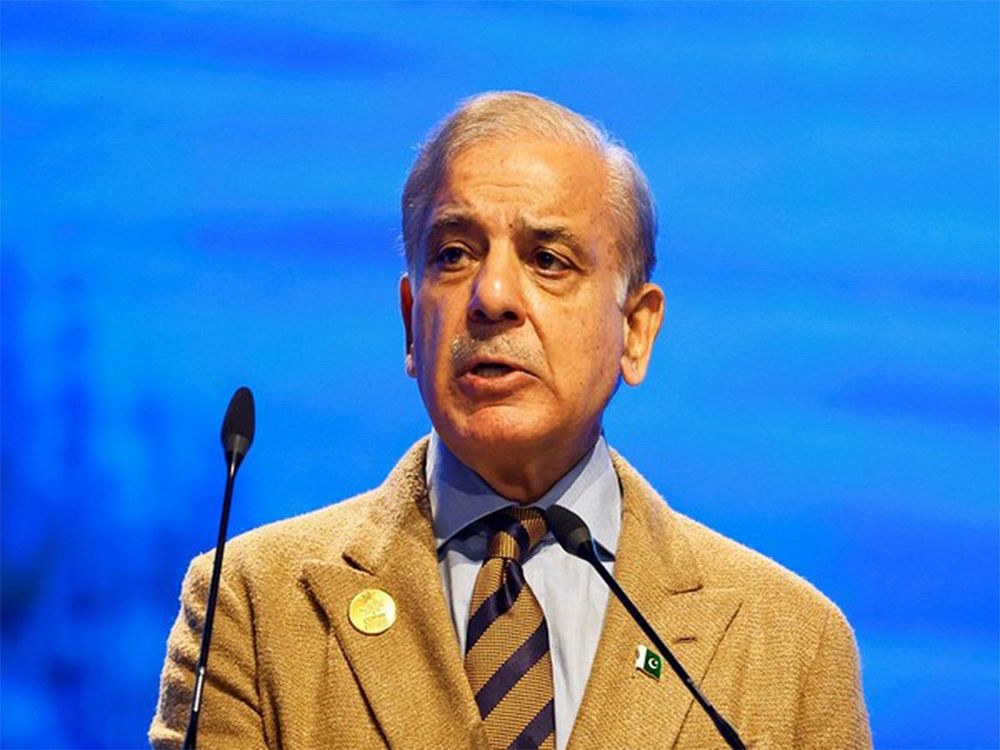
Pakistan will establish a technology-focused university offering free education to students selected purely on merit, Prime Minister Shehbaz Sharif announced on Wednesday, marking a significant expansion of educational opportunities in a country where nearly 67 million young people aged 15-29 face severe barriers to quality education.
The new institution, to be called Daanish University, will focus on technology education and will admit students without regard to their financial circumstances. The announcement came at an event in Islamabad marking International Youth Day, where Shehbaz also acknowledged that Pakistan remained far from becoming the social welfare state envisioned at its creation.
Addressing stark educational inequality
The prime minister highlighted a sharp divide in educational access between wealthy and poorer families. While children from affluent backgrounds attend Pakistan's best institutions and can pursue degrees at leading universities in Britain and North America, approximately 25.15 million children aged 5 to 16 remain out of school, according to Pakistan Education Statistics cited in the 2026 UNESCO Global Education Monitoring Report.
Pakistan's national literacy rate stands at 63%, the lowest among South Asian countries and significantly below the regional average of 78%. The situation is marked by severe gender disparity, with male literacy at 73% versus female literacy at just 52%, alongside provincial variations ranging from Punjab's 68% to Balochistan's 49%.
Building on Daanish Schools model
The new university will follow the model of Daanish Schools, which Shehbaz established while serving as Punjab chief minister. Created in 2010 under the Punjab Daanish Schools and Centres of Excellence Authority Act, the system operates a network of 20 boarding schools across remote and underdeveloped areas of Punjab, with 10 schools each for boys and girls.
These institutions target the most marginalized families, including orphans and children of illiterate parents without fixed income. The schools employ a highly competitive merit-based selection process, with over 1,600 candidates competing for 110 seats at individual campuses in 2024. Thousands of Daanish school graduates have since become doctors, engineers and teachers, Shehbaz said, describing their progress as part of efforts to realize founder Muhammad Ali Jinnah's vision for Pakistan.
Expanded China education partnerships
Shehbaz also announced an expansion of state-funded opportunities for high-achieving Pakistani students to study in China. Building on the existing programme that sends 1,000 students annually for agricultural education, high-performing students will now receive opportunities to study information technology and artificial intelligence in China at government expense.
The initiative complements existing educational cooperation between the two countries, including the Chinese Scholarship Council programme that offers 75 scholarship seats annually for Pakistani students. Pakistan has previously proposed that China provide 10,000 PhD scholarships over a 10-year period at China's top 25 universities, focusing on AI, engineering and emerging sciences as part of broader cooperation framework.
Budget allocation and new programmes
Addressing students at the event, the prime minister emphasized that Pakistan could not afford to leave its large youth population without essential skills. With approximately 66% of the country's population below age 30, the demographic pressure is immense.
Shehbaz confirmed that funds had been allocated in the current budget for youth empowerment and development. The federal government has earmarked Rs77 billion for the education sector in the 2026-27 development budget, with Rs41.19 billion directed to the Higher Education Commission and Rs36 billion for Ministry of Federal Education and Professional Training projects. However, Pakistan's education spending remains well below UNESCO's recommended benchmark of 4-6% of GDP.
At the event, Shehbaz inaugurated the Power Sector Innovation Programme, the National Youth Employment Policy and the Skills Ambassador Programme. Chairman of the Prime Minister's Youth Programme Rana Mashhood Ahmed Khan praised the initiatives and said Pakistan's progress was increasingly being recognized internationally.