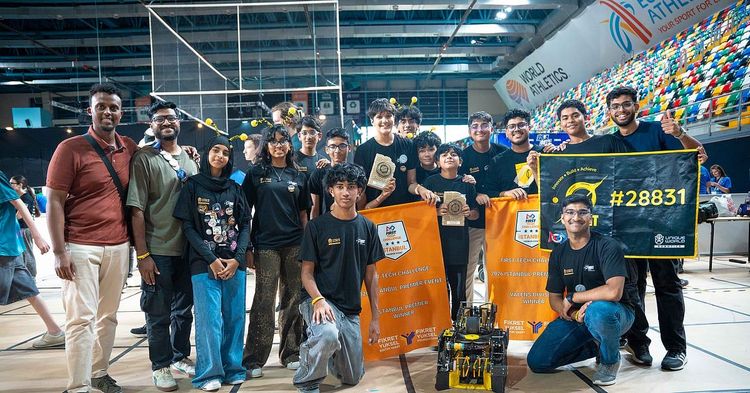
True educational success emerges over decades, not on results day
Strong exam results matter, but the most valuable outcomes of education—character, adaptability, and lifelong resilience—reveal themselves only years after students leave school, argues GEMS World Academy Dubai principal Heath Monk.
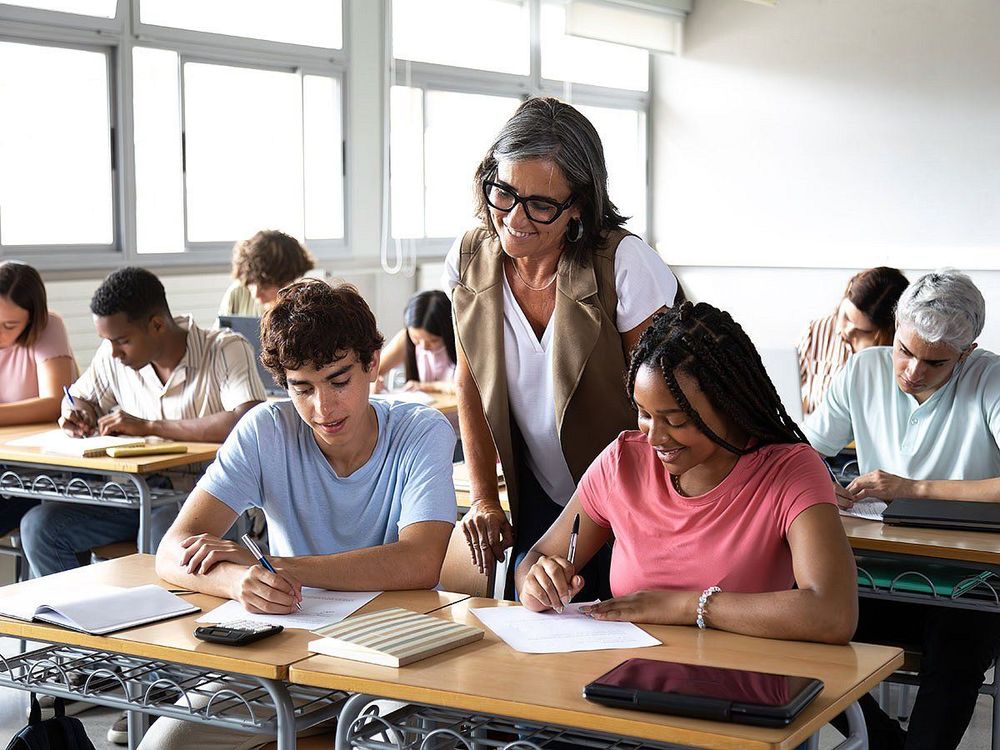
True educational success emerges over decades, not on results day
For parents navigating today's complex global education landscape, success often appears deceptively straightforward: strong examination results, an offer from a prestigious university, a clear pathway into a respected profession.
These milestones undoubtedly matter. They represent years of dedication and achievement. Yet having spent my career as a teacher, school leader, and education policymaker—including serving as Deputy Schools Commissioner at the UK Department for Education and Chief Executive of the Future Leaders Trust—I have become increasingly convinced that the most important outcomes of education cannot be measured at 18.
The question that truly matters is not where a young person goes to university, but who they become by the time they leave school, and who they continue to become throughout their lives.
Preparing for unprecedented change
This question has become more critical than ever. Today's students enter a world defined by unprecedented technological disruption and shifting career pathways. Research indicates that 30% of current jobs could be automated by 2030, with 60% expected to have tasks significantly modified by artificial intelligence. Many professions students may eventually pursue do not yet exist, while others that once appeared stable are being reshaped by automation.
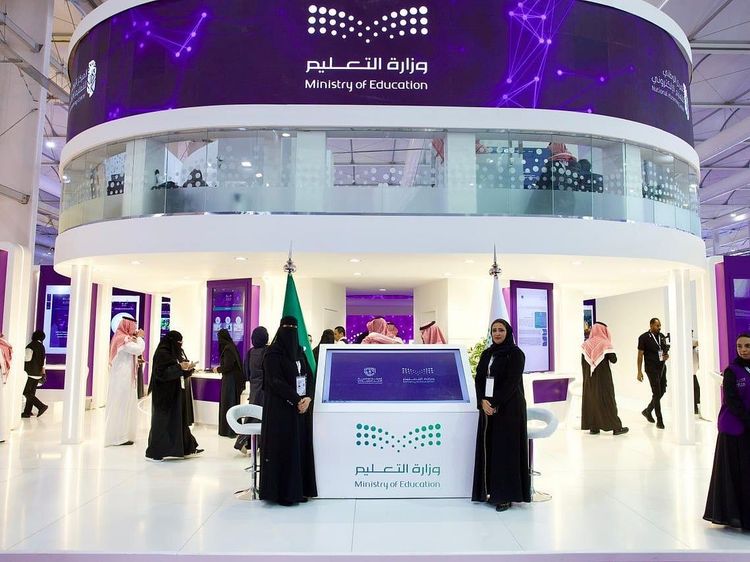
The UAE has recognized this reality, introducing artificial intelligence as a mandatory curriculum across public schools from kindergarten to Grade 12 starting the 2025-2026 academic year. With 1,000 trained teachers delivering the curriculum through practical projects rather than written exams, the focus has shifted toward developing critical thinking and problem-solving skills that complement technology.
In May 2026, the UAE launched an AI-powered skills platform connecting labor market data with the education ecosystem, enabling analysis of jobs, skills, and qualifications to forecast future labor market changes and help educational institutions align programs with national economic needs.
For years, education systems worldwide have focused heavily on knowledge acquisition and academic performance. Both remain important. However, the rise of AI presents an interesting paradox: the more capable technology becomes, the more valuable distinctly human qualities will be—creativity, judgement, empathy, communication, adaptability, the ability to build relationships and solve complex problems.
According to the World Economic Forum's Future of Jobs Report 2025, which surveyed over 1,000 global employers, analytical thinking remains the top requested skill, but leadership and social influence rank closely behind, alongside resilience and adaptability. These are not soft skills. Increasingly, they define future success.
Building foundations that matter
This is why schools must move beyond preparing students simply for examinations and begin thinking more intentionally about preparing them for life. That preparation begins with a sense of belonging.
Children learn best when they feel safe, valued, and connected to the community around them. Research confirms this: a 2025 study of over 215,000 students found that different dimensions of wellbeing—particularly learning readiness, emotional wellbeing, and engagement—play a crucial role in academic performance, with learning readiness emerging as the most influential component on academic outcomes.
Multiple studies demonstrate a strong positive association between sense of belonging and student wellbeing, with students who experience strong belonging showing higher levels of engagement, resilience, and academic performance, particularly when teachers offer academic and emotional support. Before confidence comes achievement. Before achievement comes connection.
In a world where young people are increasingly connected digitally but can sometimes feel disconnected personally, creating environments where students genuinely feel they belong has become one of education's most important responsibilities.
Diversity in the classroom is not simply a demographic statistic. It is preparation for life. The ability to understand different viewpoints, collaborate across cultures, and build relationships with people whose experiences differ from your own will be one of the defining capabilities of future leaders.
Beyond the classroom
Equally important is helping young people discover who they are. One of the greatest misconceptions in education is that success follows a predetermined route. In reality, the most successful people are often those who have developed the confidence to pursue their interests, adapt when circumstances change, and continue learning throughout their lives.
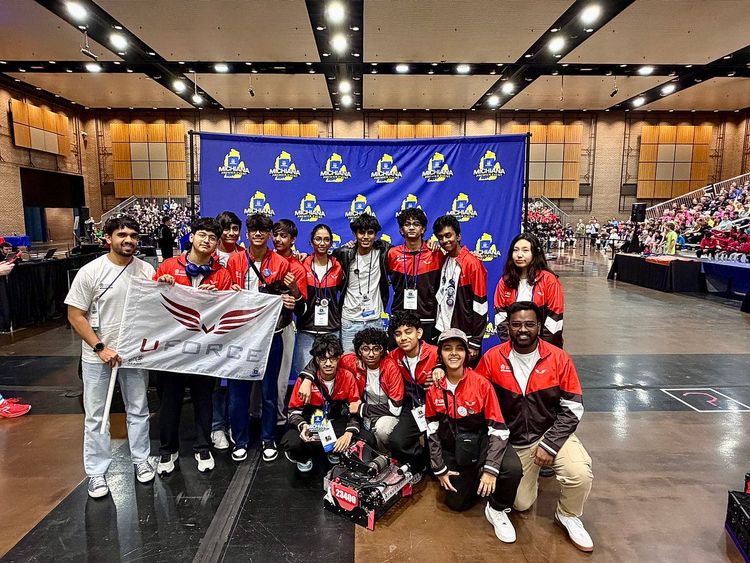
That is why opportunities beyond the classroom matter so much. Whether through entrepreneurship, leadership, service, sport, music, the arts, or community initiatives, students discover strengths in themselves that examinations alone can never reveal.
I often describe entrepreneurship not simply as starting a business, but as developing the mindset of a problem solver and self-starter. The ability to identify opportunities, navigate uncertainty, take initiative, and bring others with you will remain valuable regardless of industry or profession.
These experiences help students build something equally important: character. Not character as a slogan, but as a collection of habits and behaviours developed through experience. Resilience developed through setbacks. Confidence earned through challenge. Empathy gained through service. Leadership built through responsibility.
What universities actually seek
Increasingly, universities themselves recognize the importance of these qualities. While academic achievement remains essential, university admissions in 2026 increasingly emphasize holistic evaluation beyond grades. Qualities such as adaptability, resilience, independent thinking, leadership, and depth of engagement in activities have become more important in selection processes, particularly as academic benchmarks become more standardized.
At GEMS World Academy Dubai, over 60% of our International Baccalaureate Diploma cohort progress to top 50 QS World Universities, including Cambridge, Yale, Princeton, and Oxford—not solely because of their examination results, but because they demonstrate initiative, curiosity, purpose, and the ability to contribute meaningfully to their communities.
This raises another important question. Perhaps we should spend less time asking which university a young person should attend and more time asking what kind of life they hope to build.
For decades, students have often approached higher education through a relatively linear lens: choose a university, pursue a degree, enter a profession. That pathway still exists. But in a rapidly changing world, passion, adaptability, and creativity may ultimately prove more valuable than optimizing for a career that may look very different by the time a student graduates.
A partnership for perspective
The role of education, therefore, is not simply to prepare young people for their first destination after school. It is to equip them for a lifetime of growth, contribution, and reinvention.
This requires a partnership between schools and families. Parents rightly want their children to achieve highly. High expectations remain important. Academic rigour matters. Ambition matters.
But perspective matters too. The most successful adults are rarely defined solely by the grades they achieved at school. They are defined by their ability to navigate uncertainty, build relationships, adapt to change, and contribute positively to the world around them.
These qualities cannot always be measured in examination results or university acceptance letters. Yet they often determine the trajectory of a life.
Education is undoubtedly an investment. But its greatest returns are rarely visible on results day. The true measure of education is not what a young person achieves at 18. It is who they become at 30, 40, and beyond.
Heath Monk is Principal and CEO of GEMS World Academy Dubai. He joined the school in 2025 from The British School of the Netherlands, where he served as CEO, and holds a First Class degree in English Language and Literature from Oxford University.