Modi announces fast-track courts to tackle exam paper leak crisis
Indian Prime Minister Narendra Modi has announced the establishment of fast-track courts to ensure swift punishment for those involved in examination paper leaks, declaring that no one harming students' futures will be spared.
Modi announces fast-track courts to tackle exam paper leak crisis
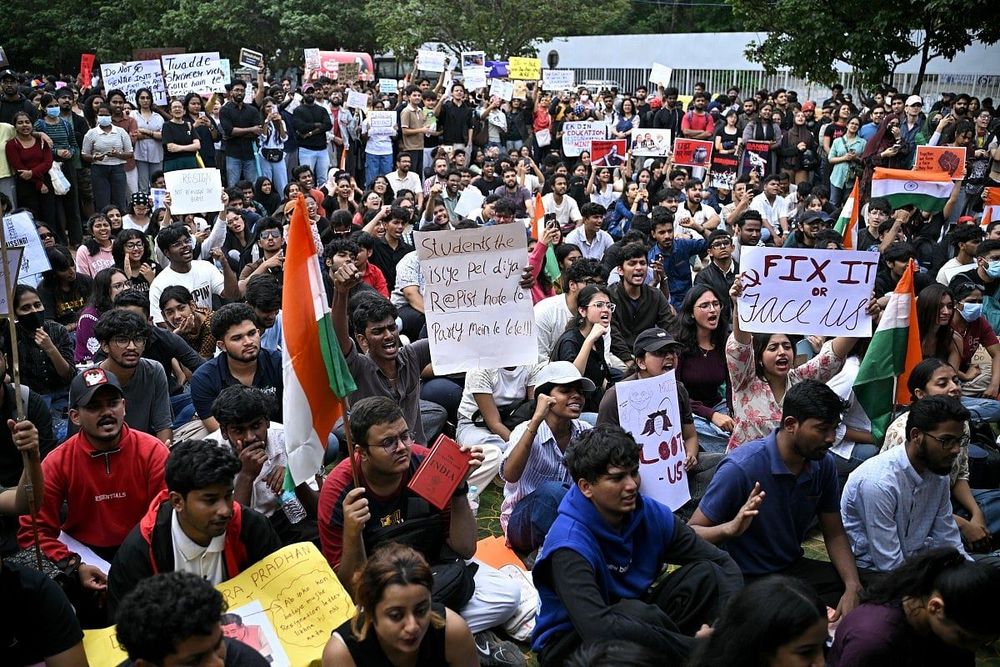
Indian Prime Minister Narendra Modi on Thursday announced the establishment of fast-track courts to ensure swift and stringent punishment for those involved in examination paper leaks, declaring that anyone who harms the future of India's youth will not be spared.
In a post on X, Modi said nothing is more important than the welfare and future of the country's young people, and that he had directed the concerned authorities and officials to take all necessary steps in this regard.
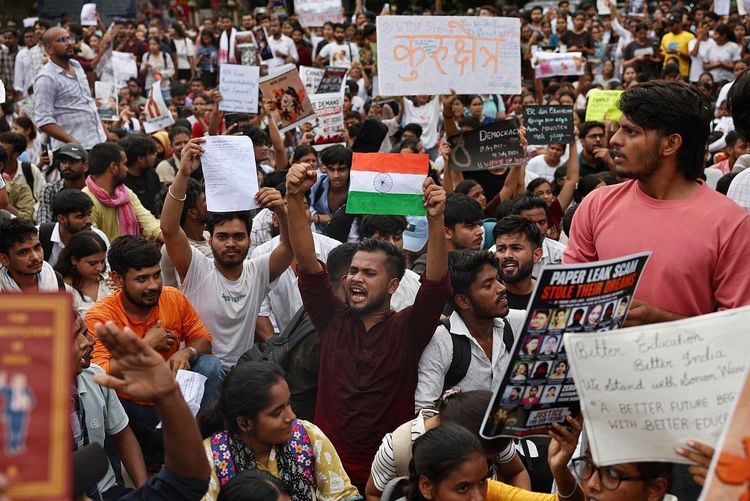
The announcement comes as India grapples with a recurring crisis of examination integrity. Over the past two decades, the country has witnessed more than 90 instances of paper leaks and examination irregularities at the national and state levels, including at least 15 involving examinations conducted by Central agencies.
What are fast-track courts?
Fast-track courts in India are special courts established to ensure speedy disposal of cases, thereby easing the burden on regular courts. They were started in 2000 on the suggestion from the Eleventh Finance Commission to deliver fast justice and relieve congested district and subordinate courts.
Modi said the decision continues the government's series of steps for safeguarding the interests of students, with fast-track courts formed for the speedy disposal of all paper leak cases and instructions issued to the departments concerned to ensure necessary action.
The NEET-UG 2026 controversy
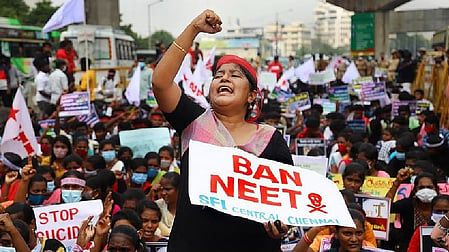
The latest announcement follows the NEET-UG 2026 examination controversy. The exam, held on May 3, 2026 for over 2.27 million aspirants seeking admission to undergraduate medical and dental courses, was cancelled on May 12, 2026 following investigations that revealed overlaps between a pre-circulated guess paper and the actual question paper.
According to investigations, approximately 120 out of 410 questions in a pre-circulated guess paper closely matched the actual NEET-UG 2026 examination questions. The guess paper was distributed through Telegram and WhatsApp groups.
The CBI arrested a Pune-based chemistry lecturer, P.V. Kulkarni, as an alleged kingpin in the NEET-UG 2026 paper leak case. Kulkarni was involved in the examination process on behalf of the National Testing Agency and had access to the question papers.
A recurring problem
The NEET-UG exam has faced at least five major leak controversies between 2015 and 2026. In 2015, the Supreme Court cancelled the AIPMT examination after uncovering a multi-state cheating racket affecting more than 630,000 candidates.
Despite numerous arrests, convictions have been rare. According to media analysis, India has witnessed only one conviction in exam fraud cases in recent years despite 148 documented cases over an 11-year period. The CBI, which is most frequently assigned to investigate exam fraud at the national level, had a credible record before 2015 but convictions have been rare since then.
The CBI has arrested multiple individuals in connection with NEET paper leak cases, including school principals, vice-principals, medical students, coaching operators, and alleged kingpins who have been linked to exam fraud for two decades.
Modi's emphasis on swift and stringent punishment appears designed to address this accountability gap and restore confidence in India's examination system.