India's NEET exam scandal: Dreams shattered, lives lost amid paper leak crisis
At least 20 students reportedly died by suicide after the 2026 NEET medical entrance exam was cancelled due to paper leaks, exposing systemic failures in India's high-stakes education system where millions compete for limited medical college seats.
'Betrayal': The young victims of India's NEET exam leak scandal
Growing up with a chronically ill mother in a remote village in India's northeastern state of Assam, Rema Begum spent years preparing to become a doctor. After costly coaching classes and intense study, the 20-year-old believed she had finally secured her future when she sat for the National Eligibility cum Entrance Test (NEET) on May 3, 2026.
Days later, she was dead.
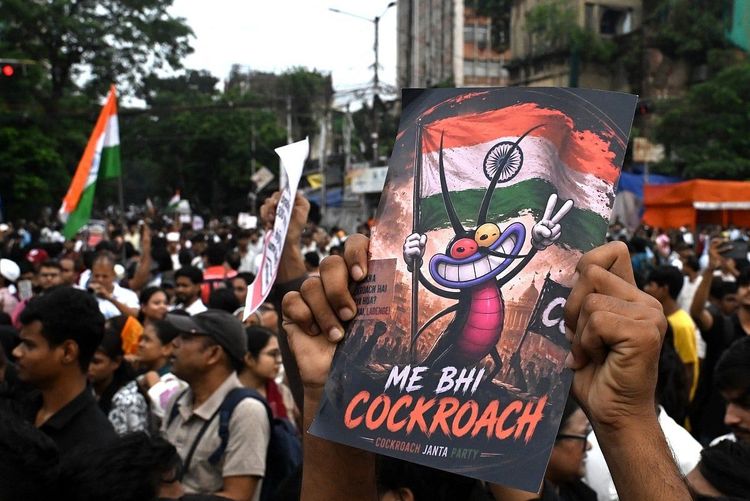
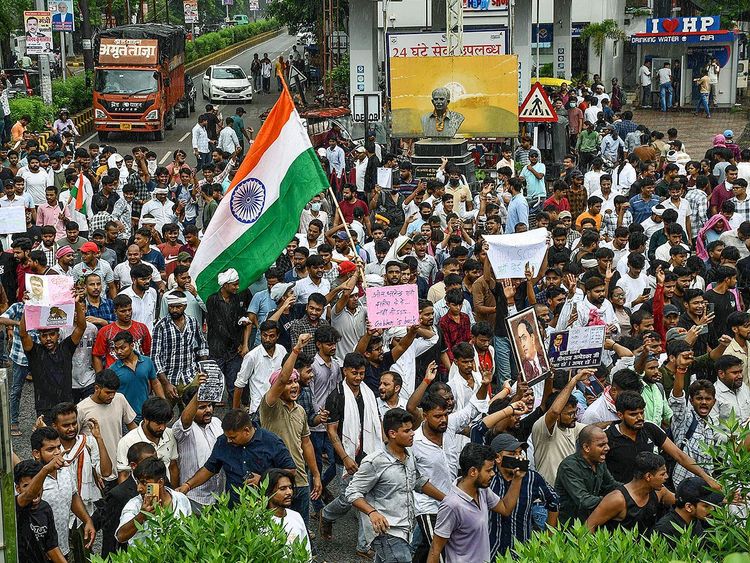
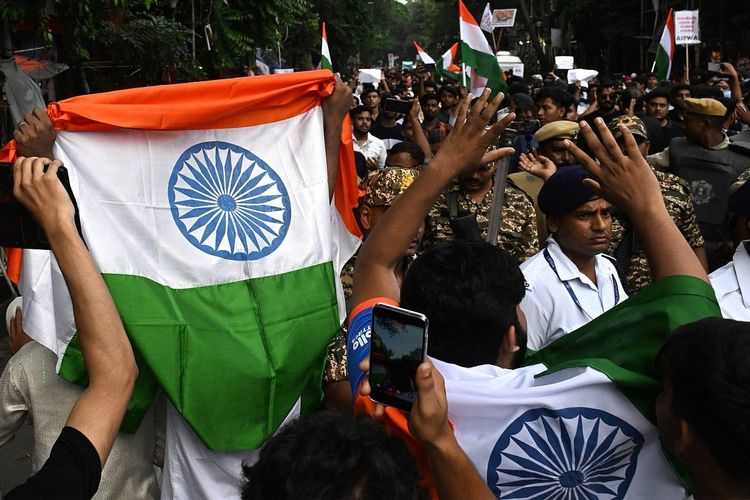
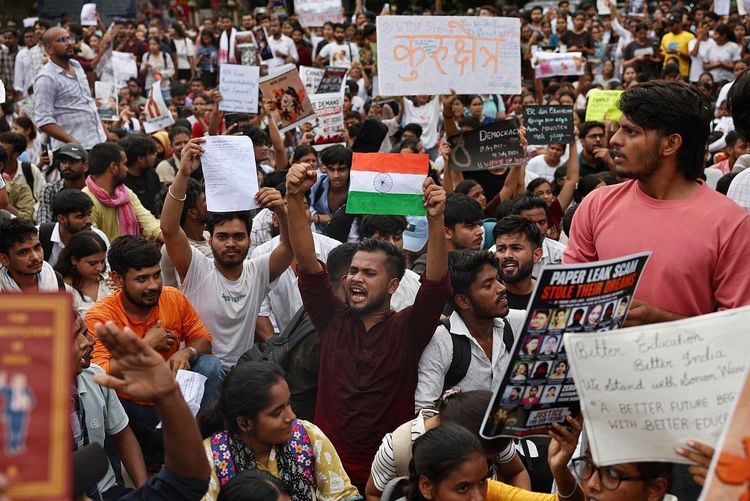
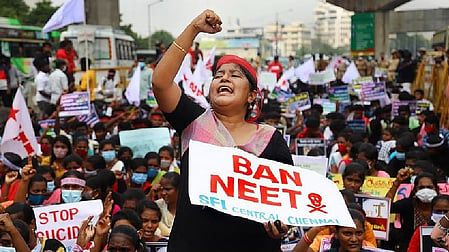
Begum was among at least 20 students who reportedly took their own lives after authorities cancelled the exam on May 12, 2026, following investigations that revealed overlaps between pre-circulated guess papers and the actual question paper. The scandal has fuelled nationwide protests and exposed deep flaws in an education system that millions of young Indians depend on for economic security.
From hope to despair
Begum's father, Rajaul Islam, a fish trader, recalls how confident his daughter was immediately after the examination. "After the exam, she was absolutely confident that she would clear it," Islam said by phone from the family's village. "But after a retest was announced because the paper had leaked, she became a different person and withdrew into a shell."
Islam had invested heavily in his daughter's preparation, spending over 1.1 million rupees on coaching centres in larger cities for two years. "I had spent a lot of money on her studies, so she was worried it would all go to waste," he said. Days before the scheduled retest, Begum was found dead.
Her story mirrors that of 22-year-old Pradeep Meena in Rajasthan, whose father Rajesh Kumar sold ancestral land and borrowed 1.1 million rupees to finance three years of coaching classes. "I toiled for up to 16 hours a day on the farm so that he could take coaching classes," Kumar told AFP. "Because I thought if he becomes a doctor it would all be worth it."
After the exam, Meena had embraced his father, saying that "even God cannot stop me from becoming a doctor now." A day after the retest announcement, he died by suicide.
Fierce competition, immense pressure
The NEET examination represents one of the most competitive academic hurdles in the world. This year, more than 2.27 million candidates sat the exam, vying for approximately 129,000 medical seats nationwide. For government medical college seats specifically, competition escalates to about 40 applicants per seat, compared to roughly 20 students per seat overall.
The stakes have created a sprawling coaching industry valued at approximately Rs 58,000 crore (USD 7.2 billion) in 2025, projected to reach Rs 1,33,995 crore (USD 17.8 billion) by 2034. Students spend years preparing, often at enormous sacrifice for their families.
"Getting through the NEET examination therefore means, for many families, the assurance of a happy and comfortable life," said literary scholar and former professor G.N. Devy. "But the number of students who want these places is completely out of proportion to the number of institutions available."
A pattern of irregularities
The 2026 scandal is not an isolated incident. In the 2024 NEET paper leak, candidates allegedly paid between Rs 30 lakh to Rs 50 lakh to obtain question papers beforehand in Bihar, while in Gujarat students reportedly paid Rs 10 lakh each. The Supreme Court of India acknowledged that at least 155 students directly benefited from that leak, though it ruled there was no evidence of systemic failure and declined to order a re-examination.
Following the 2024 irregularities, the Central Bureau of Investigation took over the probe on June 23, 2024, making multiple arrests. The Supreme Court also indicted the National Testing Agency for serious lapses, noting that in one examination centre, the rear door of the strongroom was opened and unauthorized persons were permitted to access question papers. A high-level expert committee headed by former ISRO chairman Dr. K Radhakrishnan was formed to recommend exam reforms.
A broader crisis
The emotional toll of exam preparation and failure extends far beyond the NEET scandal. Student suicides in India reached 14,488 cases in 2024, accounting for 8.5 percent of the country's total suicides and marking an approximately 80 percent increase over the past decade. More than 123,000 students died by suicide between 2014 and 2024, with more than one-fifth of these deaths linked to examination failure.
"It is very demoralising mentally," said 19-year-old Chaitanya Aggarwal, who had to retake the exam. "You give your best and then you are forced to take it again."
Abhijit Patra, a teacher at a coaching centre in Kolkata, emphasised the psychological burden. "It's a highly stressful experience to prepare for and take the exam, and having to do it all over again is not easy. Paper leaks make an already hectic experience even worse."
Families demand accountability
For many families, the scandal represents a profound betrayal after years of sacrifice. In Uttar Pradesh, 21-year-old Ritik Mishra died by suicide a day after news of the exam leak surfaced. "It was his third attempt, and he said he had done well this time," said his father, Anup Kumar Mishra.
Devy noted that preparing for entrance examinations is often financially ruinous and socially exhausting, particularly for lower-income households unable to afford costly private universities or education abroad. "They begin this journey of preparation with hope, so when they discover the paper has leaked or been sold, they feel betrayed," he said.
From his village in Assam, Islam continues to search for answers about his daughter's death. "I request the government to take irregularities in examinations seriously," he said. "They should understand that it is not easy for a child from a poor family to dream of a better life and work towards it."