Sharjah discovers five rare sea-turtle rock carvings in Wadi Al Helo
Five sea-turtle images carved into rocks deep in Sharjah's Wadi Al Helo mountains may be about 7,000 years old, according to the Sharjah Archaeology Authority. The find makes the area only the third known location for this type of rock art on the Oman Peninsula.
 Mariam Al Mansoori
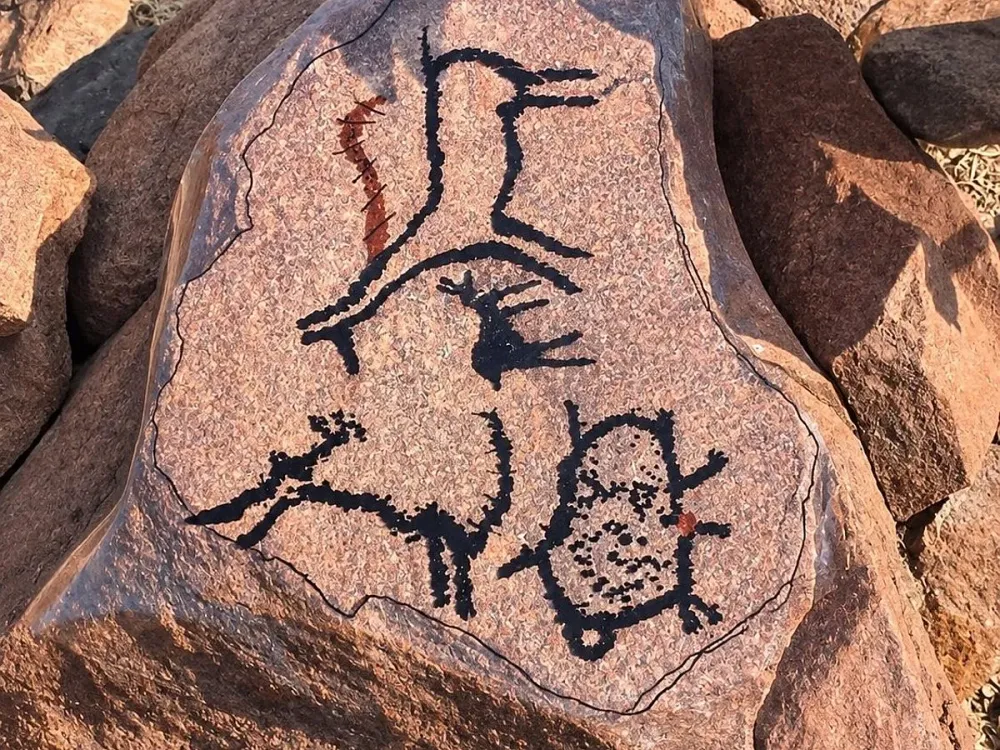
A newly recorded panel
The authority identified the five engravings on a newly recorded rock art panel during its 2026 fieldwork. Local community members had drawn attention to the location in 2022.
Only two other sites with this kind of sea-turtle imagery had previously been documented on the Oman Peninsula, according to Khaleej Times. Researchers suggest the Wadi Al Helo carvings could date to around 5000 BCE, but their precise age remains unconfirmed.
The images provide evidence of prehistoric artistic expression and the significance of marine life to early communities. Why the inhabitants chose to carve turtles, however, is still unknown.
Leatherback features far inland
Four of the images appear to represent leatherbacks, the world's largest living sea turtle species, according to the authority's announcement reported by Khaleej Times on November 26, 2026. Researchers based that identification on lines along the carved shells that resemble the distinctive ridges of living leatherbacks.
Marine animals are an unusual subject for rock art in an inland mountain setting. Their presence raises questions about the connections between prehistoric communities in Wadi Al Helo and the sea.
The excavated Wadi Al Helo site is approximately 15 km from the east coast in a straight line, with major mountain ridges between it and the shore. Following the wadi's winding course roughly doubles that distance.
A landscape with a copper-producing past
The turtle carvings add to the archaeological record of Wadi Al Helo, a landscape in the Hajar Mountains also known for Early Bronze Age copper production. Excavations in the area designated HLO1 have uncovered furnaces, ore-processing areas, slag deposits and a casting pit.
Ancient rock art offers information about early inhabitants' lives, beliefs and surroundings, making its preservation an important part of protecting that record.
Wadi Al Helo was added to the United Arab Emirates' UNESCO World Heritage Tentative List on February 1, 2023, under the title "Wadi Al Helo: Testimony of Bronze Age Copper Production".