
Cultural heritage thrives through renewal, not preservation alone
Bill Bragin, executive artistic director of NYU Abu Dhabi's Arts Center, reflects on how intangible cultural heritage evolves through community participation and how Abu Dhabi's growing cultural infrastructure creates opportunities for artists and audiences to build shared traditions.
 Mariam Al Mansoori
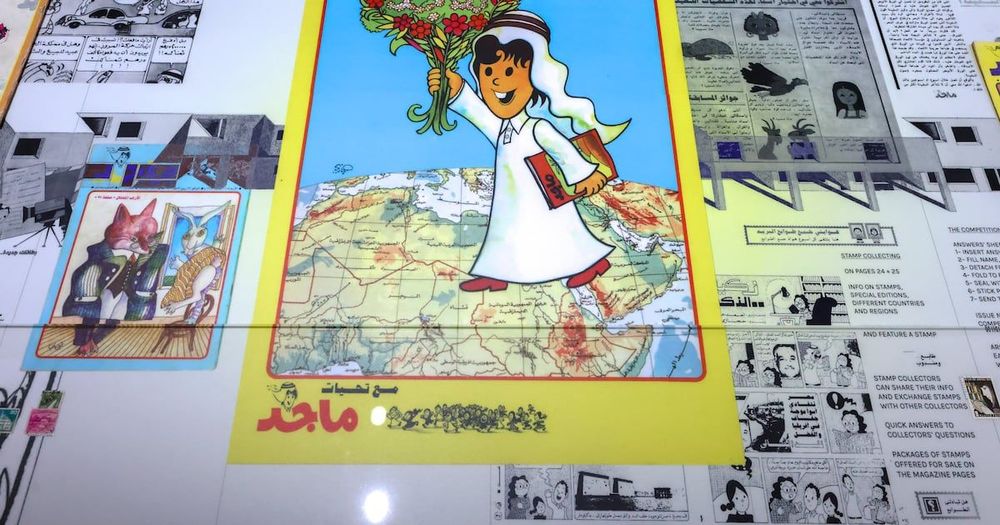
Heritage is not fixed in the past but reinvented in real time
Twelve years ago, when Bill Bragin relocated to Abu Dhabi, the cultural landscape surrounding NYU Abu Dhabi's campus was largely undeveloped desert. Yet what he witnessed was not emptiness, but potential. The museums planned for Saadiyat Island and the UAE's dedication to arts and culture represented an opportunity to contribute to something still taking shape.
Today, Bragin serves as executive artistic director of The Arts Center at NYU Abu Dhabi, which launched its inaugural season in 2015. The institution has since hosted over 200 artist residencies, commissioned or co-commissioned 34 new works, and featured artists from more than 50 countries across its first six seasons. The broader cultural ecosystem has expanded significantly, with the Louvre Abu Dhabi opening in November 2017 as the first major museum in Saadiyat Cultural District. Most recently, the Natural History Museum Abu Dhabi opened on November 22, 2025, followed by the Zayed National Museum on December 3, 2025.
Writing on the International Day of the Intangible Cultural Heritage, observed annually on October 17, Bragin considers how cultural encounters enable people to draw from the past, learn from one another, and construct the traditions future generations will inherit. The day, proclaimed by UNESCO's 42nd General Conference in November 2023, marks the anniversary of the 2003 Convention for the Safeguarding of the Intangible Cultural Heritage.
Intangible cultural heritage, Bragin notes, exists not as a fixed artifact but as a living practice. Music, storytelling, crafts, performance, celebrations, and traditional knowledge persist through teaching and participation, adapting as communities evolve. The responsibility lies in supporting those who carry these practices forward.
Building cultural infrastructure
For Bragin, the arts function as social infrastructure. They provide reasons for people with different lived experiences to gather and form community. A performance can spark conversation, introduce future collaborators, or inspire someone to recognize their own story as worth telling. Sustained opportunities to participate, create work, and learn from others transform cultural investment into lasting contributions to a nation's life.
Earlier this month, Bragin participated in a LiveX panel where Royal College of Art professor Adrian Lahoud compared the opportunity New York represented for earlier generations with what Abu Dhabi and Dubai offer today. As a lifelong New Yorker, Bragin recognizes similar energy in ambitious people arriving with diverse experiences and a shared belief in building a life together.
The comparison gains economic weight when considering regional investment figures. Dubai attracted $3.76 billion in foreign direct investment into cultural and creative industries in 2025, generating more than 19,300 jobs. The emirate retained its position as the world's leading destination for new cultural and creative industry investment projects for the fourth consecutive year. In November 2024, Dubai announced the Dubai Cultural Grant programme, allocating AED180 million over the next decade to support local talent across visual arts, performing arts, literature, and heritage.
Abu Dhabi's cultural character will continue developing from its own history, rooted in Emirati heritage and shaped by the lives and encounters of people present today. Its neighborhoods and artistic communities will differ from New York's, and the significance of current beginnings may only become clear a generation hence.
Bragin recalls words from Zaki Nusseibeh, cultural adviser to the UAE President and Chancellor of the United Arab Emirates University, published in The New York Times the week Bragin arrived in 2014. Nusseibeh, who began his government service in 1968 as personal interpreter and adviser to founding President Sheikh Zayed bin Sultan Al Nahyan, described the forthcoming museums and expressed hope that in 20 or 30 years' time, we will have our own cultural elite, so our young people won't have to go to London or Paris to learn about art.
From audience to artist
That aspiration is beginning to materialize. Bragin has encountered individuals who first visited The Arts Center on high school trips, became NYU Abu Dhabi students, experienced unfamiliar performances, attended workshops, and developed into artists whose work the center now presents and commissions. A children's matinee can plant possibilities that remain with someone for years.
Artists require opportunities to develop their practice and sustain careers. The Arts Center's Numoo professional development accelerator provides practical knowledge and builds networks across artforms and backgrounds. Participants find collaborators and develop work that could not have been anticipated when they were brought together, sharing stories that help others understand life in the UAE.
Hekayah | The Story, an annual gathering celebrating UAE National Day (Eid Al Etihad), explores how national narratives form. Poets and musicians from different backgrounds, selected collaboratively by curators from the UAE's literary and performing arts communities, share stories shaped by their histories, heritages, and experiences of home. This year's first collaboration with Public Art Abu Dhabi extends opportunities for shared storytelling.
During the same LiveX conversation, architect Bjarke Ingels referenced Leonard Cohen's lyric:
There is a crack in everything / That's how the light gets in.
He was discussing openings for the unanticipated in a city's development, spaces where unexpected moments can occur.
Implementing that intention requires creating conditions for serendipity: affordable communities where artists can live near one another, meet regularly, exchange ideas, and stumble upon collaborators. Urban planning can enable encounters even when outcomes cannot be predicted. Some ideas will falter or change direction; others become more interesting through unexpected contributions. A cultural scene needs room for this imperfect process, recognizing that failure can prove as important as inspiration.
Shared experiences, diverse perspectives
Audiences bring their own perspectives as well. At The Arts Center's opening concert this season, French North African brass and percussion ensemble Fanfarai shared the evening with New Orleans's Dirty Dozen Brass Band. Bragin noticed people clapping on different beats, bringing their own musical instincts to the performance. Yet they shared the joy of being present together, creating new common history. After shows, people describe friendships and experiences that have helped them make Abu Dhabi their home.
The International Day of the Intangible Cultural Heritage invites consideration of responsibilities to the practices and knowledge communities value and transmit. Preserving and extending them means supporting people to practice, teach, perform, and contribute, recognizing that what they pass on will change. The promise that drew Bragin to Abu Dhabi has become visible in the work people make and the connections they form.
As NYU Abu Dhabi continues evolving—the university was announced in October 2007 as the first comprehensive liberal arts campus established abroad by a major U.S. research university, with its inaugural class enrolling in 2010—the cultural ecosystem expands alongside it. Additional institutions remain in development, including the Guggenheim Abu Dhabi, designed by Frank Gehry and expected to open on December 11, 2026, after construction delays since work began in 2011.
Honoring what people bring while leaving room for discoveries none could have planned remains essential. As Octavia E. Butler wrote in Parable of the Sower, the subject of The Arts Center's inaugural season show:
The only lasting truth is change.